
Tuesday, November 3, 2026Nov 3

This story is free to read.

Report: NSA targeted German privacy activist

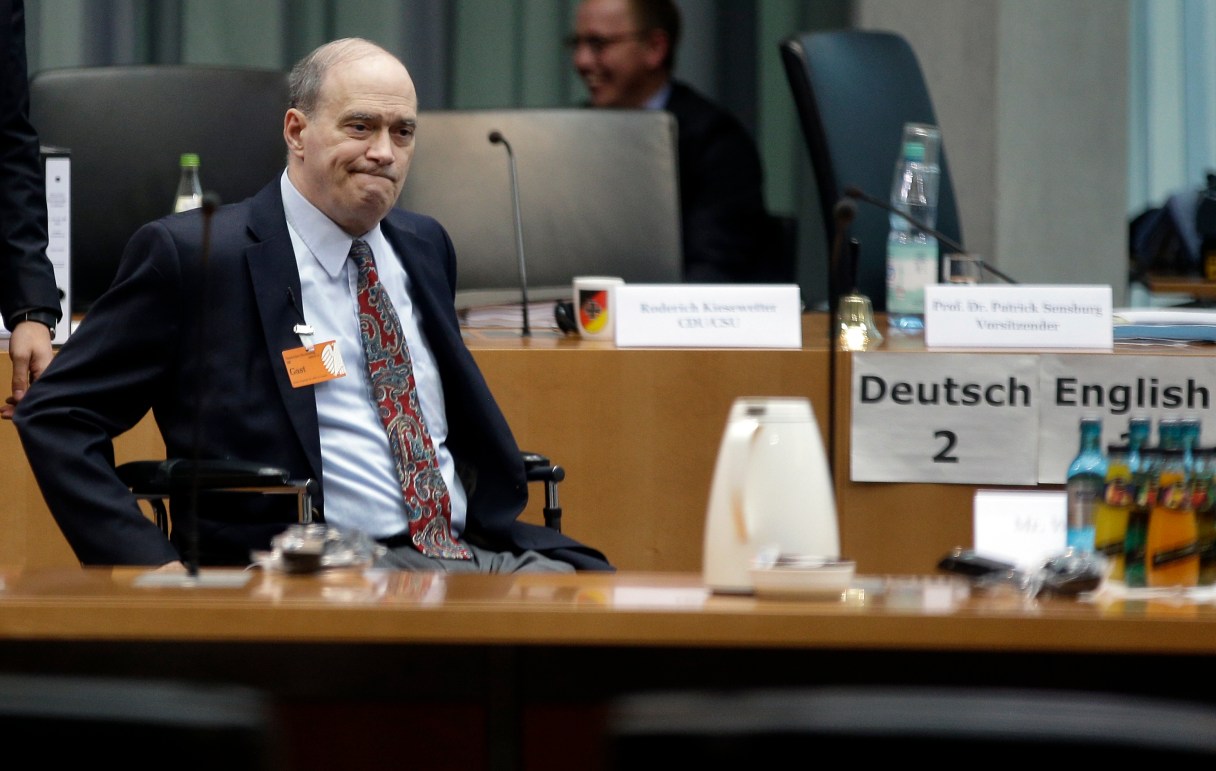
The former  US National Security Agency, NSA, employee William Binney, in wheelchair, arrives for his questioning by the German parliamentary NSA investigation committee in Berlin, Germany, Thursday, July 3, 2014. Picture taken trough a window. The committee investigates  the NSA  surveillance  activities, that also included the tapping of German Chancellor Angela Merkel. (AP Photo/Michael Sohn)
The former US National Security Agency, NSA, employee William Binney, in wheelchair, arrives for his questioning by the German parliamentary NSA investigation committee in Berlin, Germany, Thursday, July 3, 2014. Picture taken trough a window. The committee investigates the NSA surveillance activities, that also included the tapping of German Chancellor Angela Merkel. (AP Photo/Michael Sohn) The former US National Security Agency, NSA, employee William Binney, in wheelchair, arrives for his questioning by the German parliamentary NSA investigation committee in Berlin, Germany, Thursday, July 3, 2014. Picture taken trough a window. The committee investigates the NSA surveillance activities, that also included the tapping of German Chancellor Angela Merkel. (AP Photo/Michael Sohn)

BERLIN (AP) – German media say the U.S. National Security Agency monitored the computer of a Germany-based online privacy activist.

The report Thursday by public broadcasters WDR and NDR came as German lawmakers began hearing expert testimony in their inquiry into the activities of foreign intelligence agencies in Germany.

The report claims the computer code for a plug-in to the NSA’s XKeyscore data analysis software includes the Internet address for a server run by German student Sebastian Hahn. He is one of a handful of people worldwide who provide a list of so-called Tor servers that allow people to hide their online browsing activity.

Former U.S. intelligence official William Binney, who worked for the NSA until 2001, told German lawmakers Thursday the report was plausible.