
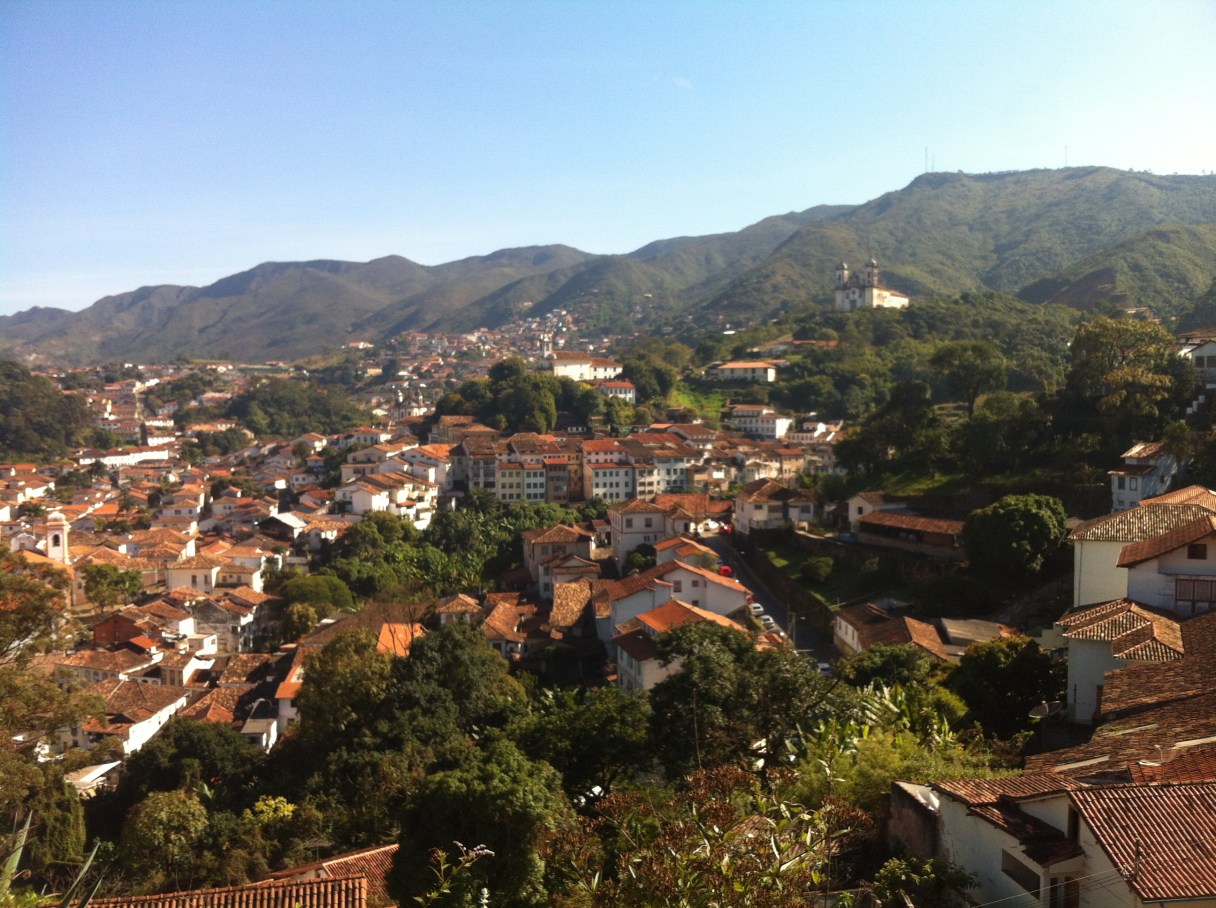
OURO PRETO, Brazil (AP) – Removed from the bustling World Cup host city of Belo Horizonte lies a charming colonial town that gave birth to Brazil’s independence.
Ouro Preto, a UNESCO world heritage site whose name means “Black Gold,” is a former mining village a two-hour drive away from the metropolis of Belo Horizonte, where thousands of soccer fans will gather Tuesday to see Brazil face Germany in the tournament’s semi-final match.
Following a road that climbs southeast through mist-shrouded hills and valleys, visitors approaching Ouro Preto first see the red-tiled roofs of its whitewashed colonial buildings before reaching the town’s cobblestoned streets and its astonishing 18th century Baroque church, a tribute to the riches of gold and gems extracted for the country’s former colonial masters.
The tremendous wealth of the town made it a cultural focal point of the era. Remarked British tourist Steve Tanner, “the biggest connection for us would be the gold rush” in California.
By the late 1700s, the fervor for independence from Portugal was ripe in Ouro Preto. Demands for a new 20-percent tax by Portugal’s royals sparked a Boston Tea Party-styled revolt in Brazil’s first uprising for independence.