
Friday, November 13, 2026Nov 13

Bosnian mom buries 2 sons 19 years after massacre

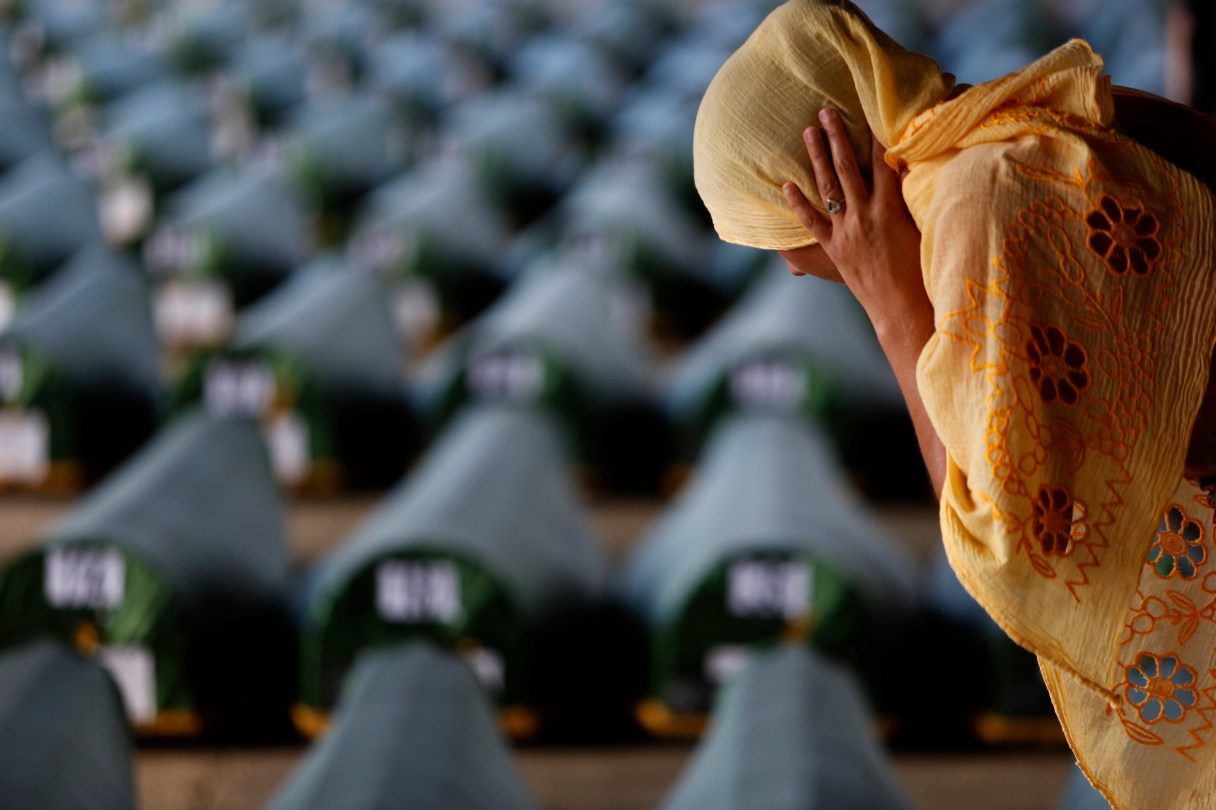
A Bosnian Muslim woman searches for the coffin of her relative, in the Memorial center in Potocari, 200 kms northeast of Sarajevo, on Wednesday, July 9, 2014. Hundreds of people turned out in Sarajevo's main street to pay their respects to 175 victims of the Srebrenica massacre — Europe's worst since World War II — as a truck carried their coffins to a final resting place. The remains of the men and boys, found in mass graves and identified through DNA analysis, will be buried in Srebrenica on Friday, the 19th anniversary of the massacre, next to 6,066 previously found victims. (AP Photo/Amel Emric)
A Bosnian Muslim woman searches for the coffin of her relative, in the Memorial center in Potocari, 200 kms northeast of Sarajevo, on Wednesday, July 9, 2014. Hundreds of people turned out in Sarajevo's main street to pay their respects to 175 victims of the Srebrenica massacre — Europe's worst since World War II — as a truck carried their coffins to a final resting place. The remains of the men and boys, found in mass graves and identified through DNA analysis, will be buried in Srebrenica on Friday, the 19th anniversary of the massacre, next to 6,066 previously found victims. (AP Photo/Amel Emric) A Bosnian Muslim woman searches for the coffin of her relative, in the Memorial center in Potocari, 200 kms northeast of Sarajevo, on Wednesday, July 9, 2014. Hundreds of people turned out in Sarajevo's main street to pay their respects to 175 victims of the Srebrenica massacre — Europe's worst since World War II — as a truck carried their coffins to a final resting place. The remains of the men and boys, found in mass graves and identified through DNA analysis, will be buried in Srebrenica on Friday, the 19th anniversary of the massacre, next to 6,066 previously found victims. (AP Photo/Amel Emric)

SARAJEVO, Bosnia-Herzegovina (AP) – After 19 years, Hajrija Selimovic will finally have a place to mourn her family on Friday.

Selimovic was reburying her husband and two sons under white tombstones in a cemetery for victims of the Europe’s worst massacre since World War II.

The three were among the 8,000 Muslim men and boys killed when Serb forces overran the eastern Bosnian town of Srebrenica on July 11, 1995. Samir was 23 and Nermin was 19 when the execution squad shot them.

The remains of Srebrenica victims are still being found in mass graves and identified using DNA technology. Every July 11, more are buried at a memorial center near the town.

This year, Selimovic’s two sons will be among the 175 newly identified victims laid to rest, joining 6,066 others including their father Hasan, who was found in 2001 but buried only last year.