
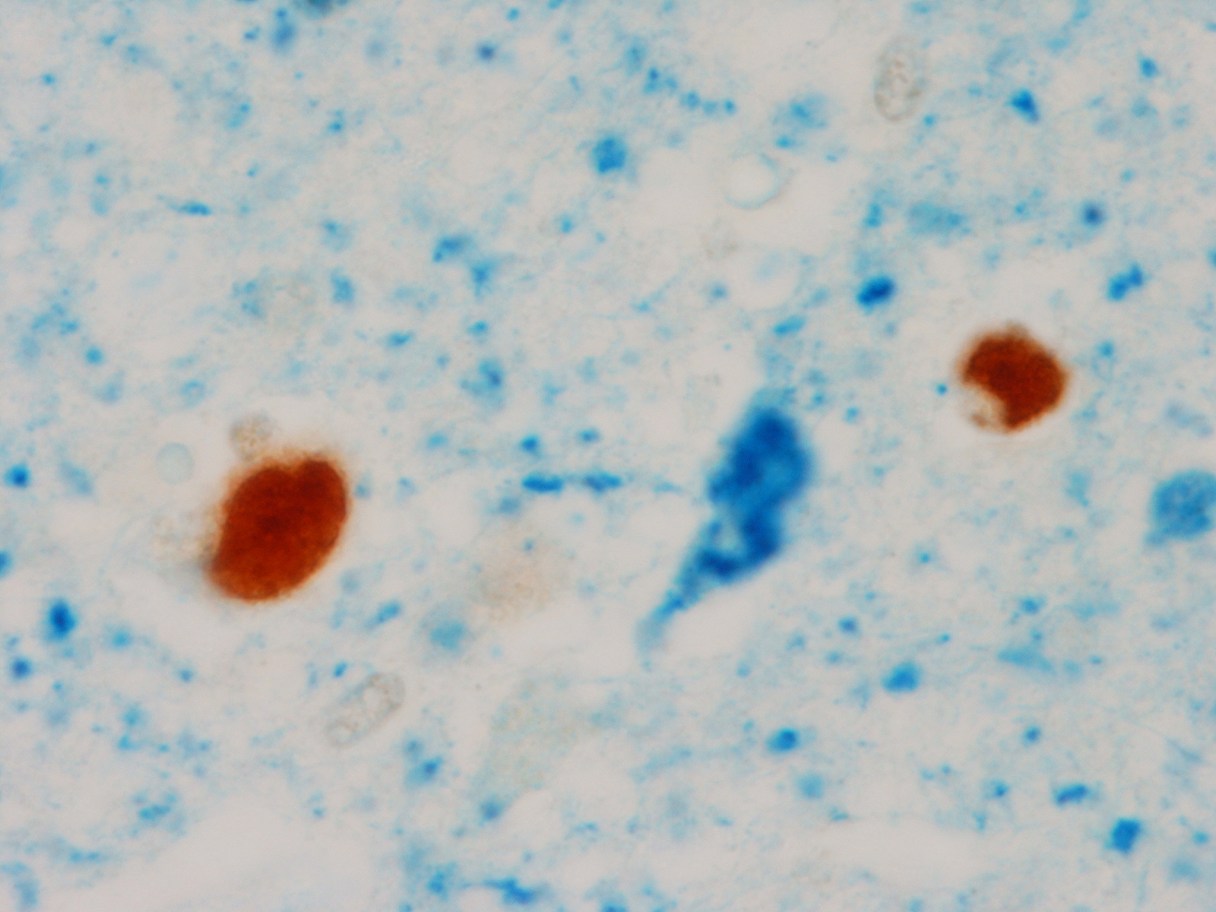
Scientists have linked a new protein to Alzheimer’s disease, different from the amyloid and tau that make up the sticky brain plaques and tangles long known to be its hallmarks.
The discovery could give a new target for developing drugs and other treatments for Alzheimer’s, the most common form of dementia. It also might help explain why many people have plaques and tangles in their brain yet show no symptoms of the disease. Autopsies on 342 brains revealed that people who had the new protein were 10 times more likely to have been mentally impaired when they died than those without it.
The study was discussed Wednesday at the Alzheimer’s Association International Conference in Copenhagen, where researchers also described a new type of brain imaging that can show tau tangles in living people for the first time.
For many years, the only sure way to diagnose Alzheimer’s disease was after death, when brains could be examined for amyloid and tau. Several companies now make imaging agents that can reveal amyloid on brain scans, and the new research shows an experimental product from Eli Lilly & Co. can do the same for tau.
“I think it will transform the field” because tau correlates better with symptoms than amyloid does, said Dr. Clifford Jack, a Mayo Clinic dementia expert with no role in that work.