
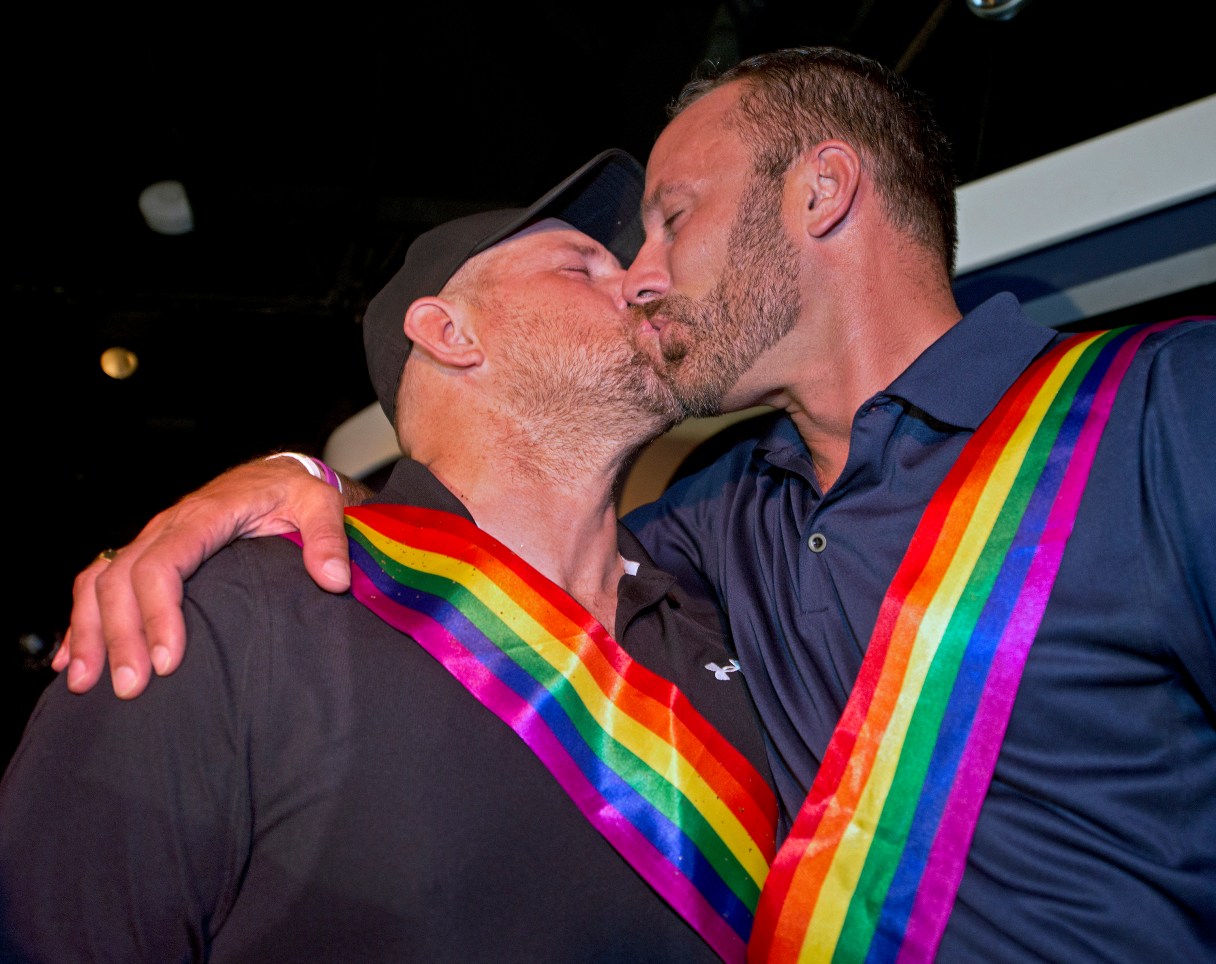
MIAMI (AP) – A judge ruled that gays can marry in Florida’s most gay-friendly county, siding Thursday with same-sex couples in the Florida Keys who challenged a voter-approved ban as discriminatory. But an immediate state appeal quickly silenced their wedding bells.
Circuit Judge Luis M. Garcia said same-sex couples could get marriage licenses as early as Tuesday in Monroe County, but Republican Attorney General Pam Bondi said the voters’ will must be respected. An overwhelming majority approved a constitutional amendment in 2008 that defines marriage as a union solely between one man and one woman. Her notice of appeal creates an automatic stay that prevents any same-sex marriage licenses from being issued, her office said.
Garcia, appointed by Republican Gov. Jeb Bush in 2000 and re-elected twice since then, invoked other moments in American history when the courts had to guarantee the civil rights of minorities. He said Florida’s ban violates the 14th Amendment of the U.S. Constitution, which guarantees equal protection under the law.
“The court is aware that the majority of voters oppose same-sex marriage, but it is our country’s proud history to protect the rights of the individual, the rights of the unpopular and the rights of the powerless, even at the cost of offending the majority,” Garcia wrote.
“When Nazi supremacists won the right to march in Skokie, Illinois, a predominantly Jewish neighborhood; or when a black woman wanted to marry a white man in Virginia; or when black children wanted to go to an all-white school, the Constitution guarantees and protects ALL of its citizens from government interference with those rights,” he added.