
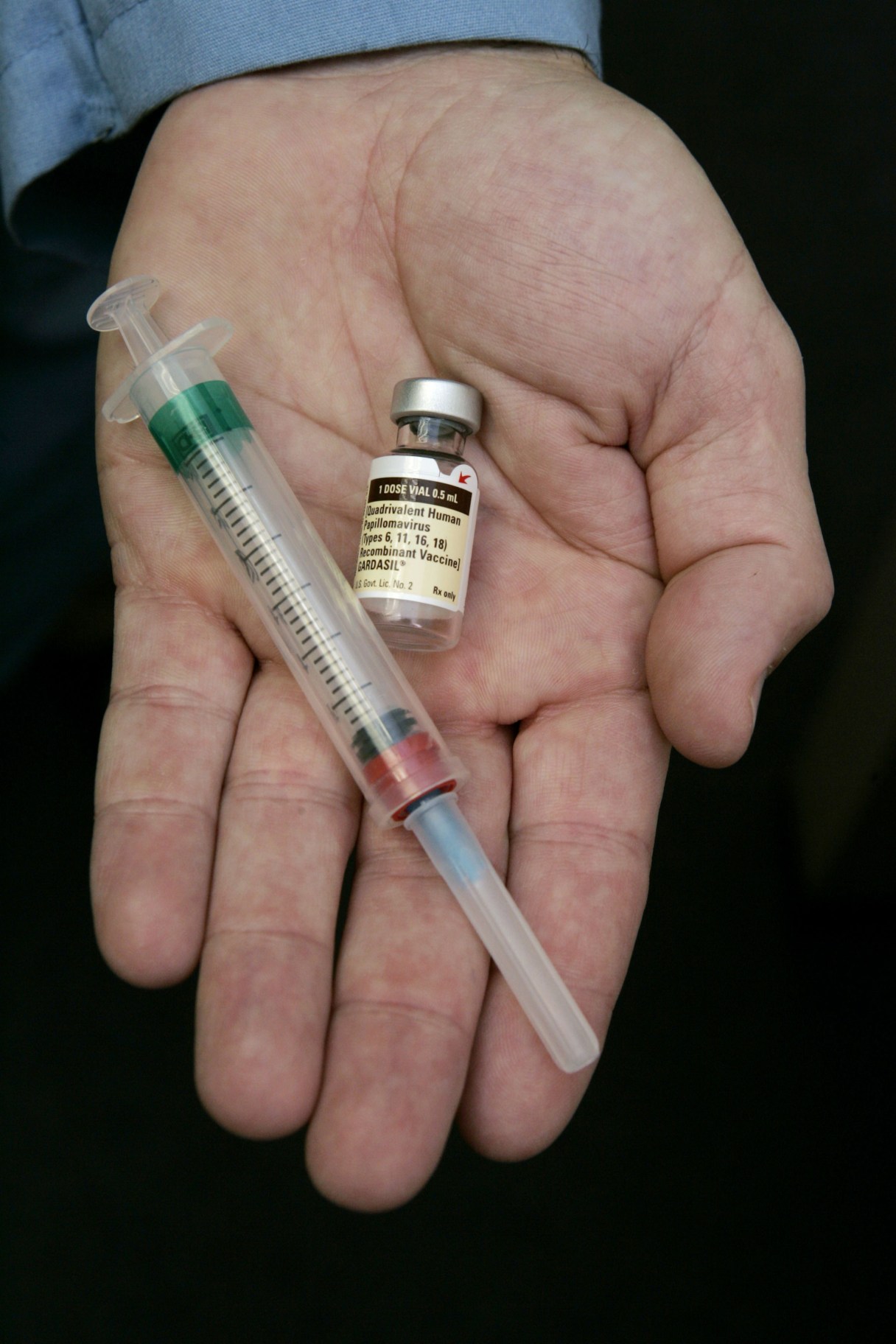
NEW YORK (AP) – More teen girls are getting a controversial cervical cancer vaccine but the increase isn’t much of a bump, the government reported Thursday.
Last year’s rise follows a couple of years when the girls’ HPV vaccination rate was flat and health officials worried that it wouldn’t budge. For girls ages 13 to 17, the rate is now up to about 38 percent of girls, from 33 percent.
“It was better than nothing. But we really need to do better moving forward,” said Dr. Anne Schuchat of the Centers for Disease Control and Prevention.
The vaccine protects against human papillomavirus, or HPV. The sexually transmitted bug can cause cervical cancer, genital warts and other illnesses.
A three-dose series of HPV shots was introduced in 2006. The government recommends the vaccine for girls ages 11 and 12 because it works best if given before a teen starts to have sex.