
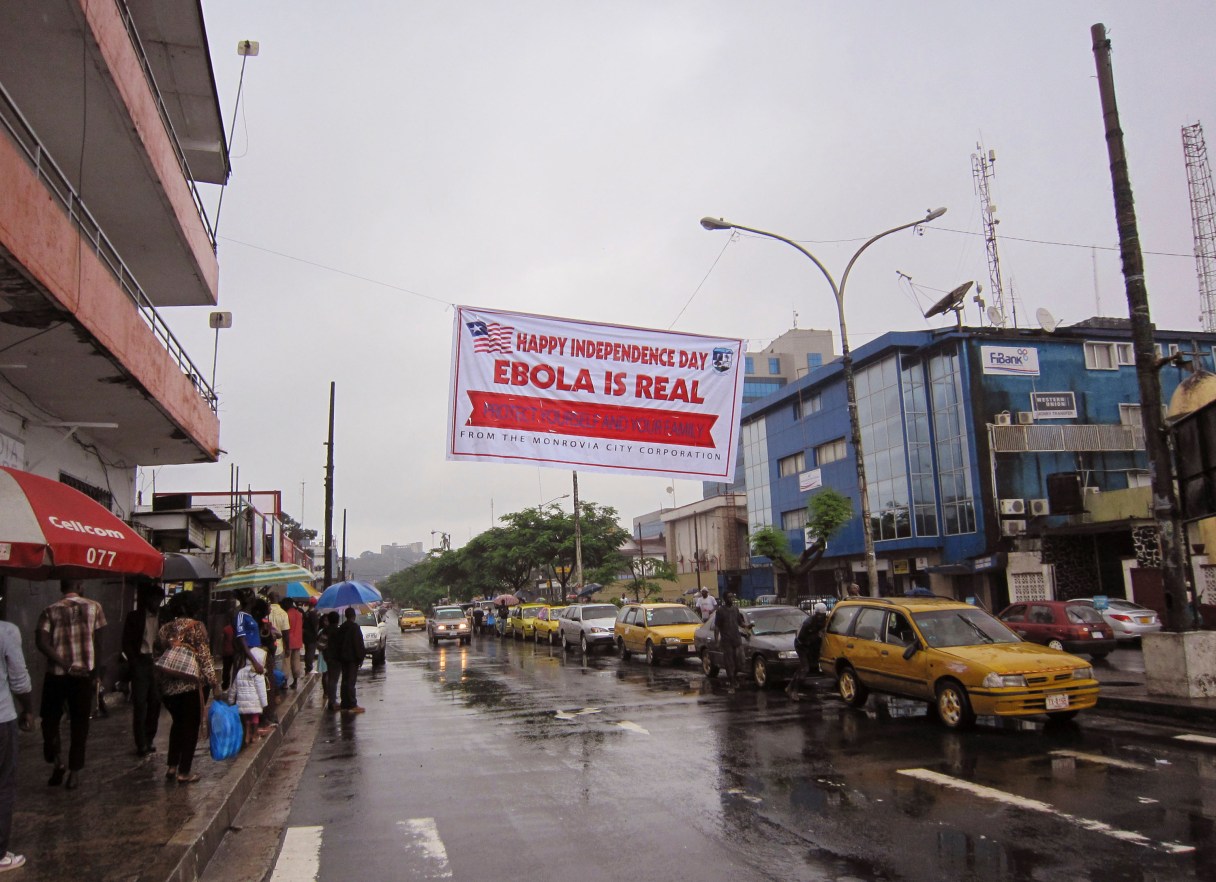
MONROVIA, Liberia (AP) – Police officers deployed to Liberia’s international airport to ensure passengers are screened for Ebola symptoms as a major regional airline announced Tuesday it was suspending flights to the cities hardest hit by an outbreak that has killed more than 670 people.
A 40-year-old American man of Liberian descent who worked for the West African nation’s Finance Ministry died Friday in Nigeria after taking several flights on ASKY Airlines. At the time, Liberian authorities said they had not been requiring health checks of departing passengers in Monrovia.
“We have a presence of the police at the airport to enforce what we’re doing,” said Binyah Kesselly, chairman of the Liberia Airport Authority board. “So if you have a flight and you are not complying with the rules, we will not allow you to board.”
Patrick Sawyer’s sister had died of Ebola though he maintained he had not had close physical contact with her when she was sick. He took an ASKY Airlines flight from Liberia to Ghana, then on to Togo and eventually to Nigeria where he was immediately taken into quarantine until his death Friday.
His travels have caused widespread fear at a time when the outbreak shows no signs of slowing in West Africa, where medical facilities are scarce and where some affected communities have in panic attacked the international health workers trying to help them. The Ebola outbreak has had about a 70 percent fatality rate, and there is no vaccine or specific treatment that can save lives.