
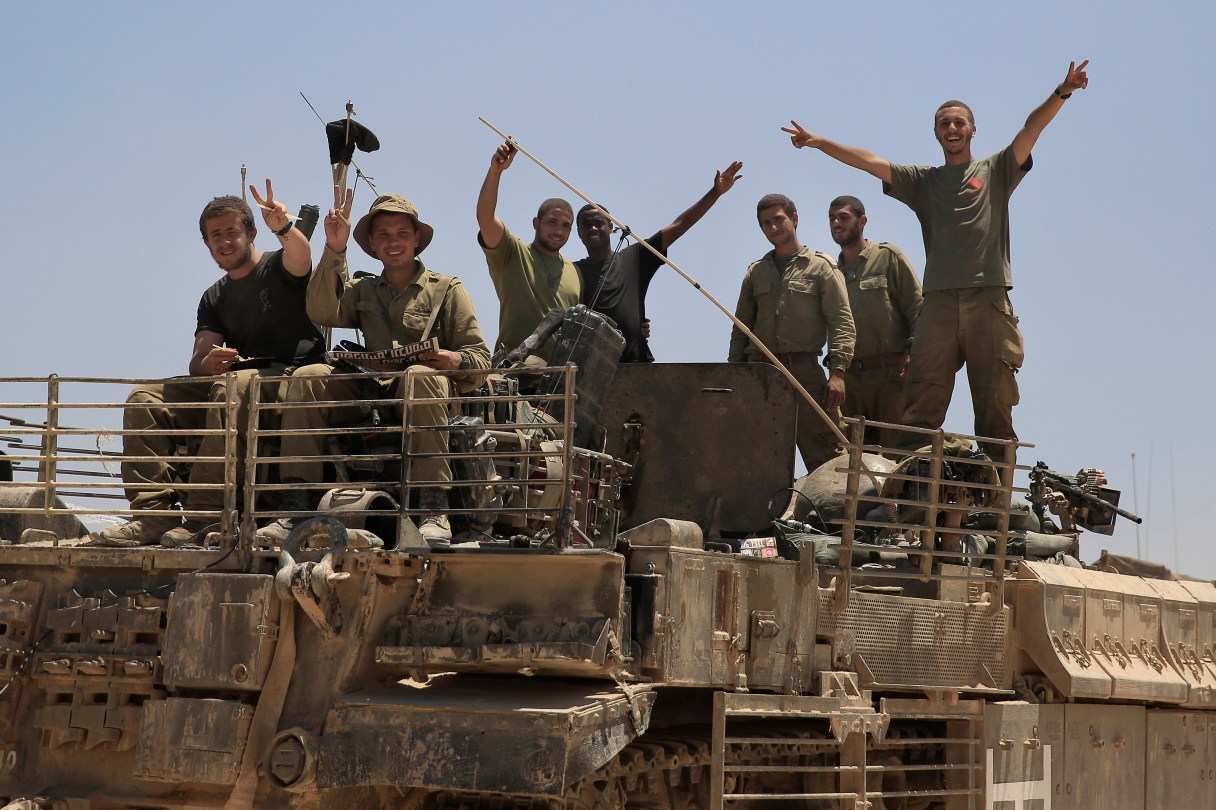
TEL AVIV, Israel (AP) – The savage fighting between Israel and Hamas is escalating in Gaza, cease-fire efforts take on elements of farce, and bravado rules the public discourse. But even through the fog of war, a few endgame scenarios can nonetheless be glimpsed.
For the moment, the deadlock is well-entrenched: As long as the crippling blockade of Gaza remains in place, Hamas says it will continue firing rockets at Israel – terrifying but mostly ineffectual, thanks to the “Iron Dome” defense system. Israel says the blockade must stay to stop a terrorist government from importing yet more weapons.
There is not much pressure on either side to stop – even in Gaza, where more than 1,200 people, mainly civilians, have been killed, amid widespread devastation. An Egyptian-led cease-fire plan more than two weeks ago, which Israel accepted and was a straight return to the status quo before this current round – was rejected by Hamas, and there was little criticism of that decision in Gaza. Such is the hatred of the air, land and sea blockade in the strip – in addition, perhaps, to the fear of Hamas.
Last week’s mediation effort led by John Kerry fizzled amid a most undiplomatic frenzy of criticism in Israel of the U.S. secretary of state. He had dared suggest Hamas’ blockade-ending demands be on the table. He also had ignored Israel’s new demands – probably long-term at best – that the militant group be disarmed.
While it is too early to say how all this will end, quiet diplomacy continues. There also is a growing sense that it can’t go on much longer – but then again, it might.