
Saturday, November 14, 2026Nov 14

Khmer Rouge tribunal clears way for genocide trial

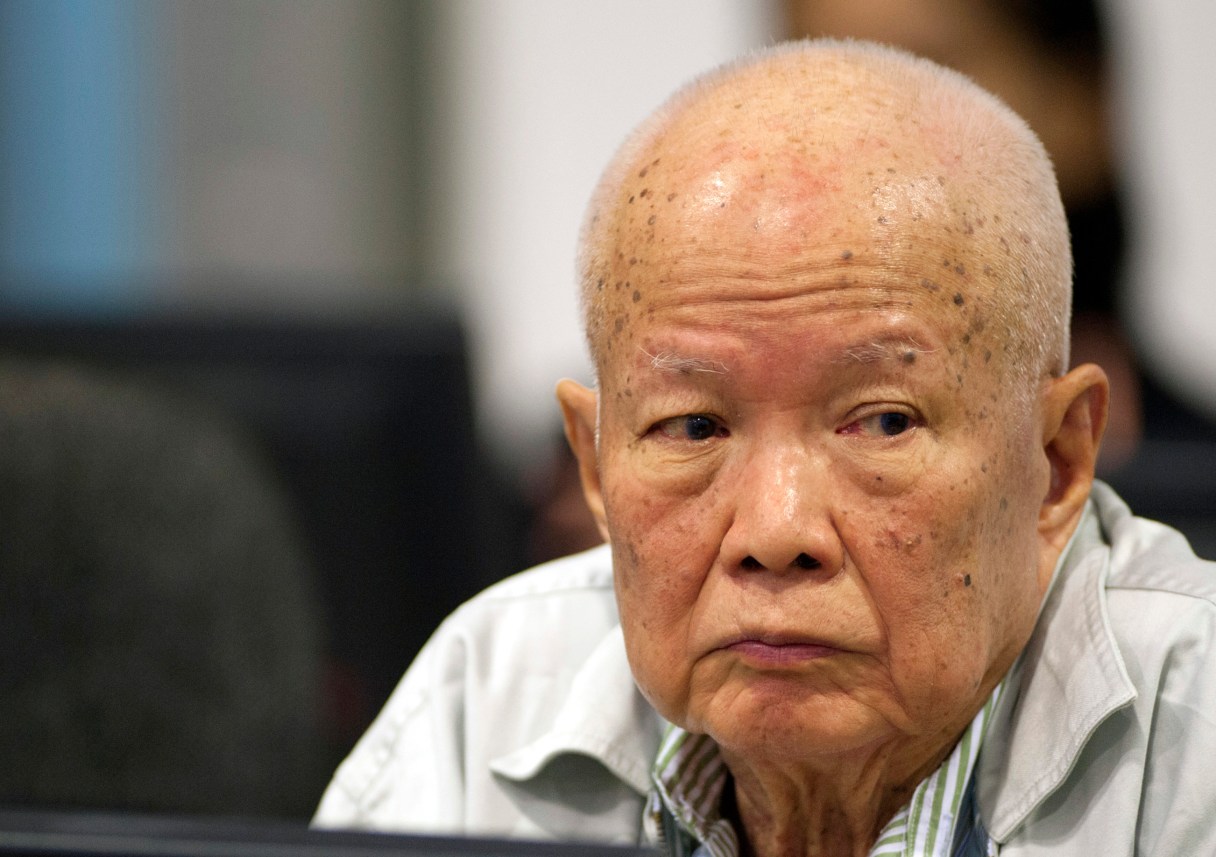
In this photo released by the Extraordinary Chambers in the Courts of Cambodia, Khieu Samphan, former Khmer Rouge head of state, sits in the court room during a hearing at a U.N.-backed war crimes tribunal in Phnom Penh, Cambodia, Wednesday, July 30, 2014. The U.N.-backed tribunal on Wednesday began a hearing to prepare for the genocide trial of the two senior surviving leaders of Cambodia's Khmer Rouge, under whose rule an estimated 1.7 million people died in the late 1970s from starvation, exhaustion, disease and execution. (AP Photo/Extraordinary Chambers in the Courts of Cambodia, Mark Peters)

PHNOM PENH, Cambodia (AP) – A United Nations-assisted tribunal on Wednesday cleared the way to begin the genocide trial of two elderly former top leaders of Cambodia’s 1970s Khmer Rouge regime.

Survivors of the communist regime’s reign of terror, along with students and Buddhist monks, attended a hearing that laid down the ground rules for the trial, which judges said would likely start in September or October.

The defendants, Khieu Samphan, 83, and Nuon Chea, 88, were in the top leadership of the 1975-79 regime, which is generally held responsible for the deaths of about 1.7 million people from starvation, exhaustion, disease and execution.

The two are scheduled to hear the verdict next week of a first trial against them for war crimes and crimes against humanity, related mostly to the forced movement of millions of people to the countryside when the Khmer Rouge took power.

At Wednesday’s hearing, the chief judge, Nil Nonn, read out the new charges before lawyers began debating witness lists, reparations requests and procedural objections.