
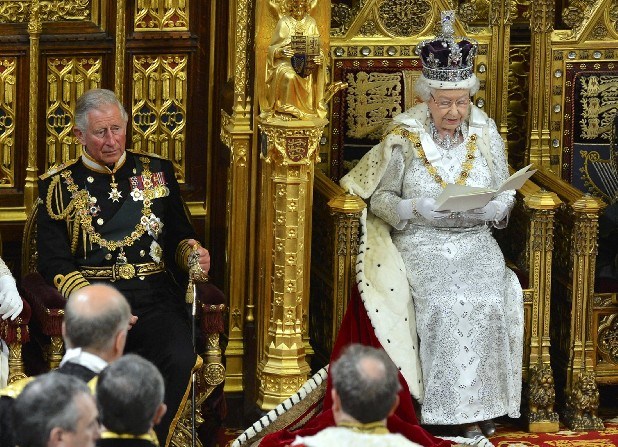
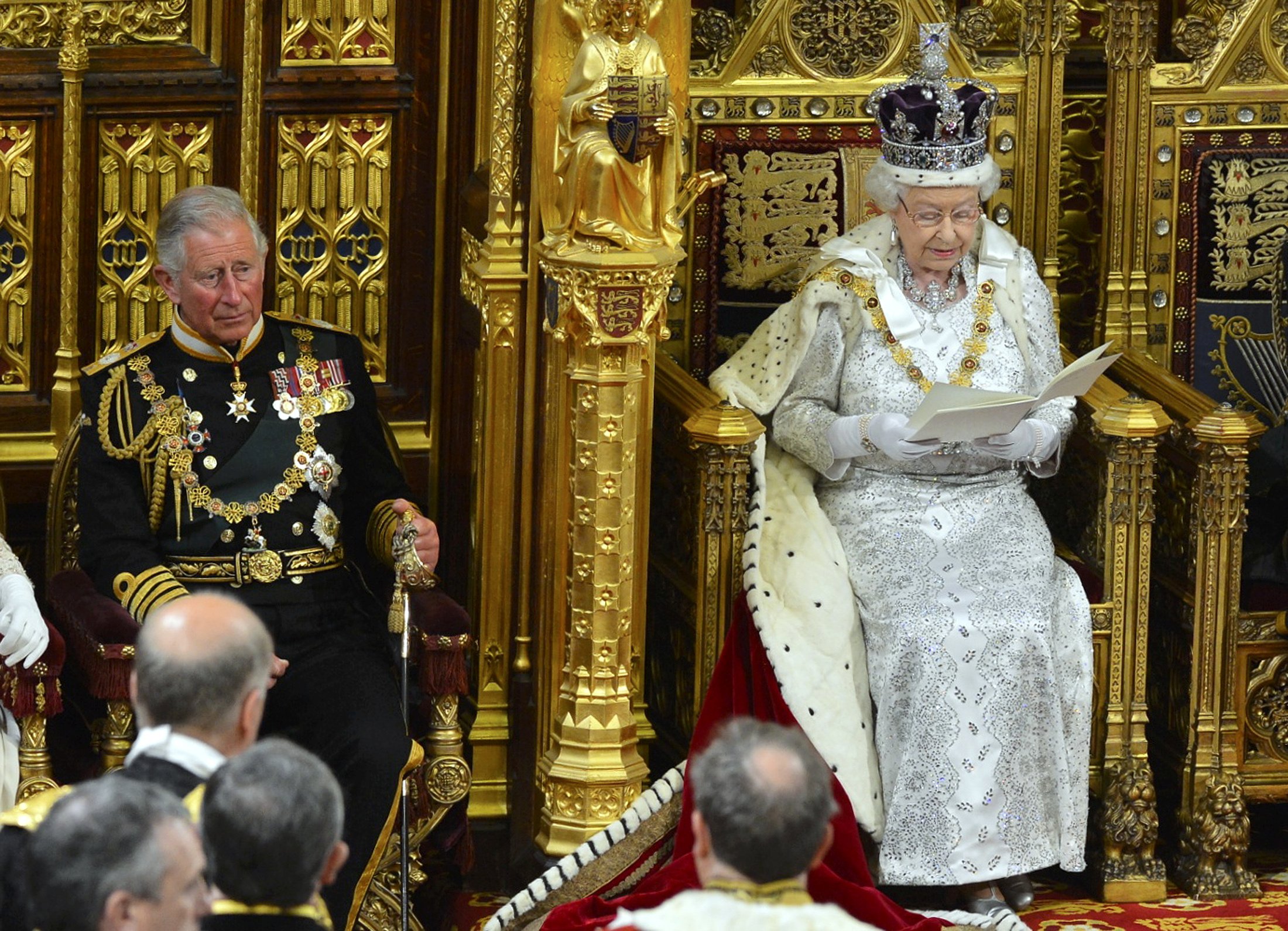
 Britain’s Queen Elizabeth as delivers a speech during the State Opening of Parliament at the House of Lords, alongside Prince Charles in London. Spanish King Juan Carlos’ decision to step down on Monday in favor of his son, Felipe, makes him the latest European monarch to decide to end his days in retirement and not on the throne. Did then-Queen Beatrix of the Netherlands start a trend toward retiring royalty when she announced her abdication. She was quickly followed by her Belgian counterpart King Albert and now Juan Carlos. Although there are still monarchs – most notably Britain’s Queen Elizabeth II – who consider they have a job for life, the idea that royalty should come with a retirement plan appears to be taking hold across Europe.
THE HAGUE, Netherlands – The decision of Spanish King Juan Carlos to step down in favor of his son, Felipe, makes him the latest European monarch to decide to end his days in retirement and not on the throne.
Queen Beatrix of the Netherlands may have started a trend toward retiring royalty when she announced her abdication last year after a 33-year reign. She was quickly followed by her Belgian counterpart, King Albert, and on Monday by Juan Carlos.
In between those royal retirements, Pope Benedict XVI shocked the Catholic world by becoming the first pontiff in 600 years to step down.
There are still monarchs – most notably Britain’s 88-year-old Queen Elizabeth II – who consider they have a job for life, but others clearly believe that their privileged position also should come with a retirement plan.
Here are some questions and answers about why some of the continent’s kings and queens are quitting while others remain resolutely seated on their thrones.