
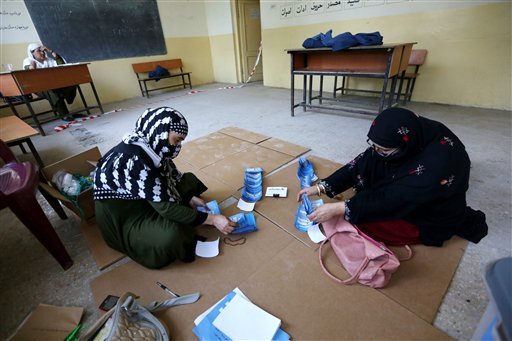
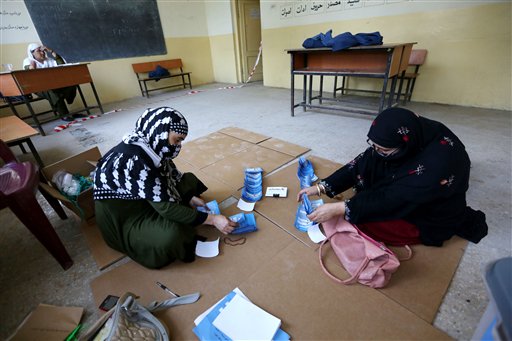
 Afghan election workers counts ballots in the presidential runoff at a polling station in Jalalabad, east of Kabul, Afghanistan, Saturday, June 14, 2014. Despite Taliban threats of violence, many Afghans vow to cast ballots in Saturday’s presidential runoff vote with hopes that whoever replaces Hamid Karzai will be able to provide security and stability after international forces wind down their combat mission at the end of this year.
KABUL, Afghanistan – Afghans braved threats of violence and searing heat Saturday to vote in a presidential runoff that likely will mark the country’s first peaceful transfer of authority, an important step toward democracy as foreign combat troops leave. The new leader will be challenged with trying to improve ties with the West and combating corruption while facing a powerful Taliban insurgency and declining international aid.
Abdullah Abdullah, who emerged as the front-runner with 45 percent of the vote in the first round, faced Ashraf Ghani Ahmadzai, an ex-World Bank official and finance minister. Neither garnered the majority needed to win outright, but previous candidates and their supporters have since offered endorsements to each, making the final outcome unpredictable.
The two men differ more in personality than policy. Both promise to sign a long-delayed security pact with the United States, which President Hamid Karzai has rebuffed. That would allow nearly 10,000 American troops to remain in the country for two more years to conduct counterterrorism operations and continue training and advising the ill-prepared Afghan army and police. And both pledge to fight for peace and against corruption.
But their different ethnic backgrounds have highlighted the tribal fault lines in this country of 30 million ravaged by decades of war.
“I voted today for my future, because it is still not clear – the country is at war and corruption is everywhere and security is terrible. I want the next president to bring security above all and jobs,” said Marya Nazami, who voted for Ahmadzai.