
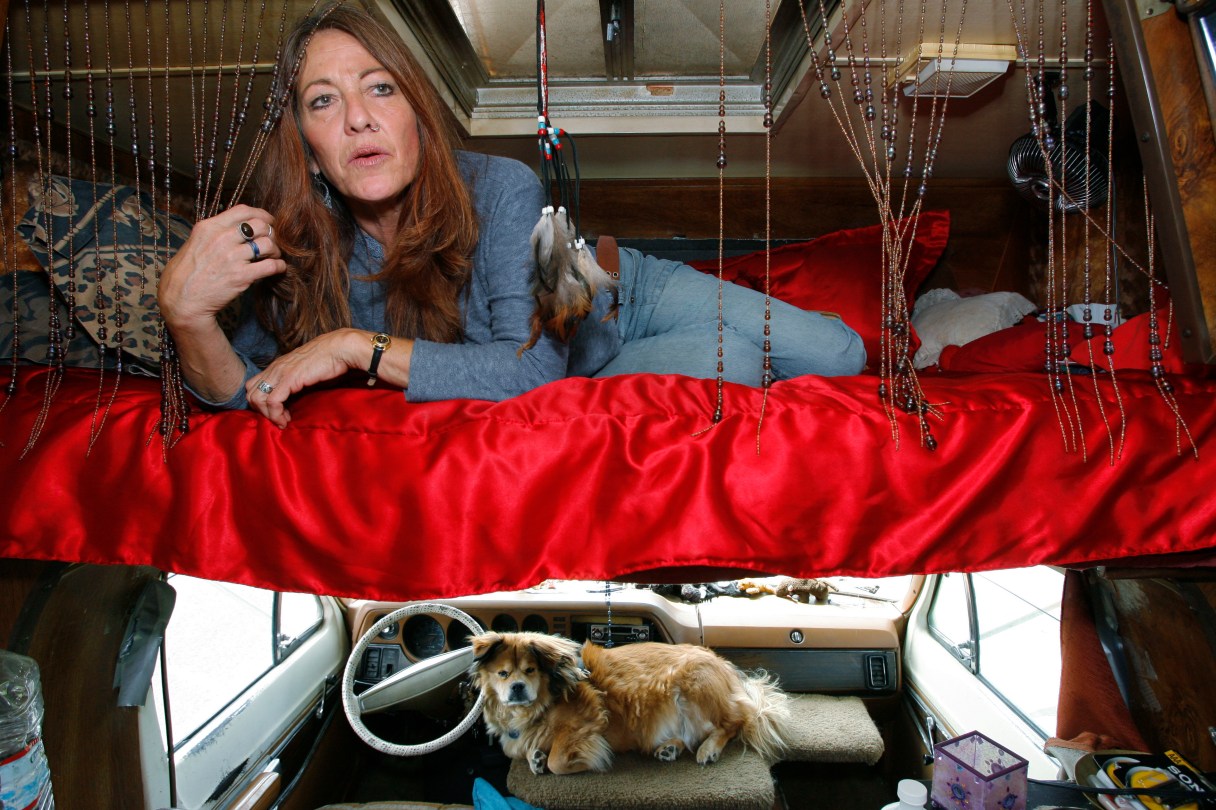
SAN FRANCISCO (AP) – A federal appeals court on Thursday struck down a 31-year-old Los Angeles law that bars people from living in parked vehicles, saying the vaguely written statute discriminates against the homeless and poor.
The ruling by a three-judge panel of the 9th U.S. Circuit Court of Appeals involved a 1983 law that prohibits the use of a vehicle “as living quarters either overnight, day-by-day, or otherwise.”
The court said the law was unconstitutional because its ambiguous wording does not make clear what conduct would constitute a violation and “criminalizes innocent behavior.”
The decision came in a case brought on behalf of four people who were cited and arrested in the Venice area by Los Angeles police officers who concluded the numerous belongings in their RVs and cars meant they were violating the law.
“Is it impermissible to eat food in a vehicle? Is it illegal to keep a sleeping bag? Canned food? Books? What about speaking on a cellphone? Or staying in the car to get out of the rain?” Judge Harry Pregerson wrote for the panel. “These are all actions plaintiffs were taking when arrested for violation of the ordinance, all of which are otherwise perfectly legal.”