
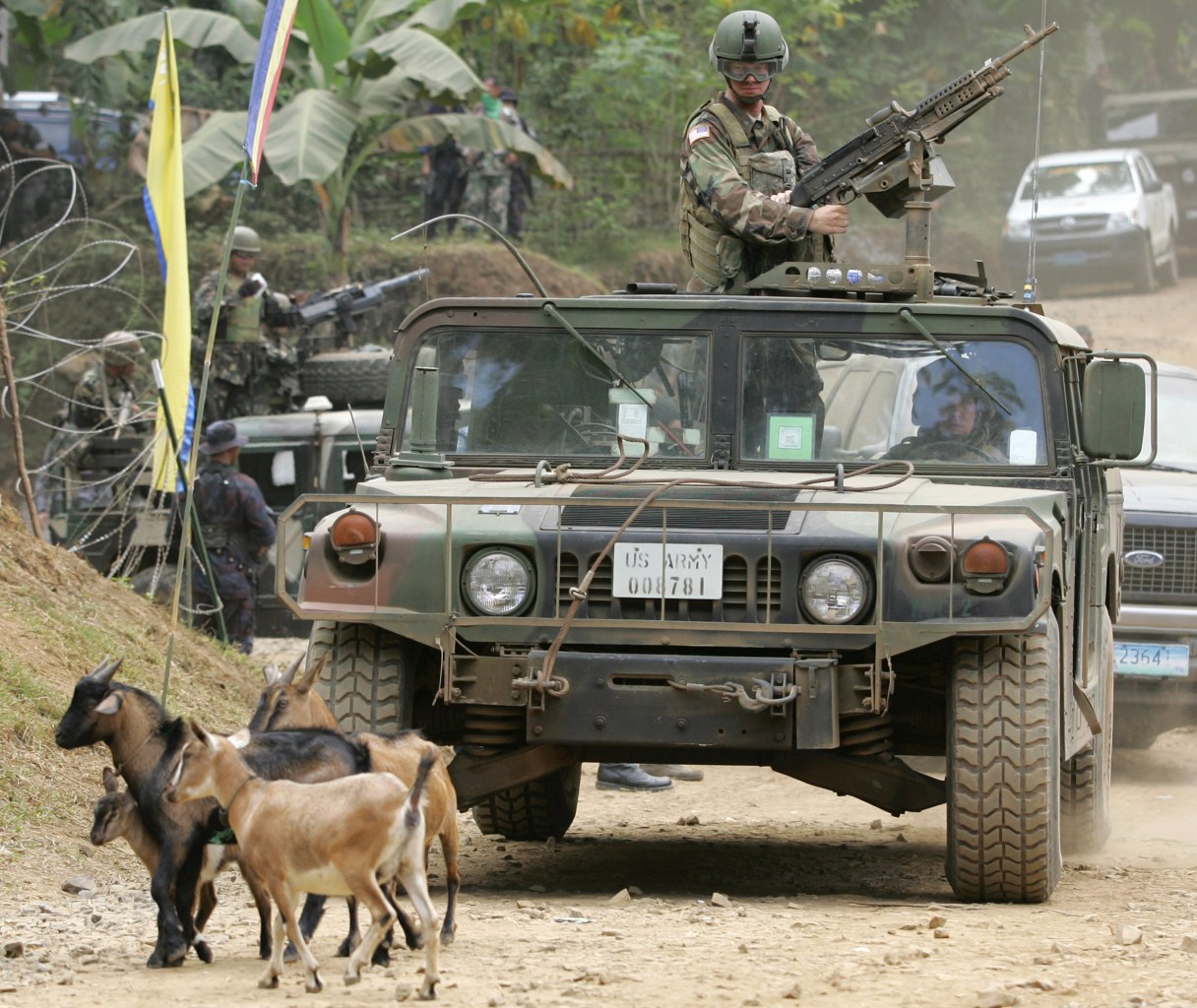
MANILA, Philippines (AP) – After more than a decade of helping fight Islamic militants, the United States is disbanding an anti-terror contingent of hundreds of elite American troops in the southern Philippines where armed groups such as Abu Sayyaf have largely been crippled, officials said Thursday.
But special forces from the U.S. Pacific Command, possibly in smaller numbers, will remain after the deactivation of the Joint Special Operations Task Force Philippines (JSOTF-P), to ensure al-Qaida offshoots such as Abu Sayyaf and the Indonesia-based Jemaah Islamiyah do not regain lost ground, according to U.S. and Philippine officials.
The move marks a new chapter in the long-running battle against an al-Qaida-inspired movement in the southern Philippines, viewed by the U.S. as a key front in the global effort to keep terrorists at bay. It reflects shifting security strategies and focus in economically vibrant Asia, where new concerns such as multiple territorial conflicts involving China have alarmed Washington’s allies entangled in the disputes.
A year after the Sept. 11, 2001, terrorist attacks, the U.S. military established the task force in the southern Philippines to help ill-equipped Filipino forces contain a bloody rampage by Abu Sayyaf gunmen, who carried out bombings, terrorized entire towns and kidnapped more than 100 people, including three Americans.
Although U.S. forces are barred by the Philippine Constitution from engaging in combat, the advice, training, military equipment and intelligence, including drone surveillance, that they provided helped the underfunded Philippine military beat back the Abu Sayyaf. U.S.-backed Philippine offensives whittled the militants’ ranks from a few thousand fighters – mostly drawn from desperately poor hinterland villages – to about 300 gunmen, who survive on extortion and kidnappings for ransom while dodging military assaults.