
Sunday, November 1, 2026Nov 1

This story is free to read.

Benghazi suspect’s court case could offer clarity

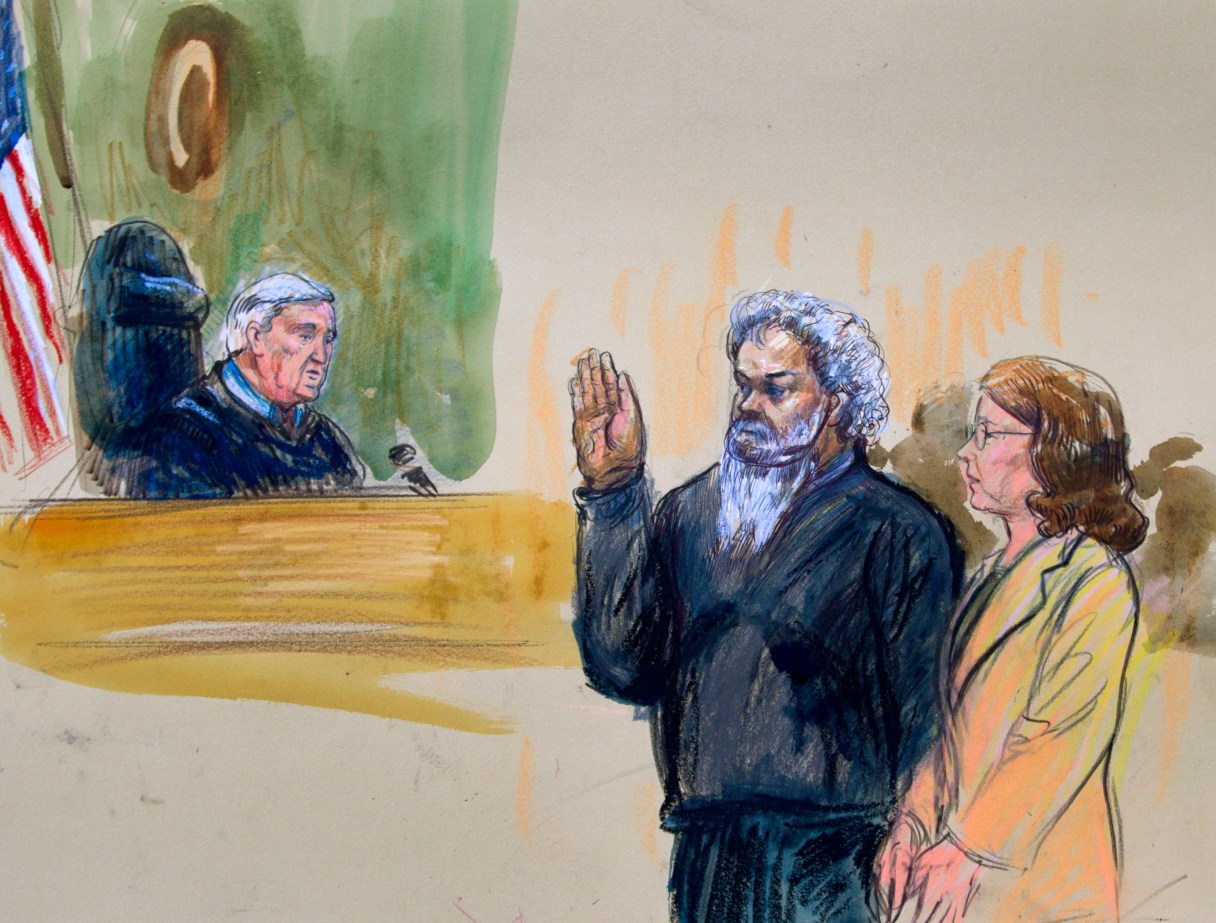
This artist's rendering shows United States Magistrate, Judge John Facciola, swearing in the defendant, Libyan militant Ahmed Abu Khatallah, wearing a headphone, as his attorney Michelle Peterson looks on during a hearing at the federal U.S. District Court in Washington, Saturday, June 28, 2014. The hearing of the Libyan accused of masterminding deadly Benghazi attacks, lasted ten minutes; he pled not guilty to conspiracy Saturday at his first appearance in U.S. court. (AP Photo/Dana Verkouteren)
This artist's rendering shows United States Magistrate, Judge John Facciola, swearing in the defendant, Libyan militant Ahmed Abu Khatallah, wearing a headphone, as his attorney Michelle Peterson looks on during a hearing at the federal U.S. District Court in Washington, Saturday, June 28, 2014. The hearing of the Libyan accused of masterminding deadly Benghazi attacks, lasted ten minutes; he pled not guilty to conspiracy Saturday at his first appearance in U.S. court. (AP Photo/Dana Verkouteren) This artist's rendering shows United States Magistrate, Judge John Facciola, swearing in the defendant, Libyan militant Ahmed Abu Khatallah, wearing a headphone, as his attorney Michelle Peterson looks on during a hearing at the federal U.S. District Court in Washington, Saturday, June 28, 2014. The hearing of the Libyan accused of masterminding deadly Benghazi attacks, lasted ten minutes; he pled not guilty to conspiracy Saturday at his first appearance in U.S. court. (AP Photo/Dana Verkouteren)

WASHINGTON (AP) – A court appearance for the alleged mastermind of the attacks on the U.S. mission in Benghazi, Libya, is the first step in a long legal process that could yield new insight into a fiery assault that continues to reverberate across U.S. politics.

The case of the suspect who pleaded not guilty during a brief court appearance Saturday, Ahmed Abu Khattala (hah-TAH’-lah), also represents a high-profile test of the Obama administration’s goal of prosecuting terror suspects in civilian courts.

Republican critics say such defendants aren’t entitled to the protections of the American legal system.

Abu Khattala made his first appearance in an American courtroom amid tight security, two weeks after being captured by U.S. special forces. He was flown from a U.S. ship to Washington and brought to the federal courthouse.