
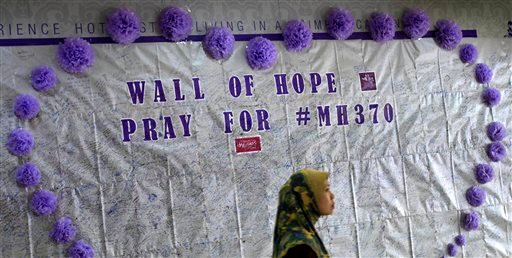
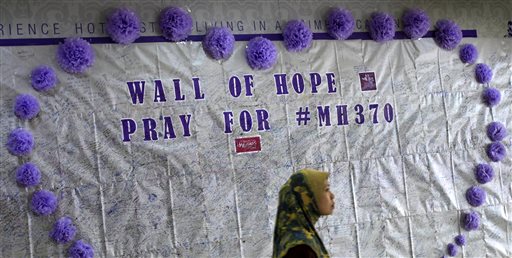
 A woman walks past a message board for passengers aboard a missing Malaysia Airlines plane, at a shopping mall in Kuala Lumpur, Malaysia, in this March 23, 2014 photo.
DALLAS – Reinforced doors with keypad entries. Body scanners and pat-downs. Elaborate crew maneuvers when a pilot has to use the restroom. All those tactics are designed to keep dangerous people out of the cockpit. But what if the pilot is the problem?
With no answers yet in the disappearance of Malaysia Airlines Flight 370; investigators have said they’re considering many options: hijacking, sabotage, terrorism or catastrophic equipment failure. Nobody knows if the pilots are heroes who tried to save a crippled airliner or if one collaborated with hijackers or was on a suicide mission.
Whatever the outcome, the mystery has raised concerns about whether airlines and governments do enough to make sure that pilots are mentally fit to fly.
“One of the most dangerous things that can happen is the rogue captain,” said John Gadzinski, a Boeing 737 captain and aviation-safety consultant. “If you get somebody who – for whatever reason – turns cancerous and starts going on their own agenda, it can be a really bad situation.”
Malaysia Airlines said this week that its pilots take psychological tests during the hiring process.