
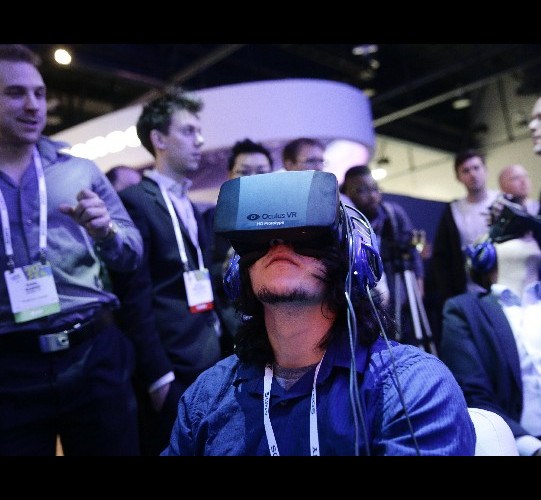
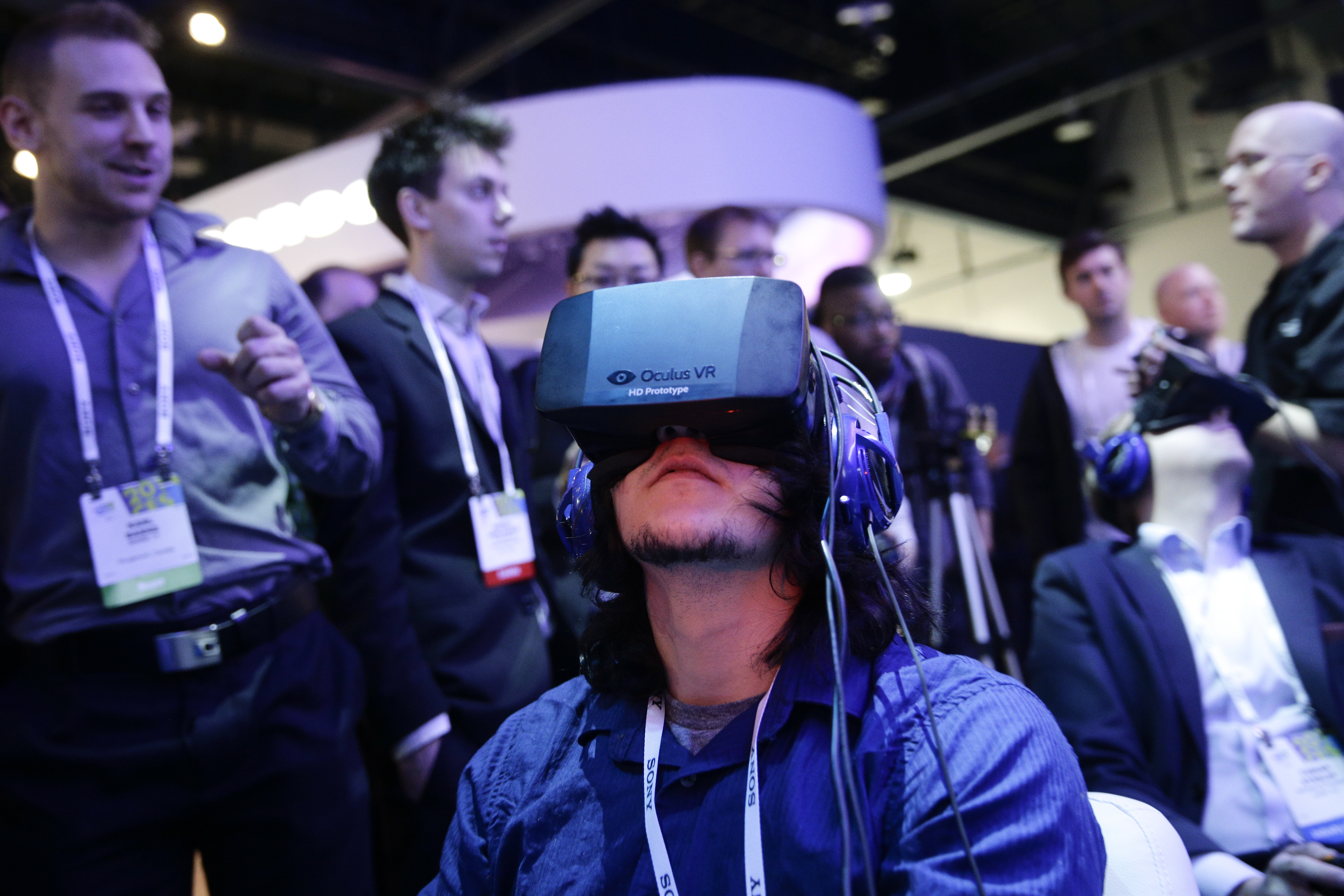
 Aattendees play a video game wearing Oculus Rift virtual reality headsets at the Intel booth at the International Consumer Electronics Show (CES), in Las Vegas in January. Facebook has agreed to buy Oculus for $2 billion, betting that its virtual reality may be a new way for people to communicate, learn or be entertained.
NEW YORK – Facebook’s latest multibillion dollar acquisition of virtual reality headset maker Oculus is prompting some people to wonder if CEO Mark Zuckerberg is already living in an alternate reality.
Longtime technology analyst Roger Kay wonders whether Zuckerberg “is nuts” for agreeing to pay $2 billion for Oculus less than five weeks after inking a deal to buy WhatsApp for $19 billion.
Oculus, which got its start on the crowdfunding site Kickstarter, doesn’t have a consumer product on the market, just the promise of bulky virtual reality goggles that have generated huge buzz in the video gaming community.
Zuckerberg, for his part, sees long-term implications in the technology, for communication, entertainment and beyond. He was right about mobile, and he’s created the world’s biggest online social network.
So, is he looney, or visionary?