
Naked and Afraid. Man vs. Wild. Survivors. Nearly every station, every primetime viewing hour holds the threat-and triumph-of man surviving on little more than his wit. Our society is undergoing a “back to basics” shift in many ways. But when it comes to surviving in situations you didn’t expect, that mentality should really only be applied for TV ratings, says local wildlife survivalist counselor Seth Weller. Especially when something as small as a pocket-size water purifier can have a huge impact on whether you live or die.
“There are a billion different ways out there to build fires, purify water, find food. Instead of going way back against technology … you don’t have to get primitive when you have just a little bit of technology.”- Seth Weller, wildlife survivalist counselor
Even Bear Grylls will tell you that water trumps wit. Just remember the “rule of three”-your body can go up to three minutes without air, three days without water and three weeks without food. “That’s in a normal situation. In a highly stressed situation that drops in half,” says Weller. He’s spent the last six years teaching the boys of Pack 111 how to survive on their own in nature … with a few key items. He offers such items, in addition to classes, in his shop off East Brainerd Road, P5 Preparedness.
“P5 stands for proper planning prevents poor preparedness,” he explains. “Everybody goes back to this bushcraft. But if you think about that when you’re leaving the house, you don’t have to worry about having to make a bow fire.” My real-life research over the course of this survivalist series has taught me that even 40-year Scoutmasters have trouble making fire by rubbing wood together.
When it comes to purifying water, Weller recommends a mini filter for its compactness and simplicity. Iodine tablets are the most compact, he says, but the “water tastes like crap.” Similarly, UV light “kills just about everything in the water but still leaves granulates.” Boiling water-at a rolling boil for at least three minutes-is the fastest and easiest, he says … once you get the fire built. Regardless of the method you use, Weller says you should always purify water before you drink it. “You’re in a bad situation as it is. Do you really want to make it worse?” he asks. In the times gone by that so many of those survivalist shows harken to, and still today in many parts of the world, some of the biggest causes of death are bacteria, often ingested with tainted food or drinking water.
Should you find yourself in the woods without the drinking water you should have brought with you, don’t fret (too much).
“The benefit of being where we’re at is that water is abundant,” says Weller. “You’re almost always going to be able to find a creek- or streambed.” If you come across a dry bed, look for the direction the water flowed, then follow it. The presence of wildlife means you’re within a few miles of water, he adds. Despite what you’ve seen on TV, Weller says you’ll be hard-pressed to track or even follow animals potentially to the source, so start walking downhill, as that’s the way water flows. “If you go downhill, there’s a good chance you’re going to be able to find water,” he says. You can also try to collect water using various essentially primitive methods: squeezing it from moss found under rocks, digging a hole about a foot deep and in diameter, tapping certain plants. Among the few basic things Weller keeps in his pack is a clear plastic sheet (plus at least one contractor bag). Securing the sheeting while leaving an indentation will allow you to easily collect rainwater. Even under clear skies you can collect condensation by placing the sheeting over yourself or a (non-poisonous) leafy plant-still leaving an indentation- but that will take awhile.
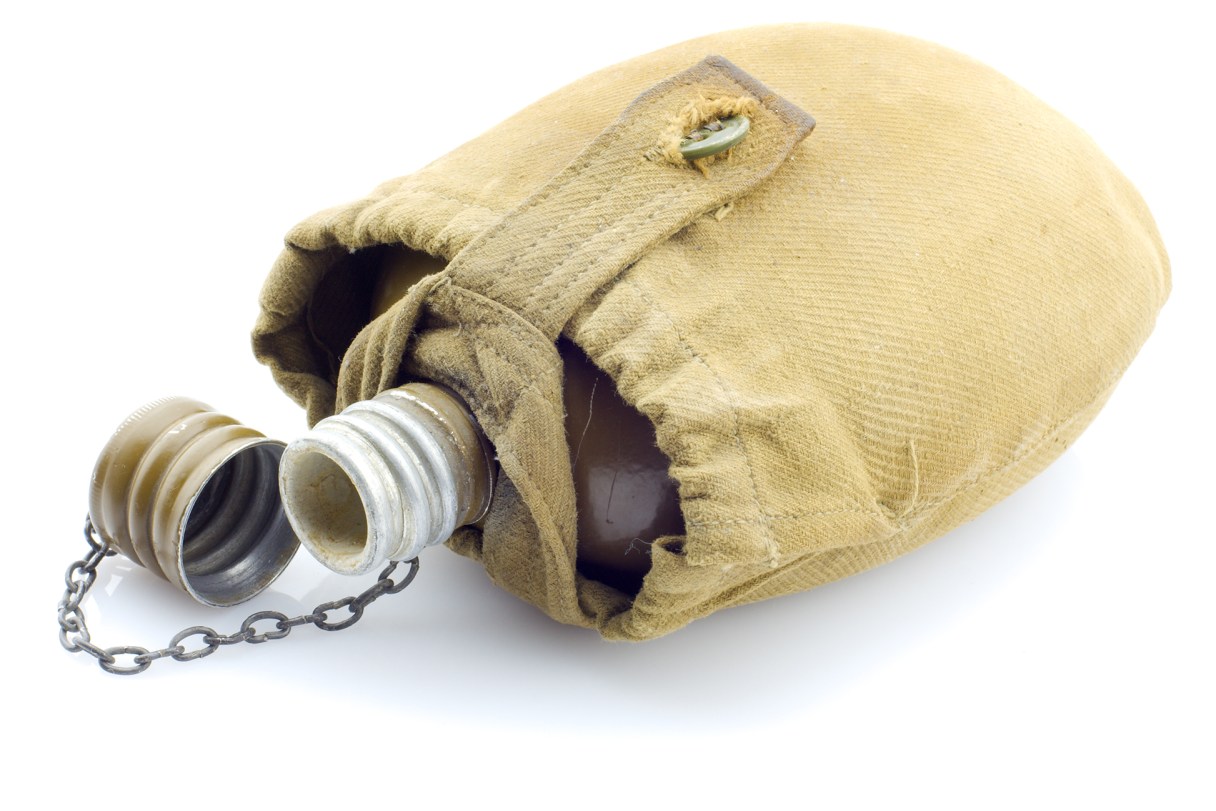
Weller’s also sure to have “something to hold water and heat water.” Keep in mind that if you opt for the mini filter he recommends, which uses a bag to help treat the water, he says you’ll need another container in order to actually drink it. Same if you go with the boiling method. Unless you want- and remember-to wait as the receptacle cools down to a manageable temperature.
Other things he recommends in every pack are a fire starter (he carries at least three), pocketknife, flashlight with extra batteries, rain gear and basic first aid kit; basic being a small roll of duct tape (something to cover up small wounds),
Neosporin (disinfectant) and semi-large bandages (for major issues). Much like the poncho, you’ll also need a hat if it’s cold, to protect you from exposure, he says. “You get dehydrated through exposure,” says Weller. “Dehydration is the No. 1 killer, along with lack of proper mindset.”
This mindset reaches beyond the situations portrayed in the slew of survivalist shows, earned through Boy Scout merit badges and encountered essentially “naked and afraid” somewhere off your trail, he adds. Remember the states of emergency brought on by recent tornadoes and snowstorms? Even just the havoc a busted water main or prolonged power outage can cause? Then remember to be prepared.