
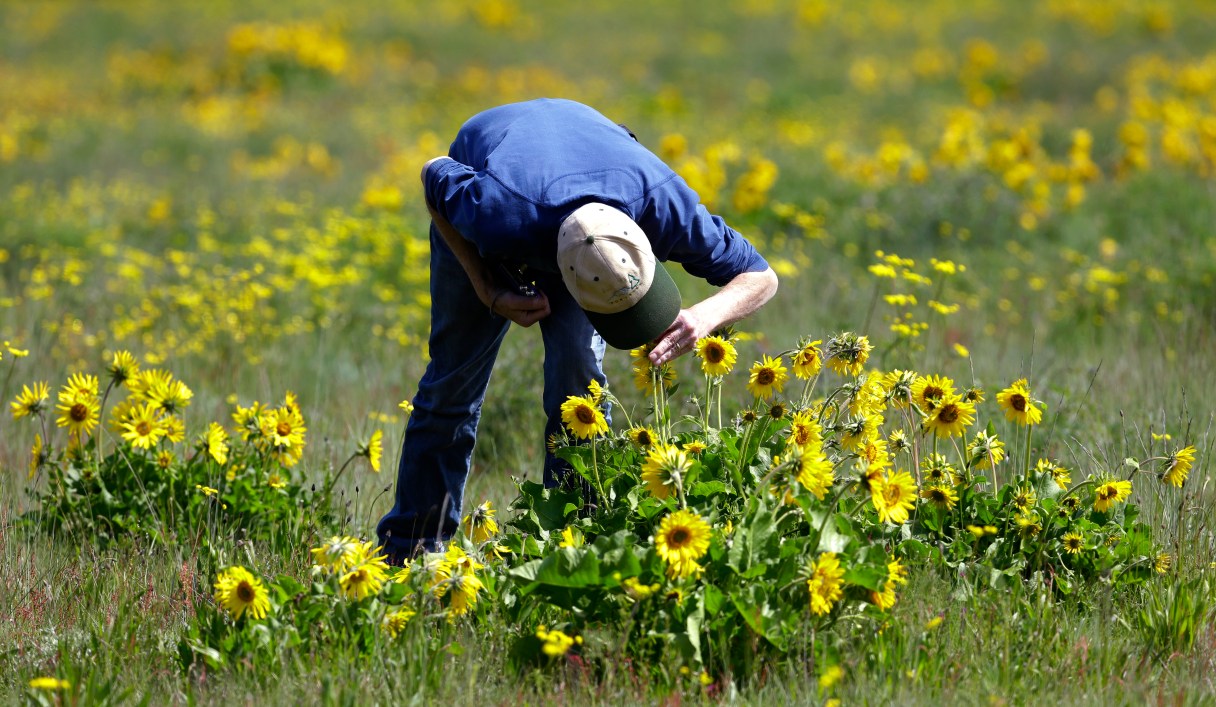
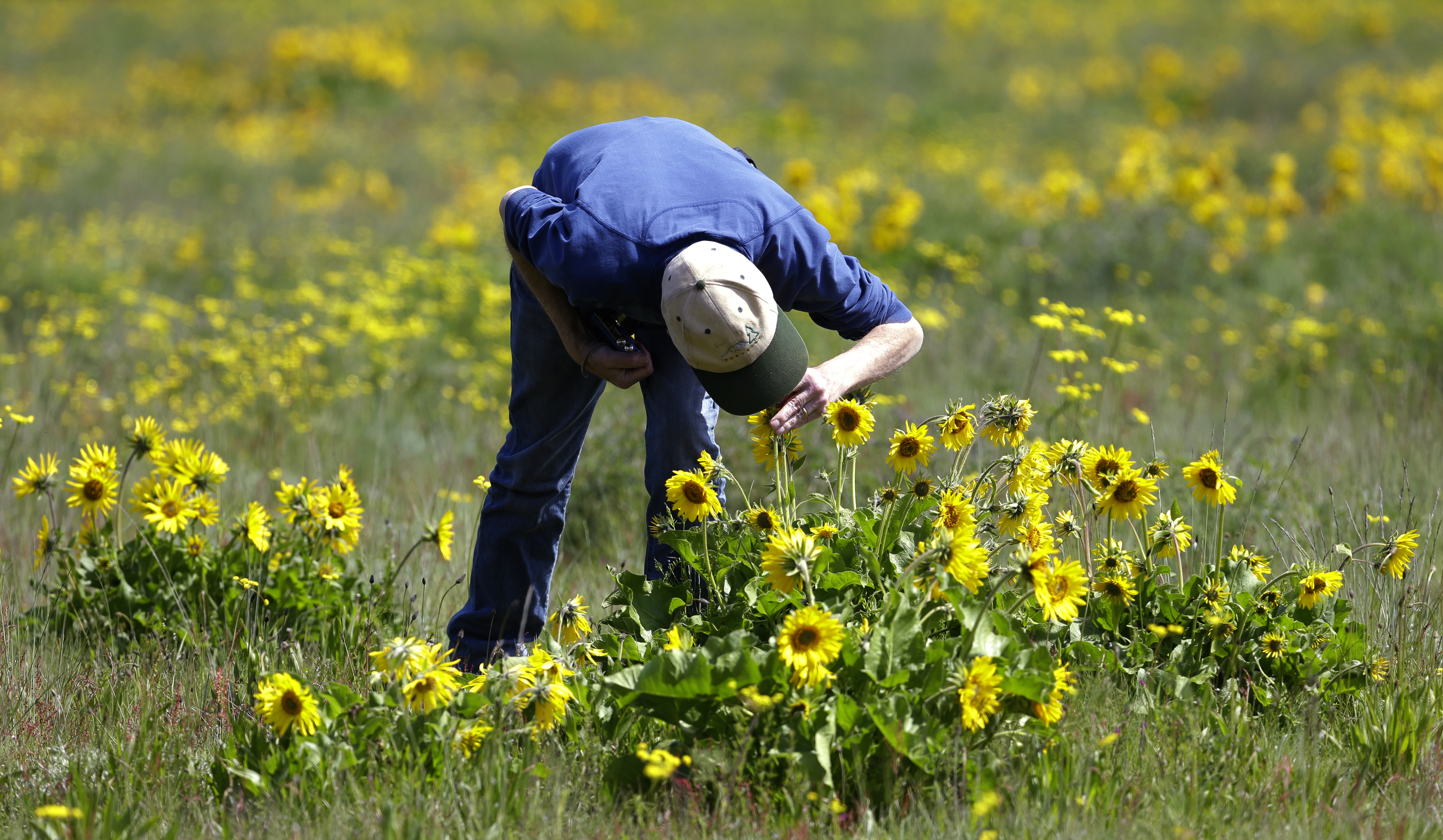
 In this photo taken May 7, 2014, Jeffrey Foster, an ecologist at Joint Base Lewis-McChord, Wash., bends to smell a Puget balsamroot flower walks growing in an undeveloped prairie area used for military training at the base, which also happens to be one of the few areas in the country where the federally listed endangered Taylor’s checkerspot butterfly lives. The Army has been working to boost the numbers of the butterflies, in part because the presence of the insect could impact current training practices.
By PHUONG LE
Associated Press
JOINT BASE LEWIS-MCCHORD, Wash. – An undeveloped stretch of native prairie in south Puget Sound offers one of the few habitats in the world where a two-inch colorful checkered butterfly thrives. It also happens to be the main artillery impact range for Joint Base Lewis-McChord.
The Army’s Stryker combat brigade and other troops regularly practice military maneuvers and live-fire training on acres of scenic, open grassland where a small population of Taylor’s checkerspot butterfly feed on nectar of native blooms, mate and lay eggs.
The butterfly’s listing as a federal endangered species last fall “has the potential to cause major restrictions on training,” said Jeffrey Foster, an ecologist at the military installation.