
Melissa Benson gets chills just thinking about it. When she and the Hamilton County Sheriff ‘s Mounted Patrol march in the yearly Law Enforcement Memorial Parade, the hustle and bustle of downtown Chattanooga ceases. When crowds line the streets, Benson swears all you can hear are the click-clack of the horses’ hooves on the concrete.
“It’s a somber thing we do, that should be done every year,” she says. “It’s indescribable how it makes me feel. Like God is letting everyone know to pay attention and to take it easy here.”
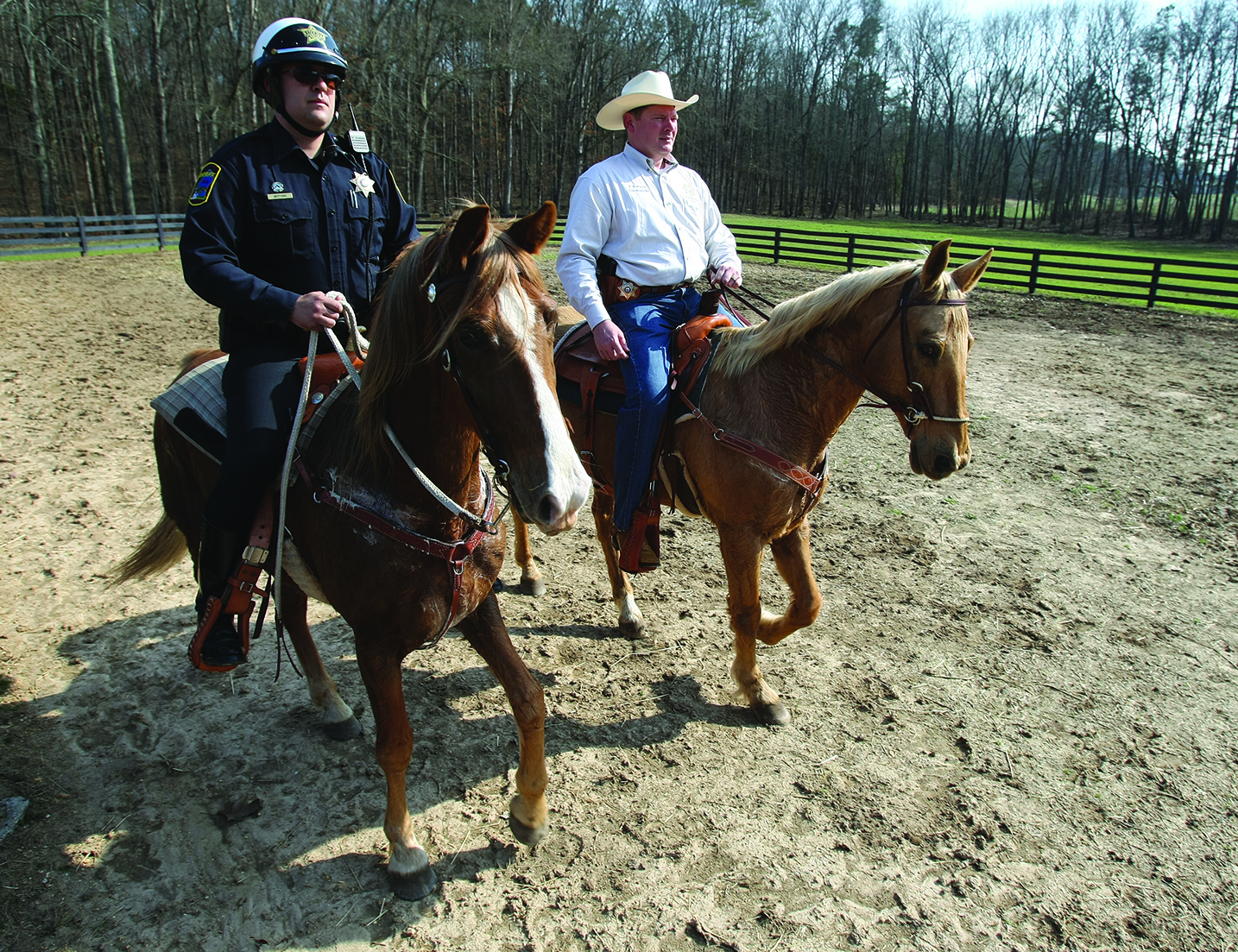
The Mounted Patrol division of the sheriff ‘s department dons uniforms and badges, and carries handcuffs. On the back of a horse, the trained officers can employ techniques to move or control a crowd, break up a fight or even arrest someone. All from horseback.
They aren’t utilized often; unfortunately or not, the call to have them and their services at the Riverbend Festival every summer stopped coming. In times of ATVs and tech- nology, their services are less useful in search efforts. But they will come out for the county fair, parades and in the tragic time of loss. Many of them wouldn’t miss an opportunity to support their community.
“My two loves are animals and law enforcement, so I managed to find something to do like this,” Benson says. She worked for 15 years with the Chattanooga Police Department’s Animal Services. When the city bid those services out to McKamey, she moved on.
“And I just happened to hear the county wanted to have a mounted patrol and I jumped on,” she said.
After the city’s mounted patrol disbanded in the late 80s, current sheriff Jim Hammond sought to bring it back in 2008. While other patrols around the country were falling to the wayside, shrinking or being defunded in larger cities, Chattanooga’s was just reimagining itself. The division consists of five mounted horses, trained to provide search service in remote areas, during parades and ceremonies and in the case of military-style processionals.
Captain Lynn Triplett, who oversees the patrol division, and by default, the mounted patrol, says they approached interested people who have horses.
“These were people’s pets. They were trained to do this job that needs to be done,” he says. “And they volunteer for this. It’s a win-win for us.”
Benson, a self-proclaimed horse person who’s been around them her whole life, already has a deep partnership with her horses. She cares for them daily and is more than familiar with riding. But training for mounted patrol brought her even closer to her horse.
“Anytime I get on the back of my horse, I’m learning something new,” she said. “We do a lot of training, but it’s a constant learning experience. When you’re on mounted patrol, in a place like Riverbend, you’re not in that horse’s natural environment. You’re far from it. So that relationship with your horse is important.”
What caused the city’s very popular and very successful horse patrol to shutter boiled down to resources. Chief Deputy Alan Branum explains that for the modern law enforcement agency, it’s hard to keep up a horse stable and, in the case of Hamilton County, difficult to use them as regular patrolling units.
“They are very expensive to upkeep and [are] taxing,” Branum said. “But now, with volunteer units, we furnish the training and the equipment. The owner and officer is responsible for their horse.”
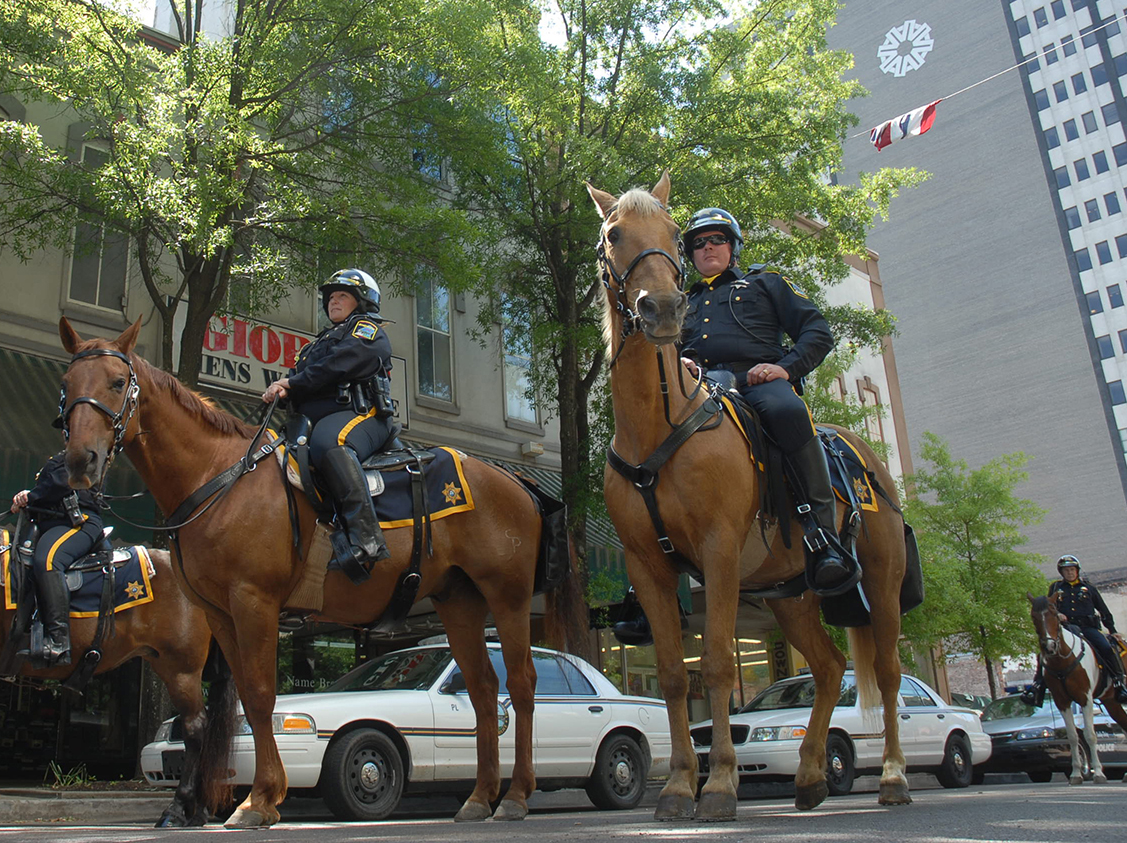
Lieutenant Mark King, who oversees a patrol division, SWAT and all reserve officers, including the mounted patrol, says that regardless of their use, the mounted patrol is honored and revered.
“These people put in at least 80 hours of training. I want them to be able to work as well as an officer as anyone else,” he says. “We focus on training for law enforcementservices, like they do in larger cities like New Orleans or New York City. And they are useful in special events.”
King has a history with horses, doing a little rodeo and horse competing in the past. That’s why he’s responsible for the mounted patrol volunteers.
“These are fully trained officers with skills. One of the things we looked at was, what are all of the things you can do from the back of a horse? I was so surprised. You can actually handcuff someone while sitting on a horse,” he says. “These dedicated volunteers really have skills that are useful and even unique. I like that about their service.”
And as unpaid service men and women, they’ll even volunteer their time while not on a horse. They’ll aid in search efforts. They’ll care, King says.
“They are historically horse people and they are very knowledgeable about their horses and what they can do,” he adds. “And they are purely volunteers, which is what makes them so valuable to us.”
And they are valuable to the community too. When the Law Enforcement Memorial Parade was rained out and moved indoors this year, the ceremonial aspect of their job was missed by those families affected by loss who are comforted by it every year. They are highly respected by all other law enforcement agents, and supported by them, regardless of their use.
“We are so proud of them. They go to competitions, one of 22 teams in the state, and come out on fourth place. They are volun- teers! They don’t get paid for this,” Triplett says. “These are just people who have horses. When we started, we used to joke that these were horse people who knew nothing about law enforcement. But really, we’ve taught them and they’ve taught us. We’ve trained each other.”