
Monday, November 16, 2026Nov 16

Egypt, Gulf Arab allies eye anti-militant alliance

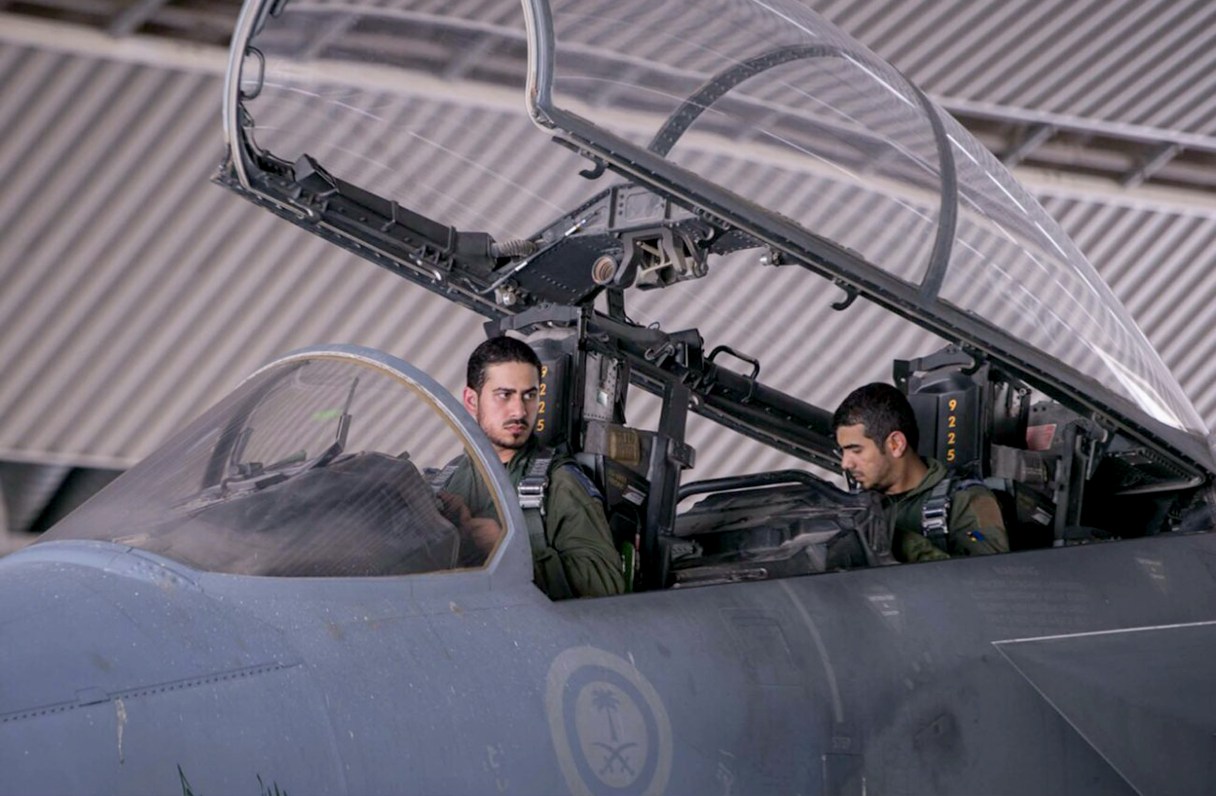
FILE - In this file photo released Wednesday, Sept. 24, 2014 by the official Saudi Press Agency, Saudi pilots sits in the cockpit of a fighter jet as part of U.S.-led coalition airstrikes on Islamic State militants and other targets in Syria that began early Tuesday in Saudi Arabia. U.S. Arab allies Egypt, Saudi Arabia, the United Arab Emirates and Kuwait are discussing creation of a military pact to take on Islamic militants, with the possibility of a joint force to intervene around the Middle East, The Associated Press has learned. Even if no joint force is agreed on, the alliance would coordinate military action, aiming at quick, pinpoint operations against militants rather than longer missions,  officials said. (AP Photo/Saudi Press Agency, File)
FILE - In this file photo released Wednesday, Sept. 24, 2014 by the official Saudi Press Agency, Saudi pilots sits in the cockpit of a fighter jet as part of U.S.-led coalition airstrikes on Islamic State militants and other targets in Syria that began early Tuesday in Saudi Arabia. U.S. Arab allies Egypt, Saudi Arabia, the United Arab Emirates and Kuwait are discussing creation of a military pact to take on Islamic militants, with the possibility of a joint force to intervene around the Middle East, The Associated Press has learned. Even if no joint force is agreed on, the alliance would coordinate military action, aiming at quick, pinpoint operations against militants rather than longer missions, officials said. (AP Photo/Saudi Press Agency, File)

CAIRO (AP) – U.S. Arab allies Egypt, Saudi Arabia, the United Arab Emirates and Kuwait are discussing the creation of a military pact to take on Islamic militants, with the possibility of a joint force to intervene around the Middle East, The Associated Press has learned.

The alliance would also serve as a show of strength to counterbalance their traditional rival, Shiite-dominated, Iran. Two countries are seen as potential theaters for the alliance to act, senior Egyptian military officials said: Libya, where Islamic militants have taken over several cities, and Yemen, where Shiite rebels suspected of links to Iran have seized control of the capital.

The discussions reflect a new assertiveness among the Middle East’s Sunni powerhouses, whose governments – after three years of post-Arab Spring turmoil in the region – have increasingly come to see Sunni Islamic militants and Islamist political movements as a threat.

Their consideration of a joint force illustrates a desire to go beyond the international coalition that the United States has put together to wage an air campaign against the Islamic State group in Iraq and Syria. Saudi Arabia and the UAE have participated in those strikes in Syria. The officials said the alliance under consideration was not intended to intervene in Iraq or Syria but to act separately to address other extremist hotspots.

Three military officials discussed details of the talks and a fourth confirmed their comments.