
Sunday, November 15, 2026Nov 15

AP Exclusive: Myanmar aiding Rohingya trafficking

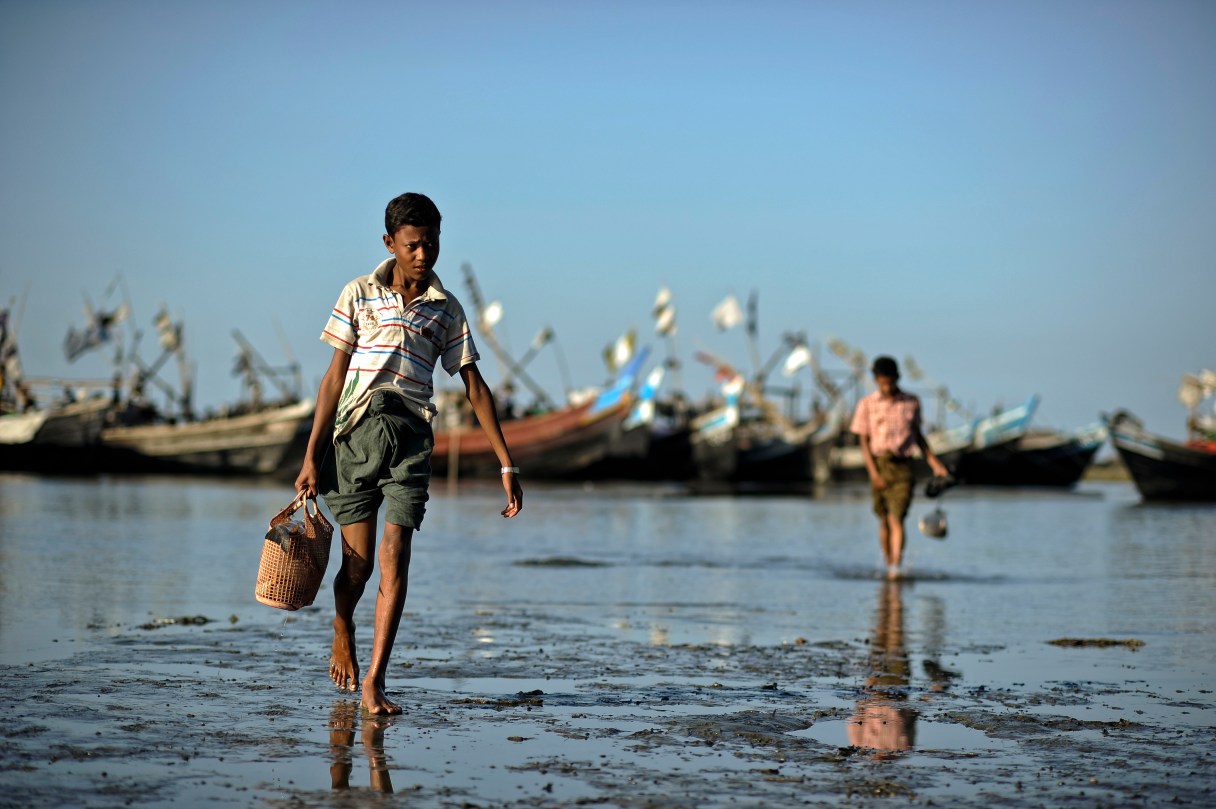
In this Nov. 29, 2013 photo, a Rohingya boy wades through the water carrying a basket of fish at The' Chaung refugee camp, on the outskirts of Sittwe, Myanmar. The small wooden boats leave the shores of western Myanmar nearly every day, overloaded with desperate Rohingya Muslims who are part of one the largest boat exoduses in Asia since the Vietnam War. Helping them on their way: Myanmar’s own security forces, who are profiting off the mass departure of one of the world’s most persecuted minorities by extracting payments from those fleeing. A report to be released Friday, Nov. 7, 2014, by the Bangkok-based advocacy group Fortify Rights, and reporting by The Associated Press, indicate the practice is far more widespread and organized than previously thought, with Myanmar naval boats going so far as to escort asylum seekers out sea, where larger ships operated by transnational criminal networks wait to pick them up. (AP Photo/Kaung Htet)

MYIN HLUT, Myanmar (AP) – The small wooden boats leave the shores of western Myanmar nearly every day, overloaded with desperate Rohingya Muslims who are part of one the largest boat exoduses in Asia since the Vietnam War.

Helping them on their way: Myanmar’s own security forces, who are profiting off the mass departure of one of the world’s most persecuted minorities by extracting payments from those fleeing. A report to be released Friday by the Bangkok-based advocacy group Fortify Rights, and reporting by The Associated Press, indicate the practice is far more widespread and organized than previously thought, with Myanmar naval boats going so far as to escort asylum seekers out to sea, where larger ships operated by transnational criminal networks wait to pick them up.

“Myanmar authorities are not only making life so intolerable for Rohingya that they have to flee, but they’re also complicit in the process – they’re taking payments and profiting off their exodus,” said Matthew Smith, director of Fortify Rights.

Rakhine state spokesman Win Myaing dismissed the allegations as “rumors,” saying he has not “heard of anything happening like that.” He said any naval boats approaching such vessels were likely aiming to help fishermen in need.

More than 100,000 Rohingya have fled Myanmar’s western shores by boat since Buddhist-Muslim violence erupted in Rakhine state two years ago, according to estimates provided by experts tracking their movements.