
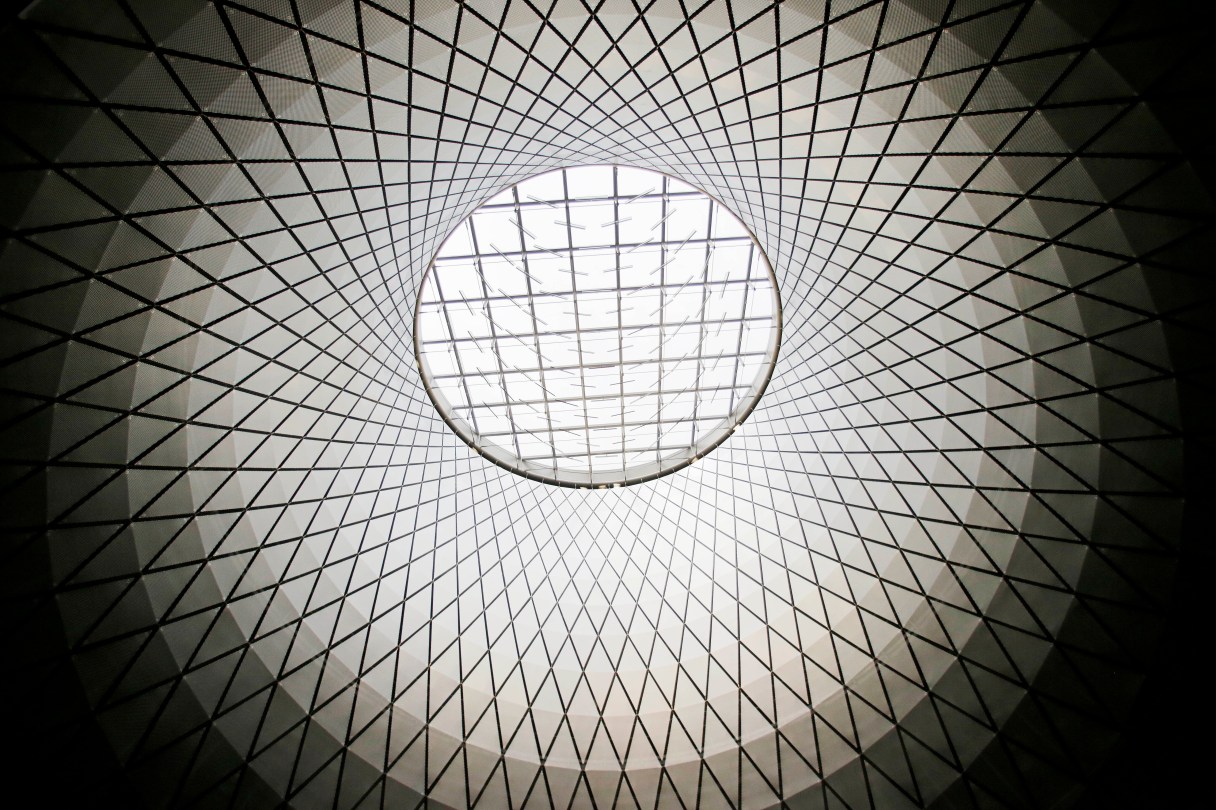
NEW YORK (AP) – New York’s biggest subway hub opened Sunday in lower Manhattan – a vital link between the new World Trade Center and the rest of the city.
The Metropolitan Transportation Authority inaugurated the $1.4 billion Fulton Center, a transit complex where many subway lines converge.
“Welcome to the station of the 21st century,” engineer Michael Horodniceanu, president of MTA’s Capital Construction who led the work, told a gathering of transit and political officials, including Sen. Charles Schumer and Rep. Jerrold Nadler.
Officials said the transit and retail hub will serve as Lower Manhattan’s next great public space – encased in a glass-and-steel shell with a soaring, light-filled atrium. It also includes retail and office space.
The federal government funded 90 percent and the state the rest of the project, which fills 180,000 square feet of new retail and office space, plus five old stations that were refurbished and linked. The center will accommodate up to 300,000 daily riders using the 2, 3, 4, 5 subway lines, plus the A, C, J, Z and R.
A 350-foot tunnel was built leading to the World Trade Center’s Santiago Calatrava-designed transit facility and the PATH commuter train to New Jersey. That tunnel will open sometime next year.
After a decade of work following the destruction of the World Trade Center area and flooding from Superstorm Sandy in 2012, “we made it,” Horodniceanu said.