
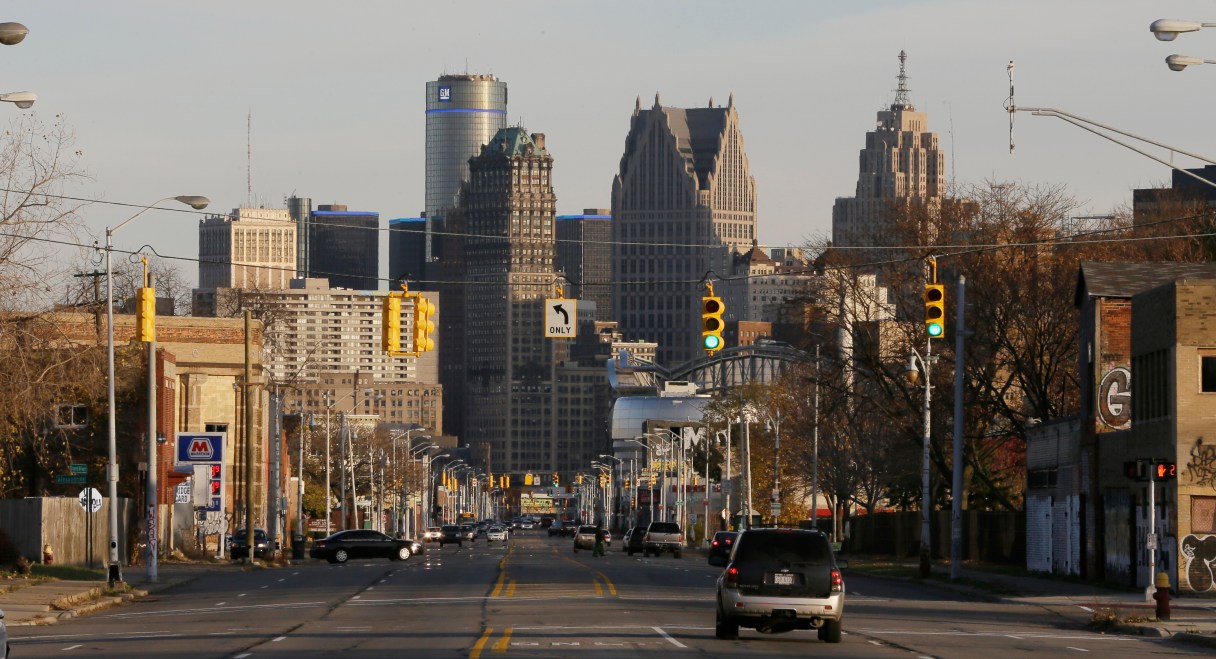
DETROIT (AP) – The largest U.S. city to endure bankruptcy has exited insolvency $7 billion lighter in debt, but the effects of civic neglect linger for many in Detroit who still fall asleep to echoes of gunfire and awake surrounded by blocks and blocks of abandoned houses.
A federal judge on Friday approved outgoing emergency manager Kevyn Orr’s long-term fiscal recovery plan, which calls for $1.7 billion to remove blight, train city workers, hire more first responders and shore up services to improve the lives of Detroit residents. The city will spend $420 million to raze vacant houses and clear lots; $167 million for new police, fire and EMS vehicles; and $715 million to hire and train workers and for other general upgrades.
Some people, like Eugene Weller and Bishop White, wonder how long it will be before they see and feel a full recovery in the city that once was home to nearly 2 million residents and pulsed to the around-the-clock rhythm of auto assembly lines that kept people working and off the streets.
“If it’s going to better everything, I’m for it,” said White, a 67-year-old retired auto worker. “If they are going to (just) fix up downtown neighborhoods, no. I ain’t for it. People still live out here. They’re like – forgotten.”
White’s home is one of only four occupied houses on his west-side block and is sandwiched between two empty lots. He wants to buy a lot from the city; crews razed the house that had been there, but the former basement sags and needs more backfill. It’s another example of something the city failed to do right the first time, White said.