
Tuesday, November 17, 2026Nov 17

NYC adult home residents asked to repay FEMA aid

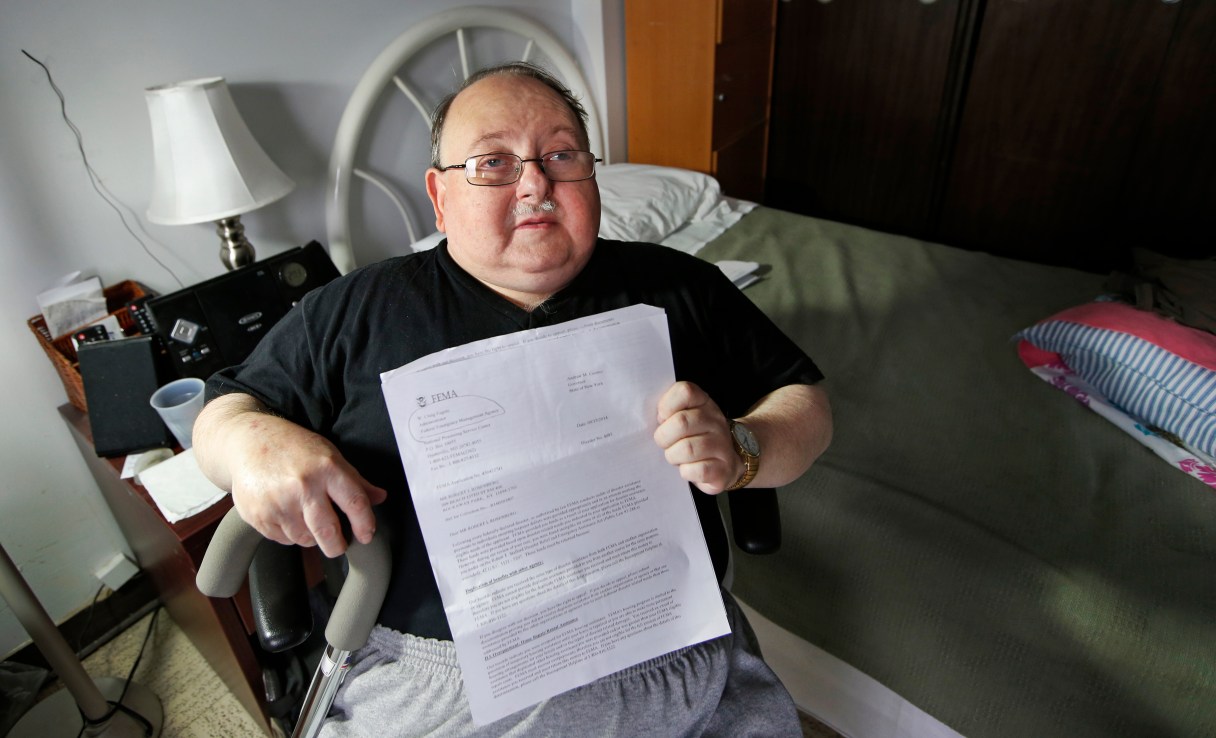
Belle Harbor Manor resident Robert Rosenberg, 61, who suffers from a spinal disability and has other chronic health problems, sits in his room in an assisted living facility in New York, Thursday, Nov. 6, 2014, where he and elderly, poor and disabled residents endured four months of misery after Superstorm Sandy flooded the center, located on New York's vulnerable Rockaway peninsula. Rosenberg holds a letter from the Federal Emergency Management Agency (FEMA) asking him to pay back all the federal disaster aid he received after the storm. He is among a dozen residents of Belle Harbor Manor who have been asked to return aid money.  (AP Photo/Kathy Willens)
Belle Harbor Manor resident Robert Rosenberg, 61, who suffers from a spinal disability and has other chronic health problems, sits in his room in an assisted living facility in New York, Thursday, Nov. 6, 2014, where he and elderly, poor and disabled residents endured four months of misery after Superstorm Sandy flooded the center, located on New York's vulnerable Rockaway peninsula. Rosenberg holds a letter from the Federal Emergency Management Agency (FEMA) asking him to pay back all the federal disaster aid he received after the storm. He is among a dozen residents of Belle Harbor Manor who have been asked to return aid money. (AP Photo/Kathy Willens)

NEW YORK (AP) – The residents of Belle Harbor Manor spent four miserable months in emergency shelters after Superstorm Sandy’s floodwaters surged through their assisted-living center on New York City’s Rockaway peninsula.

Now, the home’s disabled, elderly and mostly poor residents have a new headache: The Federal Emergency Management Agency has asked at least a dozen of them to pay back thousands of dollars in disaster aid.

Robert Rosenberg, 61, was among the Belle Harbor Manor residents who recently got notices from FEMA informing them that they had retroactively been declared ineligible for aid checks they received two years ago in the storm’s immediate aftermath. The problem, the letters said, was that the money was supposed to have been spent on temporary housing, but that never happened because the residents were moved from one state-funded shelter to another.

FEMA gave Rosenberg until Nov. 15 to send a refund check for $2,486 or file an appeal.

“We’re on a fixed income. I don’t have that kind of money!” said Rosenberg, who suffers from a spinal disability and other chronic health problems. He said he spent the aid money long ago on food and clothing, both of which were in short supply after the storm.