
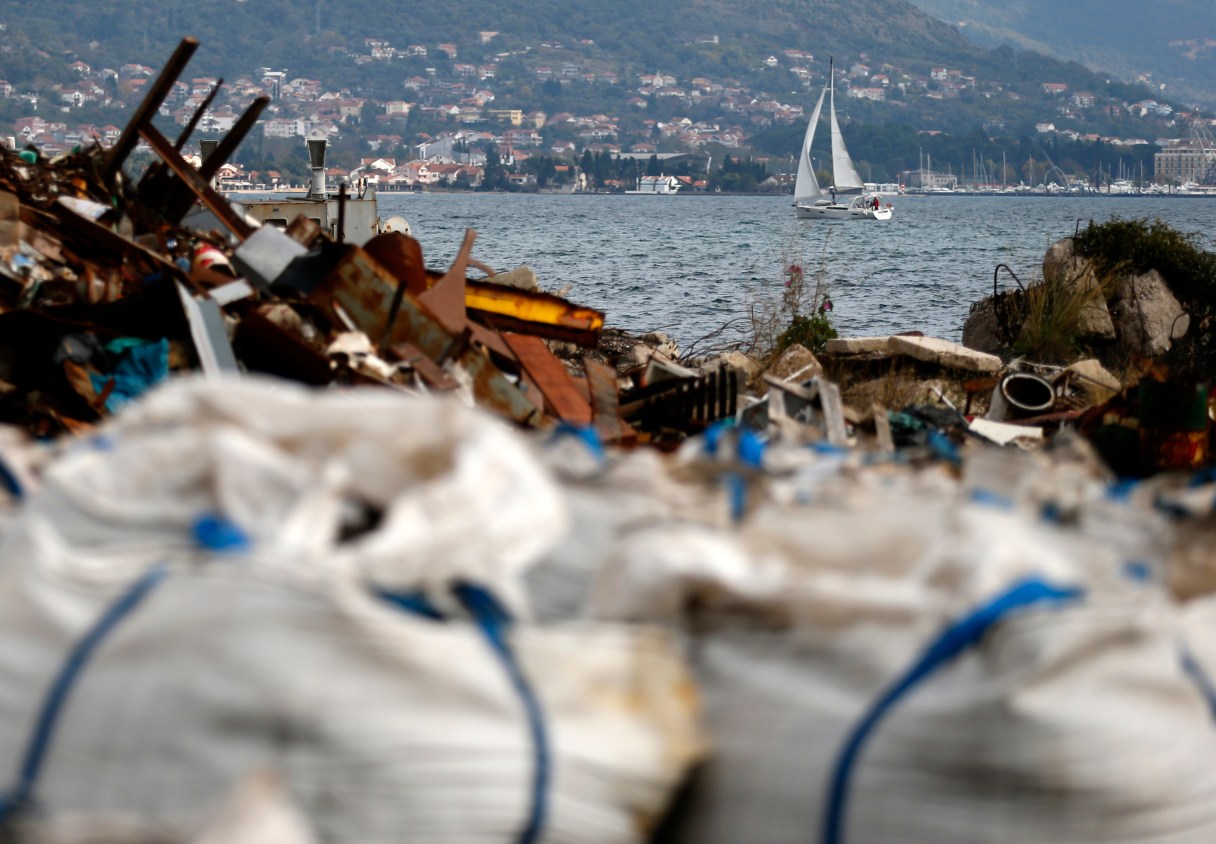
PODGORICA, Montenegro (AP) – Montenegro takes pride in its majestic Adriatic coastline and towering mountains rising from the sea, lined with rivers, streams and lakes. But the so-called Balkan Wild Beauty is now faced with the problem of waste disposal that is threatening both its natural wonders and its lucrative tourism industry.
Tons of hazardous and other waste is blemishing the spectacular scenery of Montenegro – a small country which declared itself an ecological state more than two decades ago – lying unprotected close to towns and villages, rivers and lakes, or newly-built luxurious sea resorts.
Like most Balkan countries in transition, Montenegro has done little over the past decades to deal with waste disposal and other environmental woes, allowing the problem to grow. As the country now seeks to join the European Union, it must deal with the issue to advance in its membership bid.
“We are far from being proud of our environmental situation,” State Secretary for Environment Daliborka Pejovic said. “I am quite confident that the EU will not accept the countries which have unresolved problems with hazardous waste.”
The problem is visible just outside the capital, Podgorica, where colonies of gulls and cormorants rest on the shores of two huge red mud basins of a fallen aluminum giant, which was once the pride of Socialist-era industry. The basins – along with thousands of tons of solid open-air waste – are located within the smelter complex, which is about 100 meters (330 feet) from Montenegro’s main Moraca river, a tributary of the internationally renowned natural preserve of Skadar Lake.