
Monday, November 16, 2026Nov 16

Nation’s last big icebreaker endures despite age

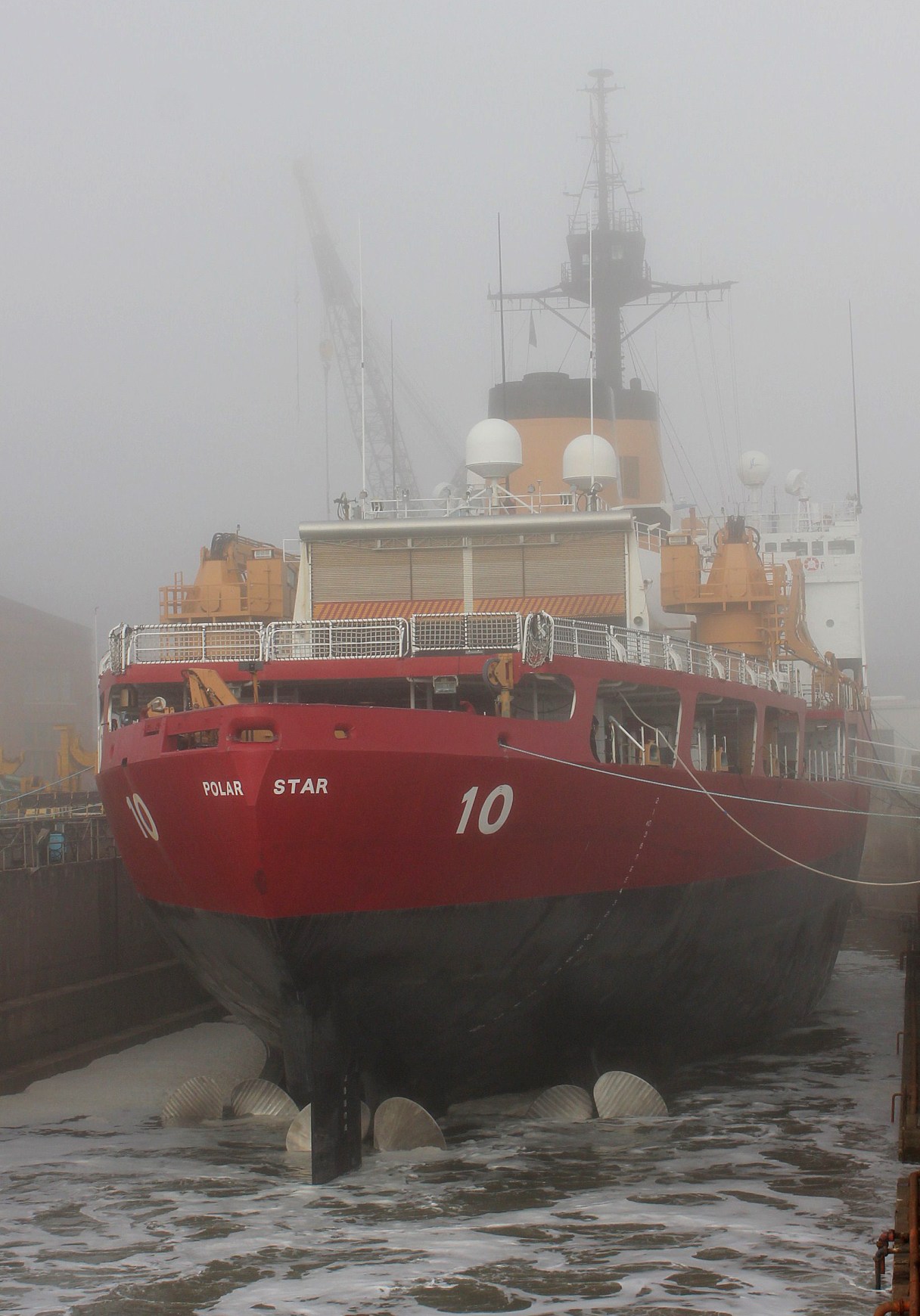
In this Monday Nov. 10, 2014 photo, a dry dock containing the icebreaker USS Polar Star is flooded with water on Mare Island in Vallejo, Calif. The United States' last vessel capable of breaking through the heaviest ice of the Arctic Circle, and resupplying the U.S. polar research station there, is scheduled to leave San Francisco Bay on Tuesday, Nov. 11, 2014, after repairs meant to help the vessel limp along another few years. While Russia and China have dozens of icebreakers, opposition in Congress to funding means the U.S. has just one heavy-duty one, already a decade past its decommissioning date. (AP Photo/U.S. Coast Guard)

SAN FRANCISCO (AP) – The last U.S. icebreaker capable of crushing through the thickest ice of the Antarctic and Arctic was due to set sail from the San Francisco Bay on Tuesday after the latest repairs to postpone its already past-due retirement.

Climate change makes the 38-year-old Polar Star Icebreaker’s science and security missions ever more vital, according to scientists and other backers of rebuilding the country’s dwindling ice fleet.

Crew members of the U.S. Coast Guard’s Polar Star icebreaker were drilling early Tuesday before leaving the former naval shipyard at Mare Island, across the bay from San Francisco. Shipyard workers replaced worn, 18-foot-high propellers for refitting and carried out other work on the country’s sole remaining heavy icebreaker, now eight years beyond its scheduled decommissioning date.

By late January, the Polar Star will loom over the western Antarctic on its key annual mission – breaking through ice for the yearly resupply of researchers at the U.S.’ McMurdo Research Station and another U.S. research center at the South Pole.

With 75,000 horsepower and a hull strong enough to batter through six feet of ice at running speed, the Polar Star is the only operational U.S. vessel capable of getting the food, fuel and research material to the two Antarctic research stations.