
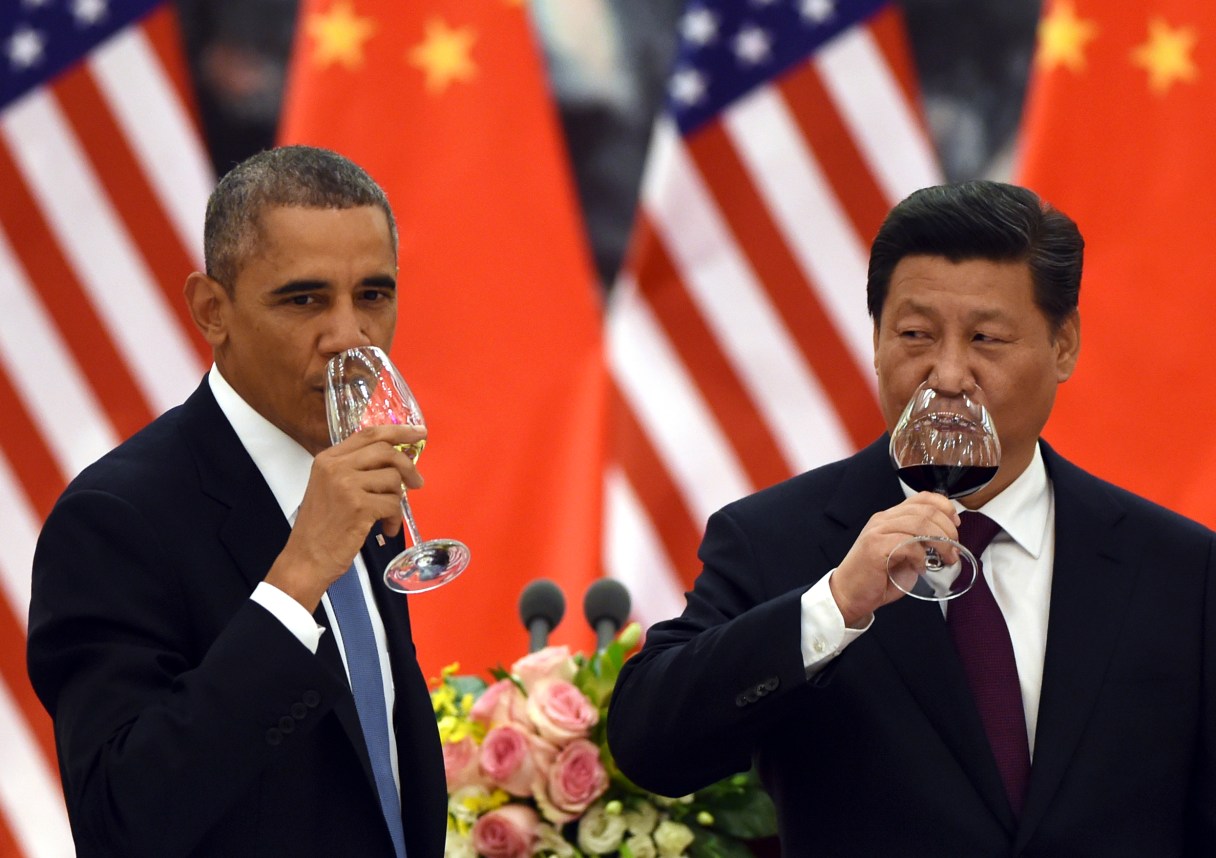
BEIJING (AP) – The climate change agreement between the United States and China caught the world by surprise after months of secret negotiations, built on an opening that arose last year when President Barack Obama and Chinese President Xi Jinping met in the California desert.
The deal, announced Wednesday, could mark a turning point in international negotiations because for the first time it brings together the two largest emitters of heat-trapping gases.
Whether it will actually help clean up the atmosphere and slow the increase in world temperatures remains to be seen. But the agreement clearly signals that Obama intends to charge ahead on the issue in his final two years in office, even though many of Congress’ staunchest supporters of action lost in last week’s elections.
The U.S.-China deal has its roots in a June 2013 summit at the Sunnylands estate, where Obama and Xi reached an agreement on pursuing the reduction of hydrofluorocarbons that are used in refrigerators and insulating foams. To the White House, the deal suggested a broader openness from China to tackling climate change, senior Obama administration officials told reporters traveling with the president to Asia.
The officials said Secretary of State John Kerry returned from a trip to China in April with the idea of pursuing a joint climate change plan with Beijing. A senior administration official said Kerry worked with his Chinese counterpart, State Councilor Yang Jiechi that launched the U.S.-China Climate Change Working Group. Later, Kerry invited Yang to visit him in Boston, where the former Massachusetts senator used the vista of the Boston Harbor to show how government action can make positive change, the administration official said.