
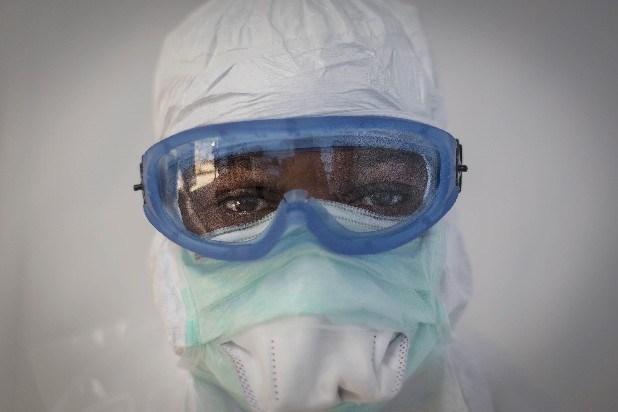
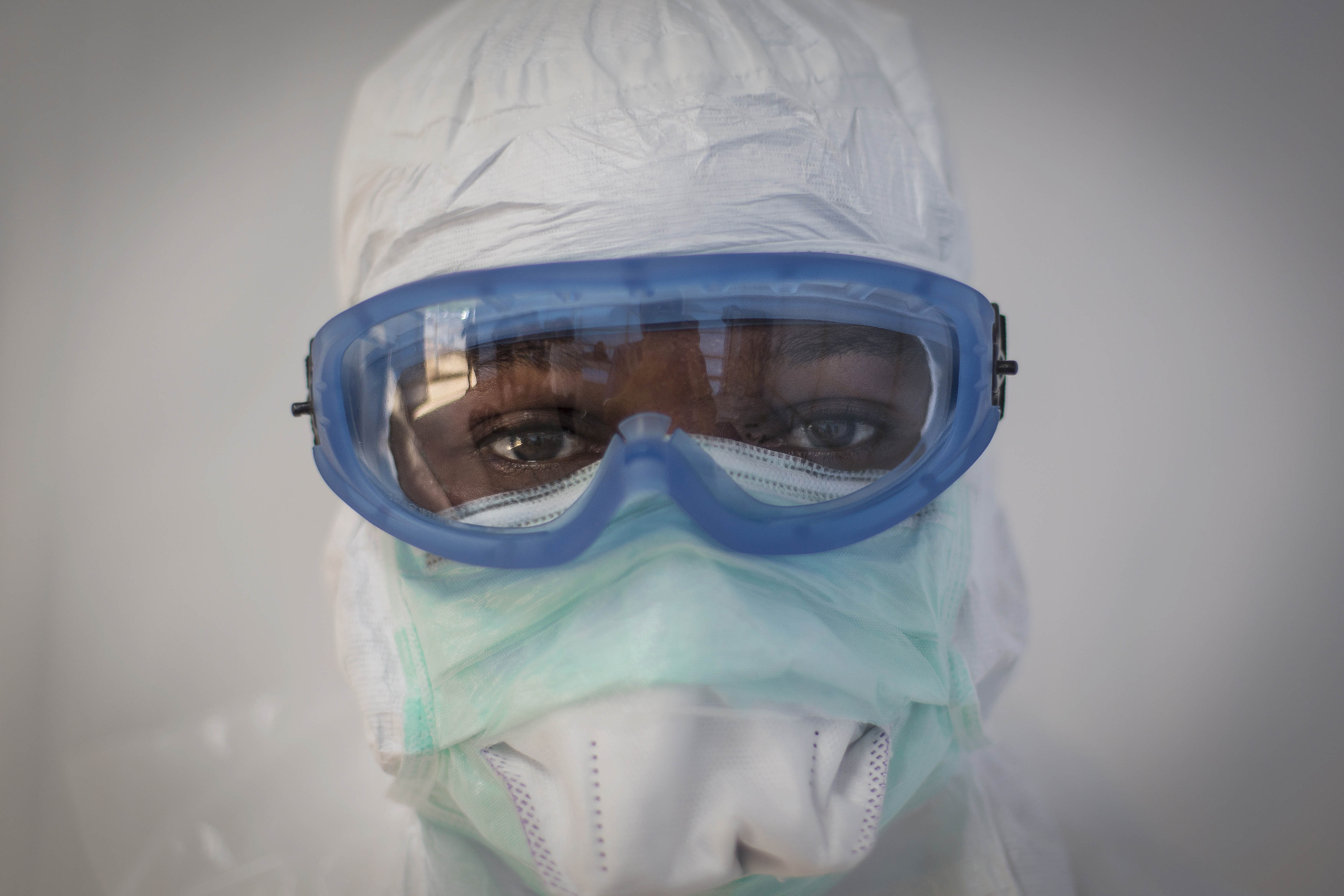
 This undated handout photo issued by Save the Children UK on Wednesday, Nov. 5, 2014, shows prospective health care workers in the Kerry Town Ebola Treatment Centre being tested on their personal protection equipment procedure in Sierra Leone. The center in Kerry Town includes an 80-bed facility to be managed by Save The Children and a 12-bed unit, which will expand to 20 beds over the coming months, for health care workers and international staff who become infected by Ebola.
More than 5,000 people have died in the Ebola outbreak, which was first identified in Guinea in March, the World Health Organization reported Wednesday, marking another grisly toll in the epidemic.
This is the largest Ebola outbreak ever recorded, with more than 14,000 people sickened, the vast majority in the West African countries of Liberia, Guinea and Sierra Leone.
There are some signs that the rate of new infections may be slowing overall in Guinea and Liberia, but they are surging in Sierra Leone, the health agency said Wednesday, and there are still areas of Liberia and Guinea where transmission remains high. While the response to Ebola is ramping up, it is still insufficient: In Sierra Leone, for instance, less than 40 percent of cases are in isolation, according to WHO estimates.
Worryingly, the virus has continued to pop up in new places, both within the most affected countries and outside their borders. The most recent example is three deaths believed to be linked to a new Ebola cluster that Malian authorities reported Wednesday. It is an alarming setback as the country tries to limit the epidemic ravaging other West African countries.
A nurse working at a clinic in the Malian capital died Tuesday, and tests later showed she had Ebola, Communications Minister Mahamadou Camara said Wednesday. Two other people are also believed to have died of Ebola, though no tests were ever done on them to confirm the disease: an imam, whom the nurse treated at the Bamako clinic, and a friend who came to visit the man there.