
A Tony Kushner play set amid the social upheavals of 1963 continues the next two weekends for Ripple Productions, whose stated mission is “exploring the human experience from a Christian point of view.”
If you go• What: “Caroline, or Change”• When: 7:30 p.m. Fridays and Saturdays, Nov. 14-15, 21-22; 2:30 p.m. Sundays, Nov. 16 and 23• Where: Ripple Theater, 3264 Brainerd Road• Admission: $15 (see note)• Phone: 423-600-9242• Website: www.RippleTheater.com• Note: Sunday, Nov. 16, is a “give what you can” show. Donations will go to the Partnership for Families, Children & Adults’ Family Violence Center, which provides shelter to adults and children who are victims of domestic violence.
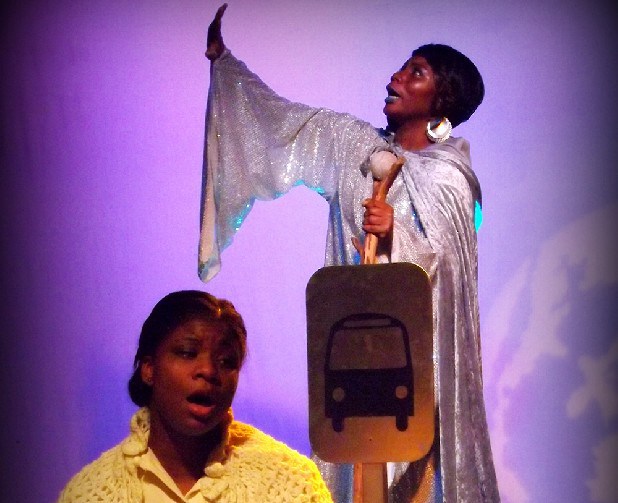
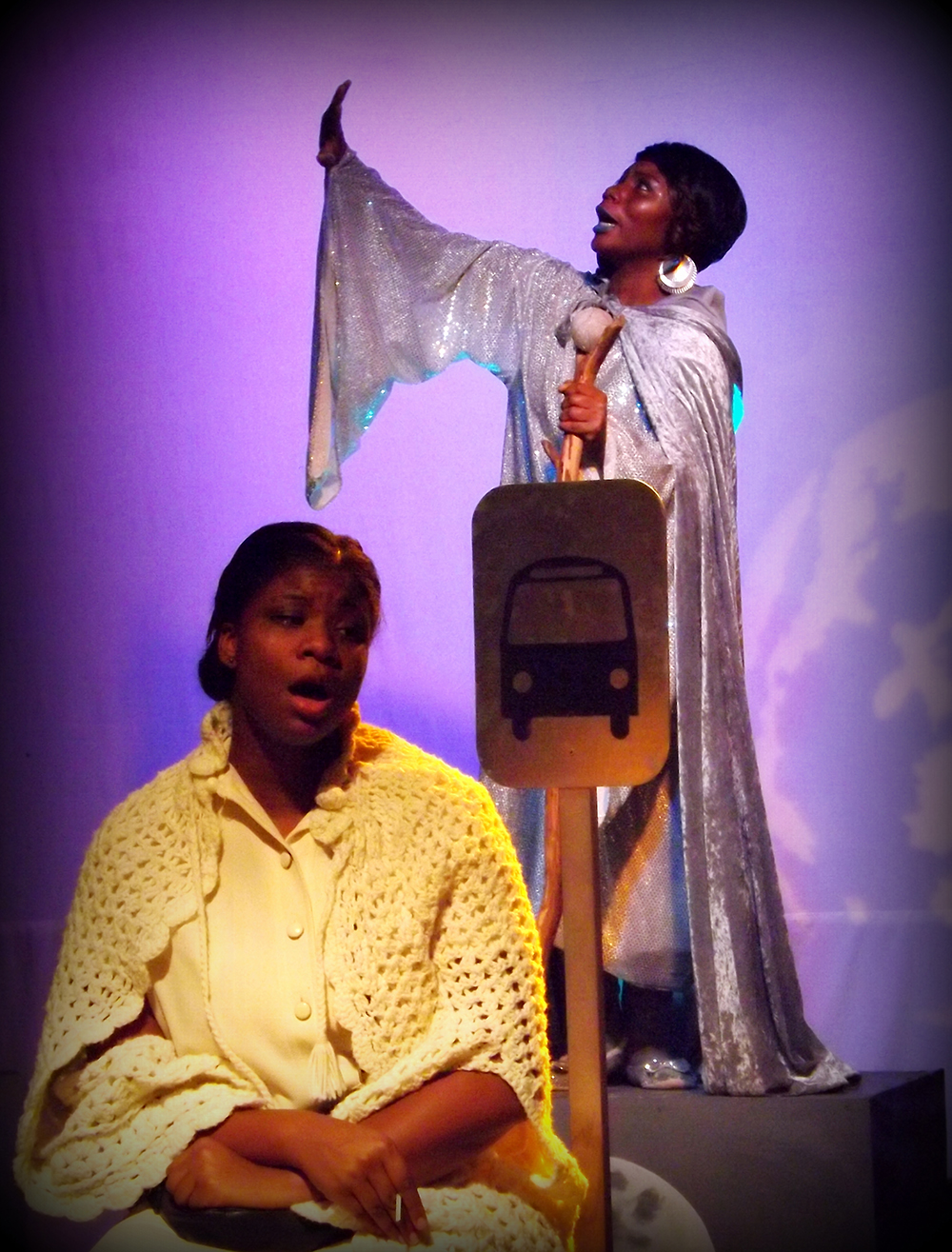 LShanté Faunteroy, in front, and Kimberly Johnson appear in a scene from “Caroline, or Change,” now playing at Ripple Theatre.
“Caroline, or Change” takes place during the civil-rights movement, with the assassination of President Kennedy as a subject of conversation. Caroline, a black mother of four, works as a maid for a Jewish family. Her employer, Rose, the wife of recently widowed Stuart, tells Caroline that she can keep any money that she finds in the pants pockets of Rose’s stepson Noah when Caroline does the laundry.
Rose is attempting to teach Noah about respect for money while trying to befriend Caroline. She wants to give Caroline a raise but can’t afford it. When Rose’s father gives Noah a $20 bill for Hanukkah, Caroline finds it in his pocket on laundry day. The conflict over who gets to keep the money causes Caroline and Noah to say hurtful things to each other, words they both end up deeply regretting and that will change the way they look at each other.
“It would be easy to assume before seeing ‘Caroline, or Change’ that it treats the issue of race much like the movie ‘The Help,’ where we see how badly white women in the 1960s treated their African-American maids, but this play is not that story,” says director Jessie Knowles.
“Rose attempts a friendship with Caroline, and Noah loves her like a mother, idolizing her as he deals with the grief of his own mother’s passing from cancer just a year earlier. But Caroline is so scarred by the abuses of her ex-husband and the worry she feels for her son in Vietnam that she keeps Rose and Noah at arm’s length.”
Knowles says race relations of the era are a context for the story, but the play is not about the civil-rights movement.
“When the conflict over the $20 puts tension in the relationship between Caroline and Noah, both use racial hatred, against blacks and Jews, to express their anger at each other,” Knowles says. “This story is about how difficult it is for people to move past their pain, whether it be personal, cultural or universal and how easy it can be for anyone to use hatred as a weapon, no matter what ‘side’ they are on, and how that hatred only perpetuates their pain.
“It’s also about the different relationships we all have to money and how our attachment to money can affect the way we treat each other.”