
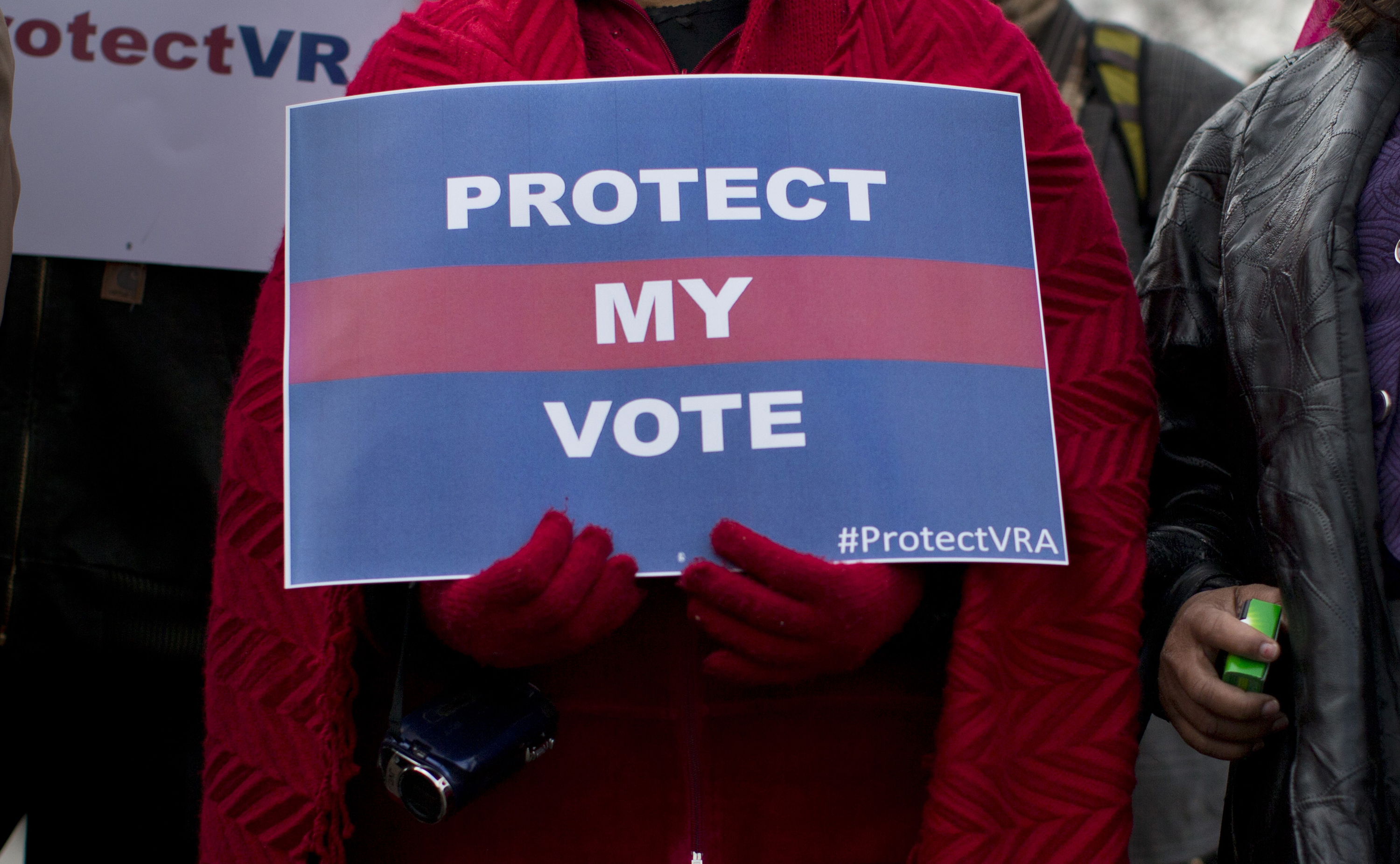
 People wait in line outside the Supreme Court in Washington to listen to oral arguments in a voting rights case. In last week’s elections, Alabama Republicans shrank their once-powerful Democratic opponents to just eight seats in the state Senate, all of them from districts in which African-Americans are a majority.Black Democrats say the GOP did it by misusing a landmark voting-rights law, intended to ensure the right to vote for southern blacks, to instead limit their voting strength. Republicans, they argue, relied too heavily on race to draw new electoral maps following the 2010 census.The case goes before the Supreme Court Wednesday. Last year a conservative majority on the court effectively blocked a key component of the Voting Rights Act, and this case will be watched closely for signs that the rest of the law could be in peril.
WASHINGTON – The Supreme Court wrestled Wednesday with a dispute over the use of race to redraw political districts that turns the usual arguments on their heads.
The complicated case argued at the high court involves the use of a landmark voting rights law that led to the election of African-Americans across the South and Supreme Court decisions that limited the use of race to draw electoral maps.
Only in this case, Republicans in Alabama are invoking the Voting Rights Act to justify concentrating black voters in some legislative districts, and African-Americans challenging the state’s legislative maps said the GOP relied too heavily on race.
“Do you realize you are making the argument that the opponents of black plaintiffs used to make here?” Justice Antonin Scalia asked a lawyer for the challengers. Scalia appeared favorable to the state’s argument.
Justice Stephen Breyer was more skeptical of the state’s claims, but he too found the role reversal curious. “This is an obverse and odd situation,” Breyer told Alabama Solicitor General Andrew Brasher.