
Sunday, November 15, 2026Nov 15

Latrines, sewers show varied ancient Roman diet

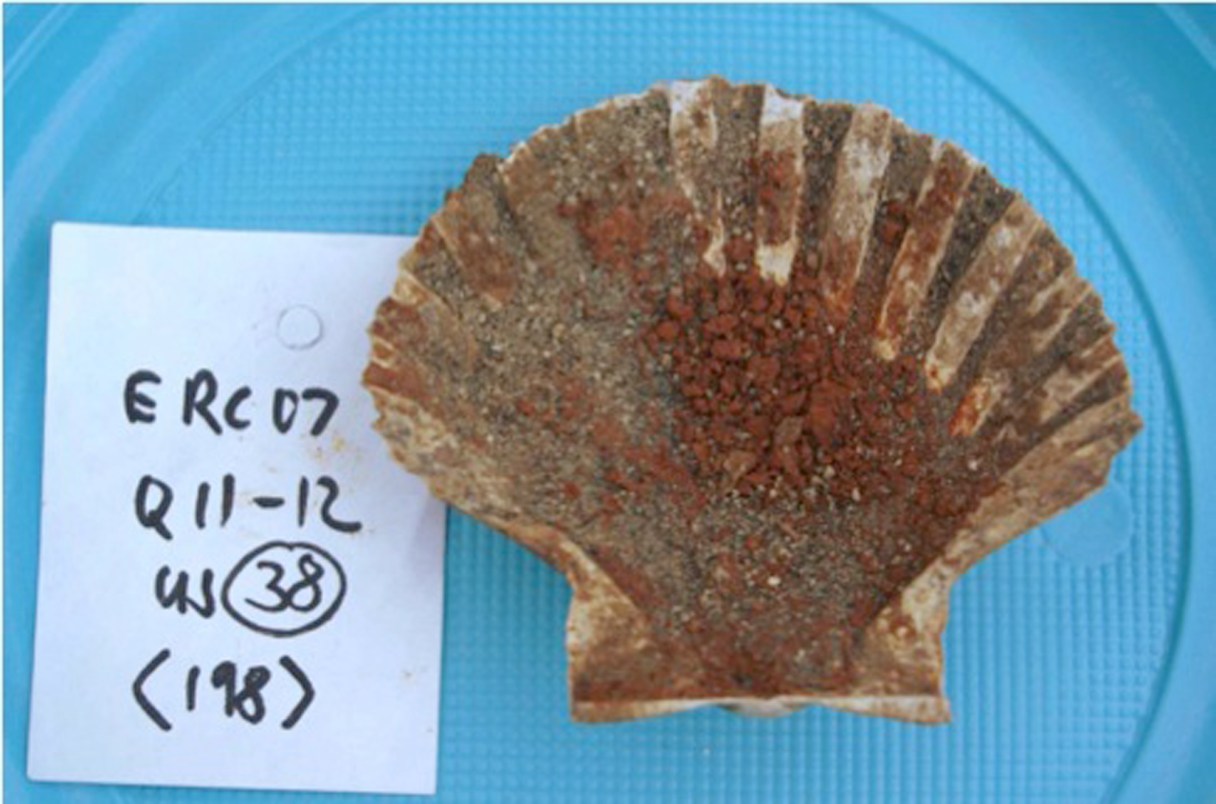
In this undated photo provided by Mark Robinson, environmental archeologist at Oxford University Museum of Natural History, a scallop shell with makeup found in a sewer of Herculaneum. Archaeologists picking through latrines, sewers, cesspits and trash dumps at Pompeii and Herculaneum have flushed out tantalizing clues to what appears to be a varied diet in those ancient Roman cities destroyed in 79 A.D. by the eruption of Vesuvius. Much of what the inhabitants of those doomed towns didn't digest or left on their plates became traces lining toilet pipes, remnants in centuries-long buildup in cesspits, or throwaway in dumps.  At a three-day conference ending Friday in Rome, archaeologists discussed their discoveries, including gnawed-on fish bones, goose eggshells from meals of the elite and carbonized nibbles baked perhaps as offerings for deities. (AP Photo/Mark Robinson/Oxford University Museum of Natural History)
In this undated photo provided by Mark Robinson, environmental archeologist at Oxford University Museum of Natural History, a scallop shell with makeup found in a sewer of Herculaneum. Archaeologists picking through latrines, sewers, cesspits and trash dumps at Pompeii and Herculaneum have flushed out tantalizing clues to what appears to be a varied diet in those ancient Roman cities destroyed in 79 A.D. by the eruption of Vesuvius. Much of what the inhabitants of those doomed towns didn't digest or left on their plates became traces lining toilet pipes, remnants in centuries-long buildup in cesspits, or throwaway in dumps. At a three-day conference ending Friday in Rome, archaeologists discussed their discoveries, including gnawed-on fish bones, goose eggshells from meals of the elite and carbonized nibbles baked perhaps as offerings for deities. (AP Photo/Mark Robinson/Oxford University Museum of Natural History)

ROME (AP) – Archaeologists picking through latrines, sewers, cesspits and trash dumps at Pompeii and Herculaneum have found tantalizing clues to an apparently varied diet there before the eruption of Mount Vesuvius destroyed those Roman cities in 79 A.D.

Much of what residents didn’t digest or left on their plates went down into latrine holes, became remnants in cesspits built up over the centuries or was thrown away in local dumps. At a three-day conference ending Friday in Rome, archaeologists discussed their discoveries, including gnawed-on fish bones and goose eggshells that were possibly ancient delicacies for the elite.

“We just have small glimpses of the environment, but some are quite curious,” Mark Robinson, a professor of environmental archaeology at Oxford University Museum of Natural History, told the conference.

Here’s some of the curiosities the experts discussed:

ROMANS LIKED EATING LOCAL