
Sunday, November 15, 2026Nov 15

Shiite holy month sees show of strength in Baghdad

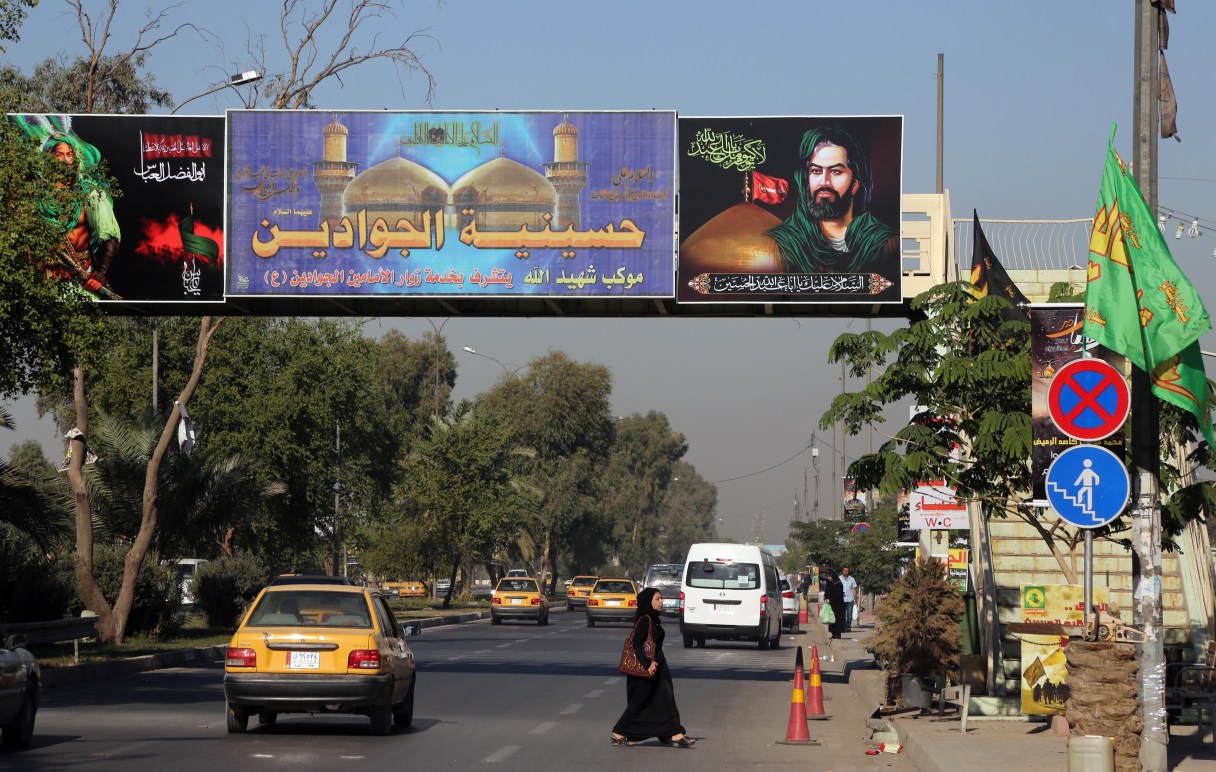
In this Monday, Nov. 10, 2014 photo, people pass under Shiite banners in Ghadeer district in southeastern Baghdad, Iraq. Religious banners and portraits of Imam Hussein, a grandson of the Prophet Muhammad, hang from homes, bridges, stores and even colleges across much of Baghdad and can be seen even in Sunni-majority areas. They also adorn government buildings and hundreds of security checkpoints across the city, reinforcing Sunni fears that Shiite Prime Minister Haider al-Abadi is no less sectarian than his predecessor Nouri al-Maliki, whose policies were widely seen as aggravating Sunni grievances. (AP Photo/Karim Kadim)

BAGHDAD (AP) – Red and green Shiite banners line the streets of Baghdad, portraits of religious figures and slain “martyrs” stare down from billboards, hymns blare from shops and cafes, and grim-faced militiamen prowl the streets in pickup trucks.

The holy month of Muharram has brought an unprecedented show of strength by Iraq’s Shiite Muslim majority, underscoring its domination of the bitterly fractured capital and the vulnerability of the once-dominant Sunnis, while raising fears of a new round of sectarian cleansing by Shiite militias allied with the government.

“They want to turn Baghdad into a purely Shiite city,” said Abu Abdullah, a community leader in Baghdad’s Sunni enclave of Azamiyah, who asked that his full name not be published for fear of retribution.

Muharram – a period of mourning over the death of Imam Hussein in a 7th century battle that cemented Islam’s Sunni-Shiite divide – is observed with grieving and fasting by Shiites across the region.

But this year in Iraq the traditional Muharram banners are being unfurled at a time when large numbers of Shiite militiamen are battling alongside the army against the Sunni extremists of the Islamic State group, which has seized a third of the county and massacred hundreds of Shiites, whom it views as apostates.