
ATLANTA (AP) – Nearly a year ago, a few inches of snow in metro Atlanta triggered an epic traffic jam as motorists fleeing the city were trapped overnight on clogged interstates. Children slept at school or on stranded buses as parents tried desperately to reach them.
With officials seemingly caught off guard by a mere 2 inches of snow, the city became a national joke and officials vowed it would never happen again. Gov. Nathan Deal convened a task force to make recommendations and setting aside roughly $14 million in the state budget for equipment and supplies. As winter nears, officials say they will do things differently next time – but they say there are limits to how they can respond.
“We can only act so fast,” said state Transportation Commissioner Keith Golden, noting one of the biggest challenges officials faced during that storm was a weather forecast that shifted from affecting south and central Georgia to metro Atlanta. “You can’t just change on a dime and change your plans.”
Golden was among a cadre of state agency heads and key state employees gathered Tuesday at the State Operations Center for a large-scale drill built around a fake snowstorm barreling down on metro Atlanta in the next 24 hours. State emergency management workers received a mock briefing in which they were warned a mix of snow, ice and wind would cause widespread power outages and poor road conditions.
A major change in state operations has been the shift away from relying on rock salt to using brine to pre-treat metro Atlanta’s extensive interstate system. Golden said the plan is to pre-treat all interstates 24 hours in advance in an attempt to halt the buildup of ice that caused so many problems in January.
A big challenge that remains is how to deal with a skeptical public and the hundreds of thousands of people who fled the downtown area as the snow began to fall. Officials said they can’t order people to stay home or tell them to leave work. Instead of calling for volunteer evacuations, officials appear to be relying on earlier and better communications with the public. The same holds true for school superintendents, whom they plan to encourage early on to consider closing school with bad weather in the forecast.
Another issue that surfaced during the storm earlier this year was that resources dedicated to treating the roadways were diverted to emergency situations. Now, there will be up to 18 teams staged around the metro Atlanta area that won’t leave their routes, while up to 41 response teams will be coordinating with “strike teams” launched by the Department of Public Safety to respond to emergencies and traffic incidents.
“We’re in a position where we learned a lot from the first storm,” said Bart Gobeil, the state’s chief operating officer. “We need to continue to keep improving and not let our guard down.”
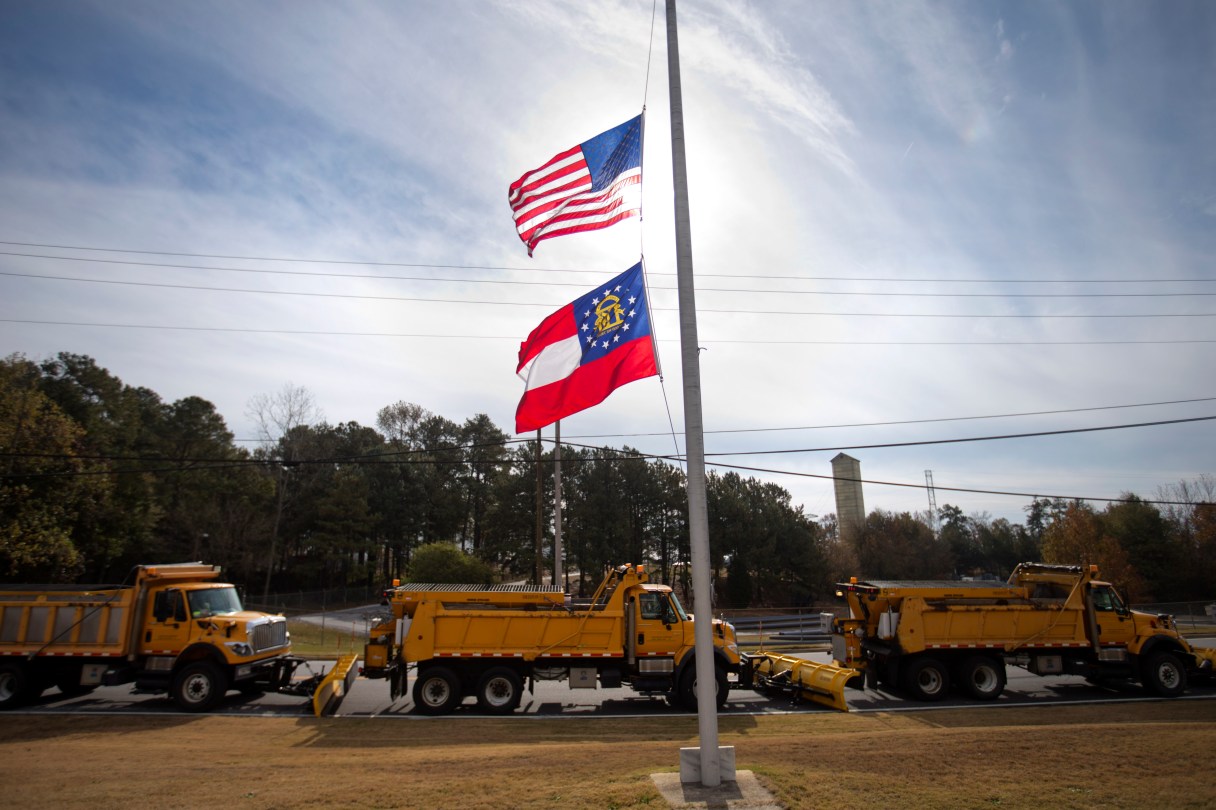
Officials said the state has more than doubled its capacity to store salt, established a tracking system to monitor its vehicles, and bought dozens of new trucks and other equipment. The state is also in the process of putting down about 17 new road sensors in metro Atlanta to monitor weather conditions on the ground. All were part of 23 recommendations issued by a severe winter weather task force convened by the governor earlier this year.
Charley English, the director of the Georgia Emergency Management Agency, faced intense scrutiny after the January storm for allowing the state to be caught flat-footed in its response. After weathering that storm, English said he feels comfortable the response will improve.
“We’re ready,” English said.
___
Follow Christina Almeida Cassidy on Twitter: http://twitter.com/AP_Christina.