
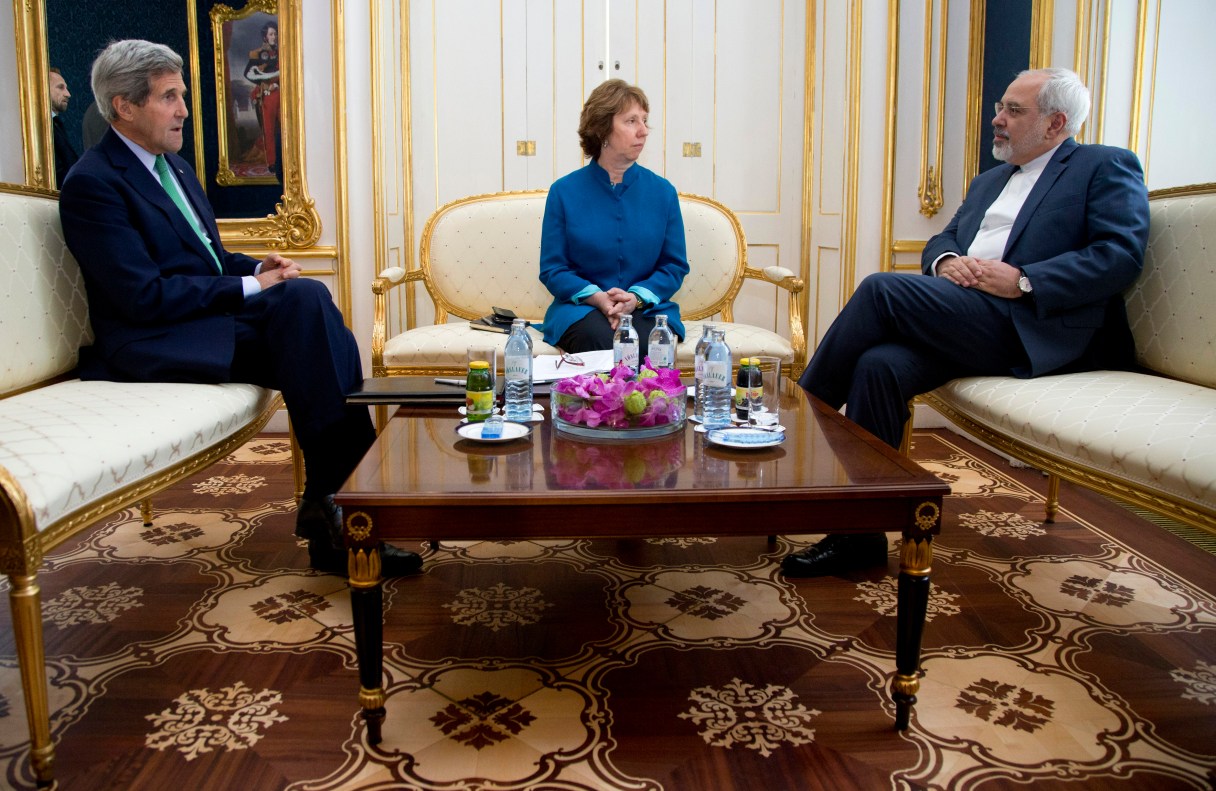
LONDON (AP) – Bill Clinton tried. So did George W. Bush. Neither succeeded. As President Barack Obama’s own second term winds down, he is getting closer than either of his immediate predecessors to the goal of improving U.S. relations with Iran. But he’s not there yet, and plenty stands in the way, including a messy and brutal conflict in Iraq and Syria.
As high-stakes negotiations with Iran over its nuclear program resume this week in Vienna ahead of a Nov. 24 deadline for a deal, the ghosts of previous failed attempts at American-Iranian rapprochement loom large. So do very real and current concerns, not least of which are the rise of the Islamic State militancy in Iraq and Syria, fierce opposition to a deal from U.S. ally Israel and open hostility from many in Congress and hardliners in Iran who already look to be trying to derail a potential agreement.
Those issues, combined with the already frustratingly complex nature of the negotiations, have made for slow going and increased the chances of something less than a full deal being struck by next Monday’s target. Officials say an extension of the already once-extended talks is possible, but they warn additional delays will invite complications. Diplomats from all sides are eager to meet the deadline.
Obama and his top aides deny that anything other than resolving the nuclear deadlock is in play in the negotiations. Yet, they also acknowledge a deal is key to a broader improvement in relations, something Obama is reported to have conveyed in a recent letter to Iran’s Supreme Leader Ayatollah Ali Khamanei.
Though it hangs over the process, what appears to be a shared U.S.-Iranian interest in defeating the extremist Sunni Islamic State group has been raised only tangentially on the sidelines of the talks. The Obama administration’s goal is to ultimately defeat the militants, whose rise it blames chiefly on atrocities committed by Syrian President Bashar Assad and the failure of the previous leadership in Iraq.