
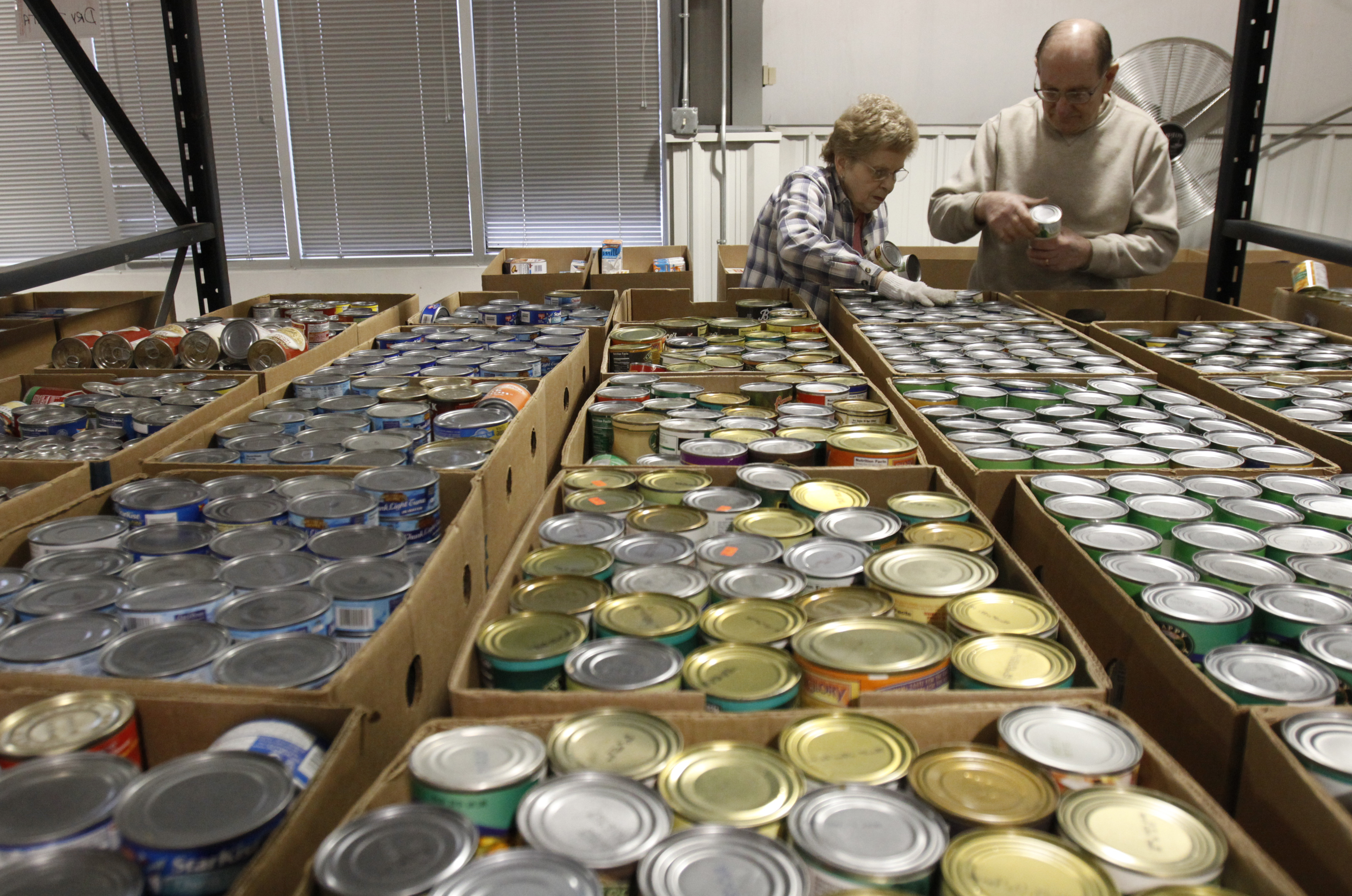
 A couple fills food boxes at the Chattanooga Area Food Bank in this file photo.
FOR MORE INFOThe Chattanooga Area Food Bank works through a network of 300 partner agencies – soup kitchens, church pantries, and on-site feeding programs – throughout 20 counties to provide nearly 11 million meals each year.To learn more visit us on the web at www.chattfoodbank.org
As the president of the Chattanooga Area Food Bank, I am often invited to speak on the issue of hunger in our community. My speaking engagements range from conversations with school-aged children to more formal presentations to local civic clubs and the media. It seems, no matter where I am or with whom I’m speaking, some people always want to know, “who is gaming the system?” So, I’d like to take this opportunity to address that perennial question here for as many people as possible.
The best way to answer this question is to introduce you to our clients.
A typical family seeking food assistance looks something like this: a father, let’s call him John, his wife, Elaine, and their two young daughters. John’s job pays minimum wage ($7.25 an hour for 40 hours comes to a before-taxes payday of $290 a week). At this wage, he cannot afford to pay the health insurance premium, so he declines his employer’s coverage. Elaine is currently looking for work. Recently, John was diagnosed with diabetes, a condition that affects 45 percent of the families we serve. There is not enough money to pay for healthy food, rent and insulin. John and Elaine choose to pay the rent because they have to have a place for their family to live. They choose less healthy food to stretch their budget, but still cannot afford insulin. Without insulin, John’s condition worsens. He and his wife worry about his health and him losing his job.
John’s family is not unique. Many families in our area face similar struggles. In fact, most of the families we serve – 86 percent – have to choose between paying for food and paying for medicine or medical care at least once a year.