
Sunday, November 15, 2026Nov 15

In Ferguson, mundane choices lead to tragedy

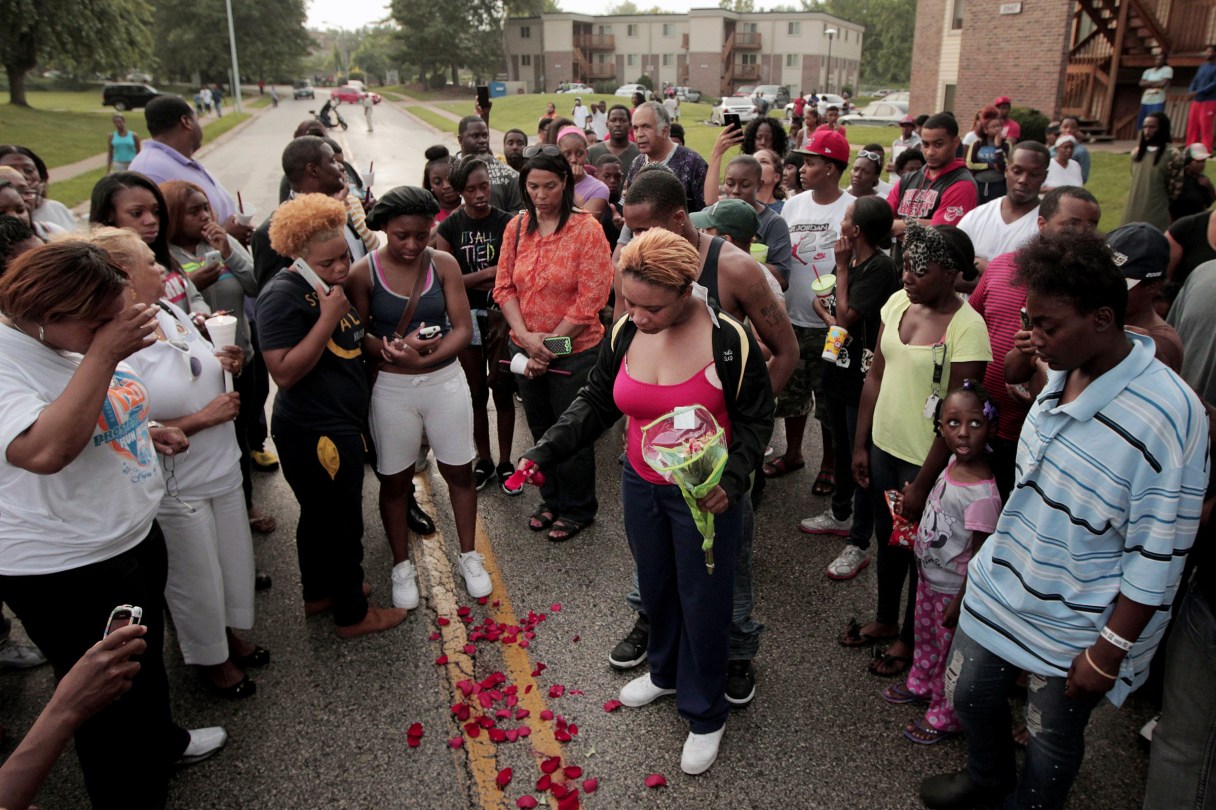
FILE- In this Aug. 9, 2014, file photo, Lesley McSpadden, center, drops rose petals on the blood stains from her 18-year-old son Michael Brown who was shot and killed a police officer in Ferguson, Mo., Aug. 9.  With a grand jury’s decision this week not to indict police officer, Darren Wilson for Brown’s killing, prosecutors released thousands of pages of testimony, interviews and documents that shine new and often harsh light on the events that unfolded in this suburb’s darkest hours. (AP Photo/St. Louis Post-Dispatch, Huy Mach, File)
FILE- In this Aug. 9, 2014, file photo, Lesley McSpadden, center, drops rose petals on the blood stains from her 18-year-old son Michael Brown who was shot and killed a police officer in Ferguson, Mo., Aug. 9. With a grand jury’s decision this week not to indict police officer, Darren Wilson for Brown’s killing, prosecutors released thousands of pages of testimony, interviews and documents that shine new and often harsh light on the events that unfolded in this suburb’s darkest hours. (AP Photo/St. Louis Post-Dispatch, Huy Mach, File)

Michael Brown spent part of his last morning chatting with some workmen about Jesus. Police officer Darren Wilson got a call to help a feverish child. Dorian Johnson got up at 7 a.m. with the intention of getting breakfast for his girlfriend.

It was a mundane start to a Saturday, but by noon, all three had made a series of wrong turns that led to Brown’s death in a burst of gunfire.

There are still parts of their story the public may never understand. People looking for clear answers won’t find them in the thousands of pages of testimony, interviews and other records released by prosecutors after a grand jury decided not to indict Wilson in Brown’s death.

But the trove of documents offers the most complete picture yet of the key moments where things went so wrong.

___