
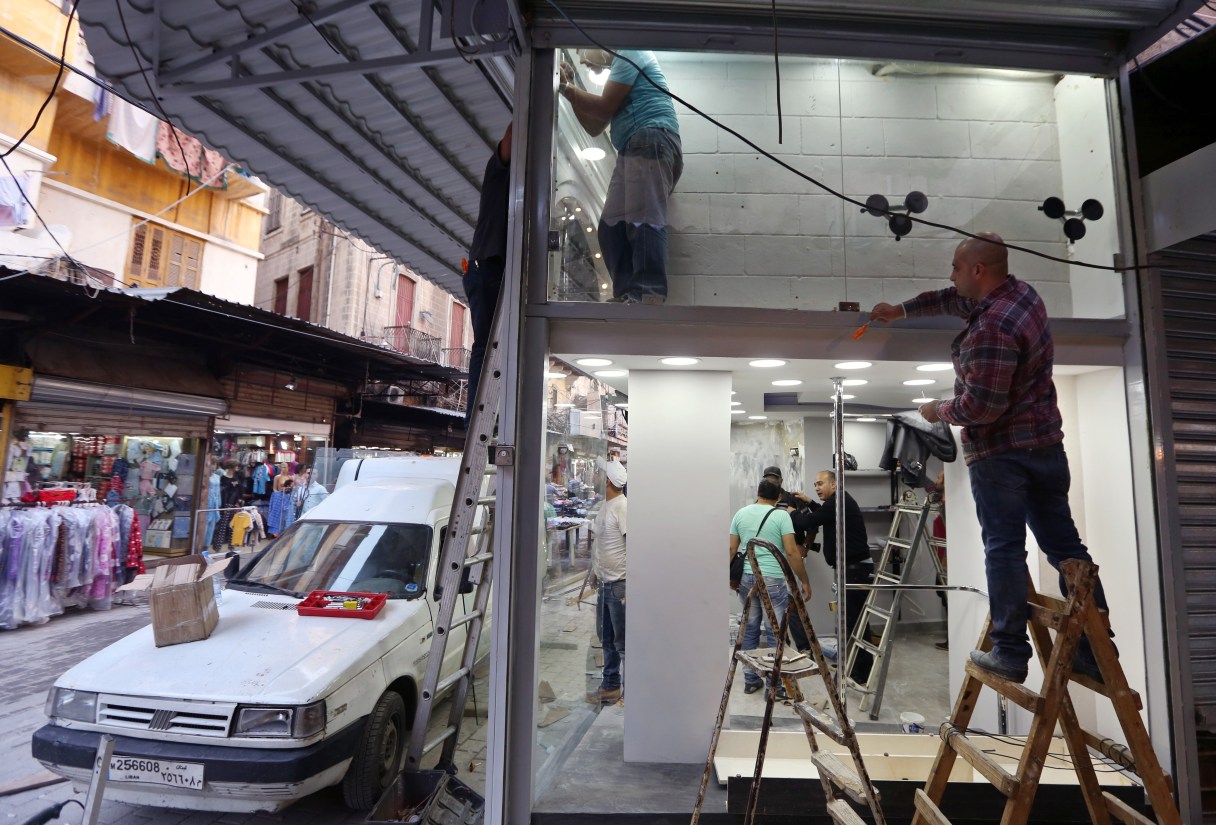
TRIPOLI, Lebanon (AP) – Jamal Hayak is finally fixing up his restaurant, damaged a month ago in clashes between the army and militants in this northern Lebanese city. But he has little doubt violence will erupt again, and he says he fears next time it will be Islamic State group fighters battling in Tripoli’s streets.
“In the beginning we used to say. ‘This is the last time.’ Now we’ve had Round 21 and 22 (of fighting), so we say God knows,” said Hayak, 56, grimy with dust as he fixed his shop, shelled during the four days of fighting in late October that killed over 20 people.
Sunni Muslim-majority Tripoli is seen as particularly vulnerable to becoming a foothold for militants from Syria, including the Islamic State group, to expand into Lebanon. Years of neglect have deepened poverty in the city, Lebanon’s second largest. Many among its conservative Sunni residents are bitter over what they see as domination of the central government by Shiites, the Hezbollah guerrilla group in particular – giving fertile ground for the sectarian hatred that militants often feed on.
The city also has a geographical sectarian fault line, worsened by Syria’s civil war. Clashes have erupted some two dozen times in the city the past three years, mostly between the neighboring districts of Bab Tabbaneh and Jabal Mohsen. Bab Tabbaneh is majority Sunni, like Syria’s rebels, and Jabal Mohsen’s residents are mostly Alawites, the offshoot of Shiite Islam to which Syrian President Bashar Assad belongs.
October’s fighting was considered the most serious because heavily-armed Sunni militants led the clashes, launching attacks on army positions in Tripoli. They were believed to be local residents inspired by the Islamic State group and Syria’s al-Qaida affiliate, the Nusra Front, security officials have said. The violence raised warnings from politicians that militants are seeking to carve out an enclave in north Lebanon along the lines of the Islamic State group’s self-declared “caliphate” in Syria and Iraq.