
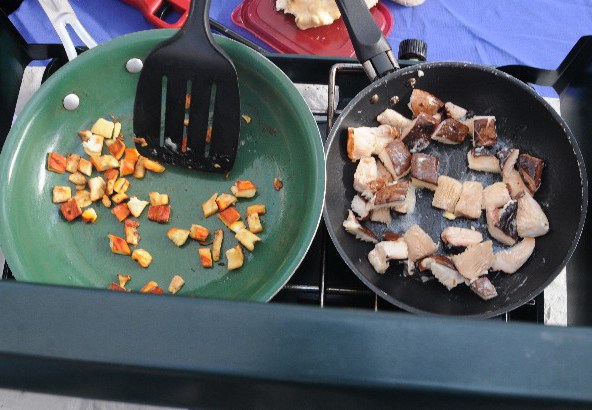
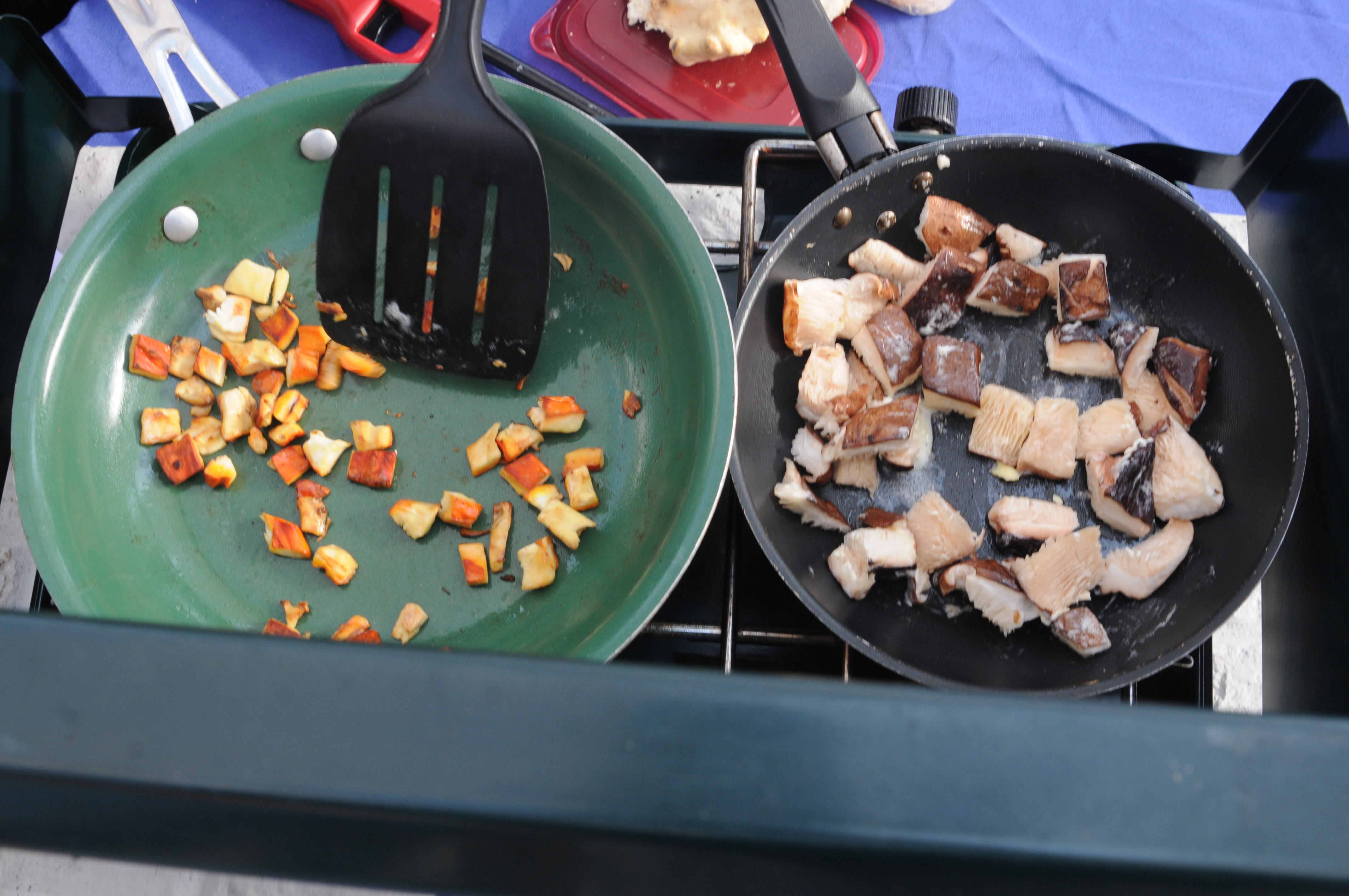
 Chicken of the woods, left, and shiitake mushrooms are best cooked slow over low heat.
Mushroom types• Agaricus: The familiar button mushroom. Flavor intensifies when cooked. Versatile, excellent both raw and cooked.• Chanterelle: Vase-shaped; ranging in color from bright yellow to orange; nutty flavor, delicate texture; expensive when fresh, but also available dried and canned. Add late in the cooking process to avoid toughening. Use in salads, sauces and risottos.• Crimini: Naturally dark cap ranges in color from light tan to rich brown; rich, earthy flavor; substitute for button mushrooms for full-bodied flavor.• Shiitake: From tan to dark brown; rich, full-bodied flavor, almost steak-like, with a meaty texture when cooked; particularly good for sautéing, broiling and baking. Remove stems before cooking but reserve for soup stocks.• Oyster: Fluted cap resembles a fan; ranging in color from a soft beige brown to gray; can be eaten raw in salads but has delicate flavor, velvety texture when cooked; some say it has a faint oyster-like or seafood flavor.• Enoki: Long stems and tiny, snow-white caps; resemble bean sprouts; light and mild, almost fruity flavor with crisp texture. Also available canned. Use in sandwiches, salads and as garnishes. In a cooked dish, add at the last possible moment to avoid toughening.• Portobello: Largest of the commercially available mushrooms with a tan/brown cap, it’s the mature version of the crimini; deep, meat-like flavor, and substantial texture. They are good whole, sliced, grilled, baked, stir-fried and deep-fried.• Porcini: Resembles the traditional fairytale toadstool; pale brown color; smooth, meaty texture; pungent in flavor; very expensive; many general cooking uses. Also available dried.• Morel: Relative of the highly-prized truffle; tan to dark-brown, cone-shaped, spongy; smoky, earthy, nutty flavor; expensive and available canned and dried. The darker the color, the more pronounced the flavor.Source: about.com
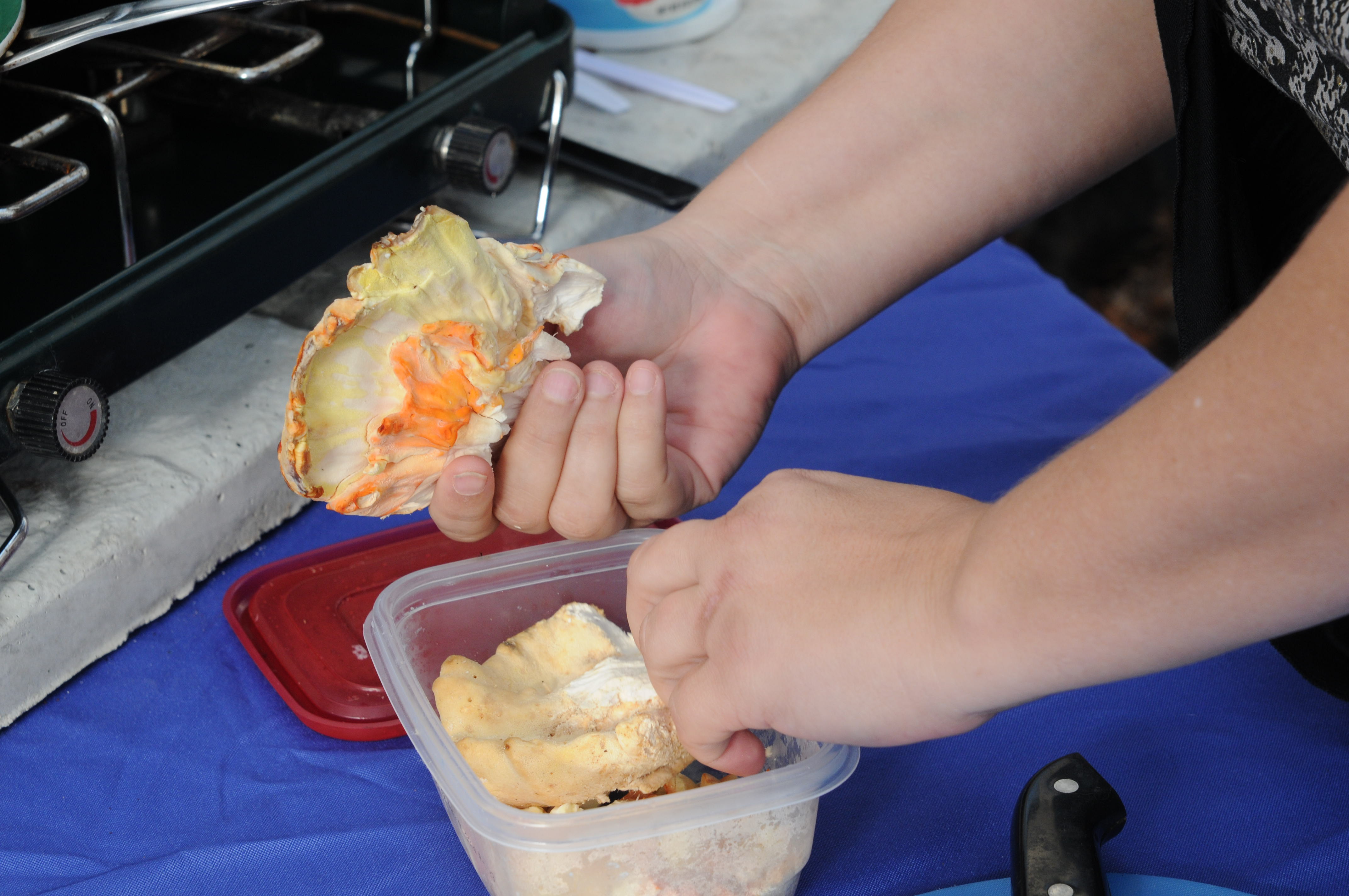 Angel Miller holds a chicken of the woods mushroom.
Mushroom vitamins and minerals• Potassium: Good for the heart, reduces the risk of high blood pressure and strokes.• Copper: Aids iron (also found in mushrooms) in making red blood cells and delivers oxygen to the body.• Selenium: Together with Vitamin E it produces antioxidants that neutralize “free radicals” which can cause cell damage.• Riboflavin: Promotes healthy skin and vision.• Niacin: Aids the digestive and nervous systems.• Pantothenic acid: Helps with the nervous system and hormone production.• Amino acid: The count in mushrooms is higher per serving than corn, peanuts and kidney and soy beans.• Vitamins: The vitamin content of mushrooms is similar to the vitamin content in meat.Source: mushroomfactory.co.za
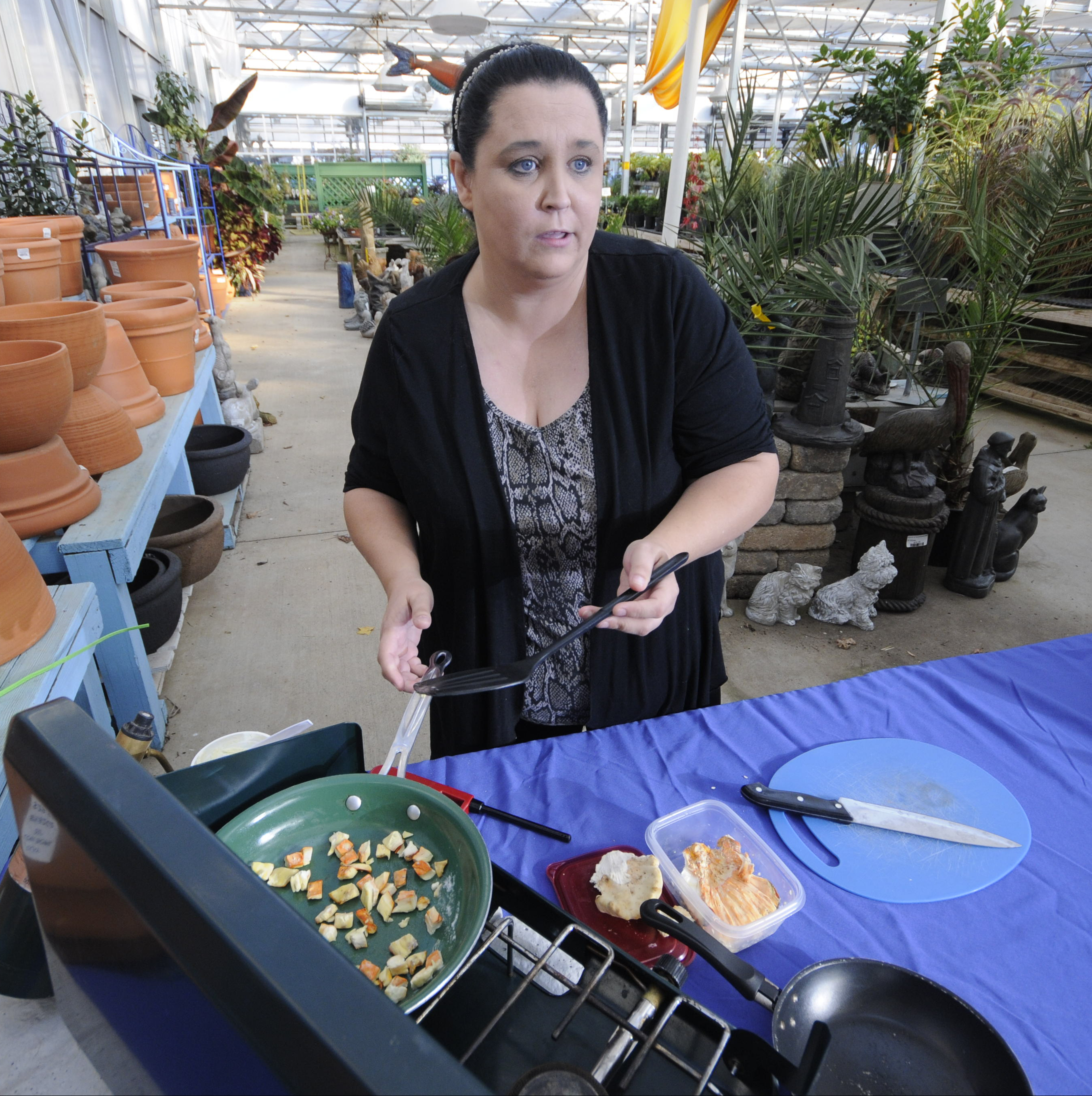 Angel Miller of 2 Angels Mushroom Farm cooks chicken of the woods mushrooms during a class.
Fast Facts• A mushroom is a fungus (from the Greek word sphongos, meaning “sponge”).• A mushroom is classified as a fungus because it has no chlorophyll, produces spore and not seeds.• A mycologist is an expert in mushrooms and other fungi; it comes from the Greek word mykes, meaning “fungus.”• One portobello mushroom generally has more potassium than a banana.• Mushrooms are composed of 90 percent water.• Mushrooms, particularly the portobello, are often used in place of meat in many dishes, making them great for vegetarians and earning them the name of “beefsteak for the poor.”• Drying mushrooms is the oldest and most commonly used way to preserve mushrooms, but they can also be canned, pickled or frozen.• Picking wild mushrooms can be a dangerous hobby. Many mushrooms found in the wild look very similar to the edible variety but are highly poisonousSource: mushroomfactory.co.za
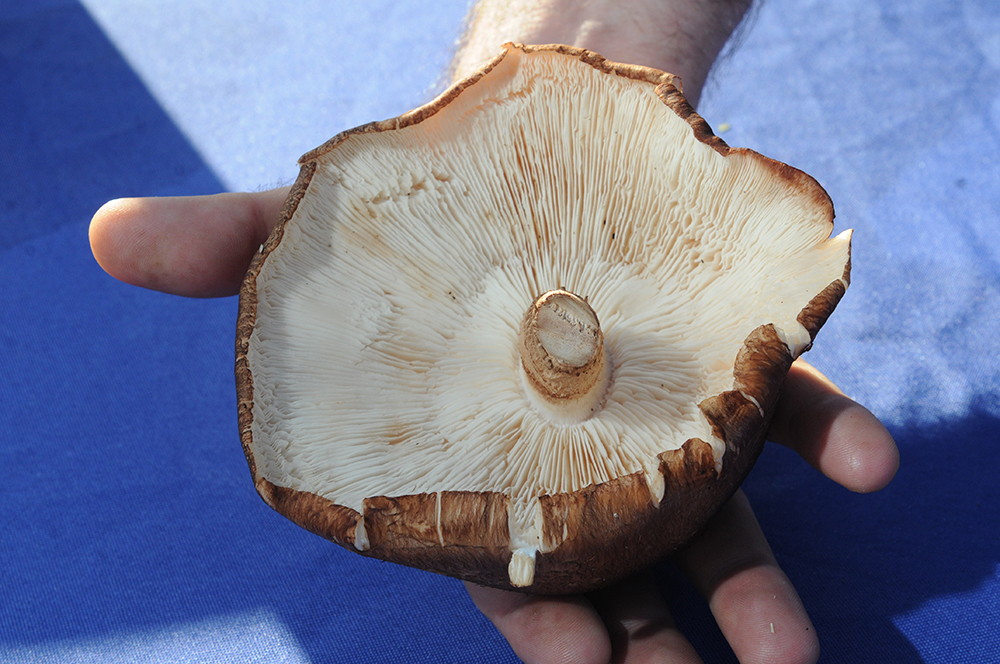 A Shiitake mushroom grown by the Millers.
For years, the humble mushroom, which has been around for eons, was used primarily as a salad bar filler or in a creamy soup that you could mix with just about anything.
Until a few years ago, cooks mostly bought the ubiquitous and flavorless button variety found in most groceries, knowing it would take on the flavors of the other ingredients when cooked.