
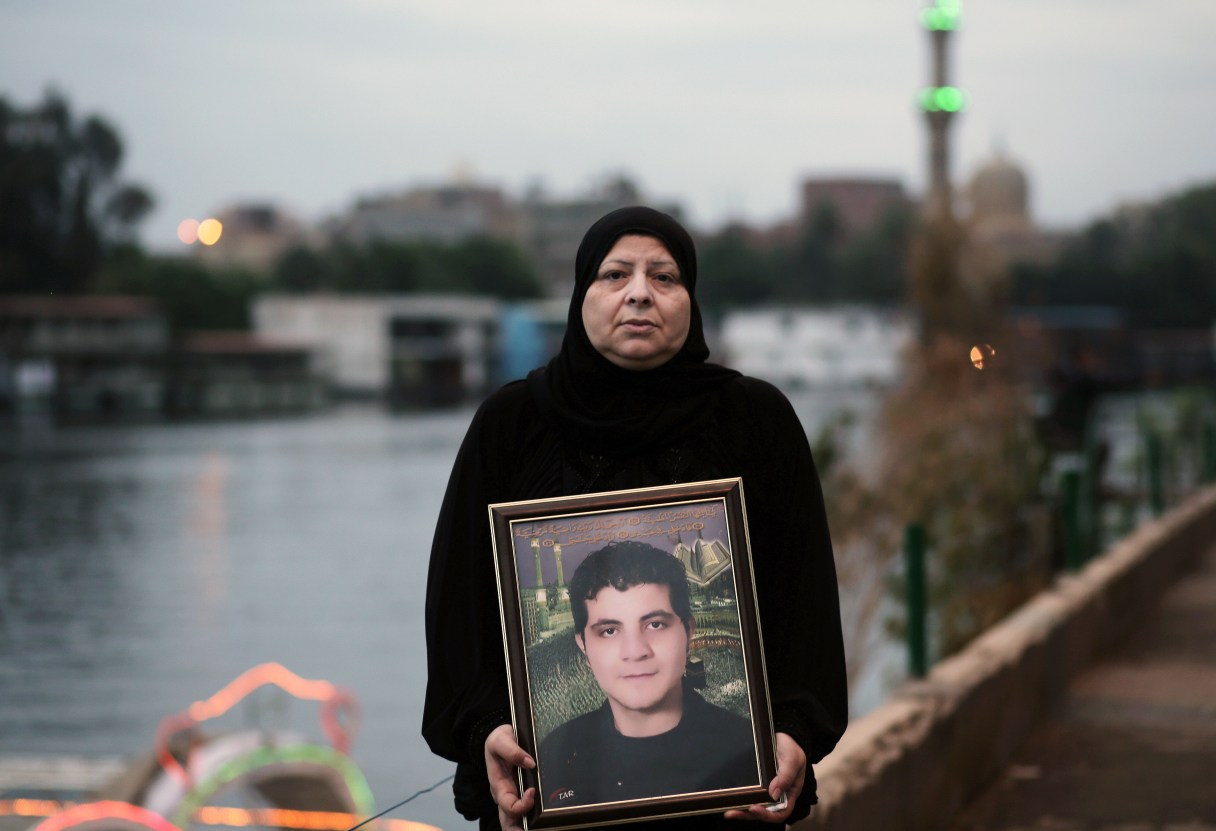
CAIRO (AP) – Amal Shaker’s 25-year-old son Ahmed was fatally shot in the back on the “Friday of Rage,” one of the bloodiest days of Egypt’s 2011 uprising against longtime autocrat Hosni Mubarak. Nearly four years later, she is still waiting for justice.
“We want blood for blood,” she said.
Her wait is supposed to end Saturday when a verdict is expected in the 86-year-old Mubarak’s trial on charges connected to the killing of more than 900 protesters against his rule. But Egypt’s “trial of the century,” initially watched with excitement, has largely dropped from public attention. That’s partly because of how drawn out the process has been – with a trial and retrial – and partly because subsequent upheaval has flipped the political narrative.
The revolutionary fervor of 2011 has been largely extinguished, replaced among many Egyptians by exhaustion from nearly four years of turmoil. Many of the pro-democracy activists central to the uprising are in prison for attempting to protest against the new president, former army chief Abdel-Fattah el-Sissi. Others are dismissed in the media as troublemakers, while the police who in the revolutionaries’ eyes were the hated tools of Mubarak oppression are now lauded in the press as heroes in a fight against Islamists.
“The issue is over,” Ahmed Hani, a Cairo accountant, said of the trial, which he like many is not following closely. “What’s important is to improve the country, to bring it back to its prior state, more than to take an interest in a thing like this.”