
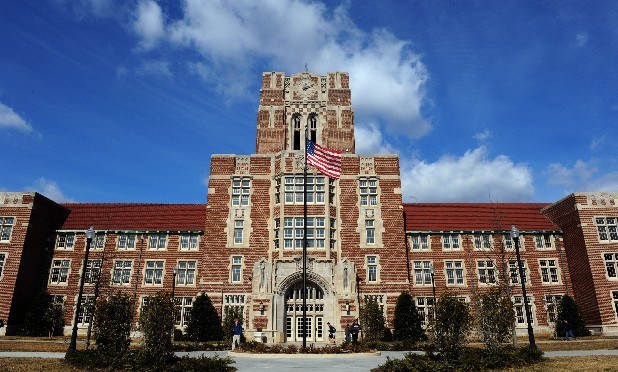
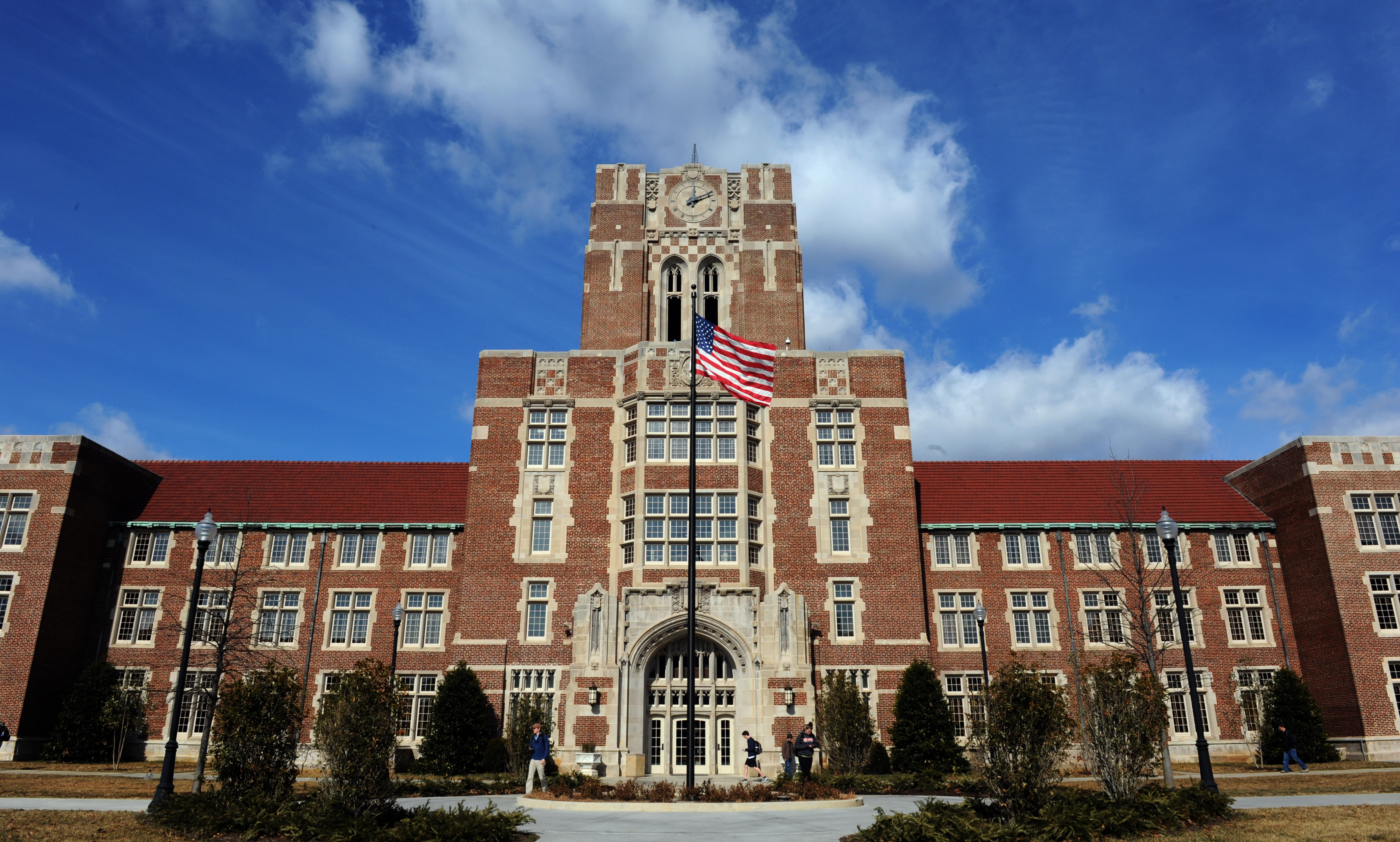
 This is Ayres Hall on the University of Tennessee campus in Knoxville.
KNOXVILLE – The University of Tennessee is declining to make public a letter from a student trustee who resigned from the governing board of the state’s flagship institution and quit school.
University officials cited federal privacy laws when asked by the Knoxville News Sentinel why they wouldn’t say why R.J. Duncan of Nolensville, Tennessee or release his resignation letter.
Duncan quit less than six months into a two-year appointment by Gov. Bill Haslam. He left the university on Oct. 11.
Duncan, a junior in finance and marketing, was one of three students nominated from the Knoxville campus to serve as a student trustee, an appointment that rotates among the system’s three undergraduate campuses and the Health Science Center in Memphis. Student trustees, like faculty representatives, have voting power only in the second year of their appointment.
Duncan was not the top vote-getter in a campus wide election in April, when 47 percent of students elected first-year law student Grant Davis. Haslam opted to instead appoint Duncan, an Eagle Scout who volunteers with the Boys and Girls Club.
Duncan’s letter is undated, and it’s unclear when he submitted his resignation, according to a UT spokeswoman. Student Government Association President Kelsey Keny said she was informed Nov. 22 by the UT dean of students that Duncan had stepped down earlier that day.
Duncan could not be reached for comment Friday.
Frank LeMonte, with the Student Press Law Center, said the document should be released and that such laws apply only to educational records.
“Anything that bears on his performance in trustee duties, by definition, is not a FERPA record,” said LeMonte, executive director of the First Amendment advocacy group in Washington, D.C. “There’s a completely legitimate public interest in knowing why someone is not continuing in an important public position.”
When asked whether it was unusual to appoint a representative other than the one elected by students, Haslam’s spokesman, Dave Smith, said Duncan’s appointment was routine.
The Student Government Association will meet Tuesday to approve three new names to submit to Haslam, who will select a replacement for Duncan.