
Tuesday, November 10, 2026Nov 10

Justices weigh limits of free speech over Internet

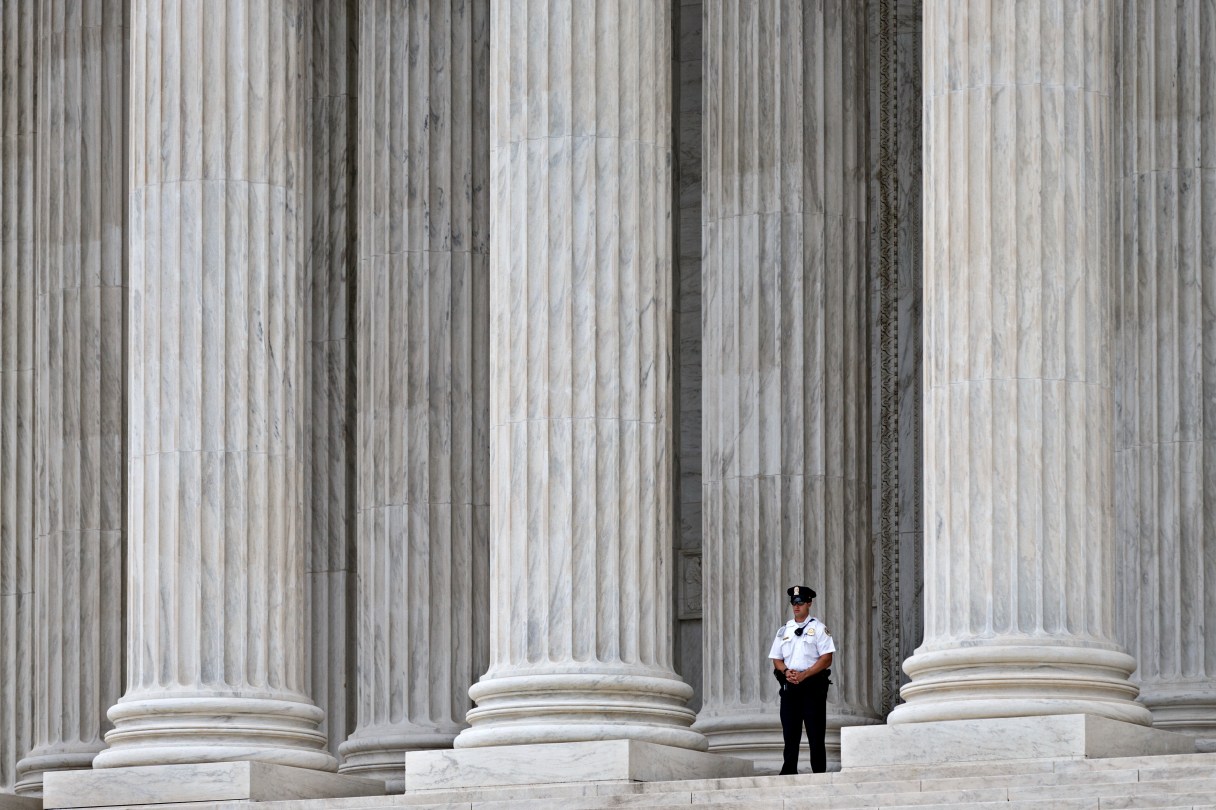
FILE - This Oct. 7, 2014, file photo shows a police officer dwarfed amid the marble columns of the U.S. Supreme Court in Washington. Anthony Elonis claimed he was just kidding when he posted a series of graphically violent rap lyrics on Facebook about killing his estranged wife, shooting up a kindergarten class and attacking an FBI agent. But his wife didn't see it that way. Neither did a federal jury. In a far-reaching case that probes the limits of free speech over the Internet, the Supreme Court on Monday is considering whether Elonis' Facebook posts, and others like it, deserve protection under the First Amendment. (AP Photo/J. Scott Applewhite, File)
FILE - This Oct. 7, 2014, file photo shows a police officer dwarfed amid the marble columns of the U.S. Supreme Court in Washington. Anthony Elonis claimed he was just kidding when he posted a series of graphically violent rap lyrics on Facebook about killing his estranged wife, shooting up a kindergarten class and attacking an FBI agent. But his wife didn't see it that way. Neither did a federal jury. In a far-reaching case that probes the limits of free speech over the Internet, the Supreme Court on Monday is considering whether Elonis' Facebook posts, and others like it, deserve protection under the First Amendment. (AP Photo/J. Scott Applewhite, File) FILE - This Oct. 7, 2014, file photo shows a police officer dwarfed amid the marble columns of the U.S. Supreme Court in Washington. Anthony Elonis claimed he was just kidding when he posted a series of graphically violent rap lyrics on Facebook about killing his estranged wife, shooting up a kindergarten class and attacking an FBI agent. But his wife didn't see it that way. Neither did a federal jury. In a far-reaching case that probes the limits of free speech over the Internet, the Supreme Court on Monday is considering whether Elonis' Facebook posts, and others like it, deserve protection under the First Amendment. (AP Photo/J. Scott Applewhite, File)

WASHINGTON (AP) – Anthony Elonis claimed he was just kidding when he posted a series of graphically violent rap lyrics on Facebook about killing his estranged wife, shooting up a kindergarten class and attacking an FBI agent.

But his wife didn’t see it that way. Neither did a federal jury.

Elonis, who’s from Bethlehem, Pennsylvania, was convicted of violating a federal law that makes it a crime to threaten another person.

In a far-reaching case that probes the limits of free speech over the Internet, the Supreme Court on Monday was to consider whether Elonis’ Facebook posts, and others like it, deserve protection under the First Amendment.

Elonis argues that his lyrics were simply a crude and spontaneous form of expression that should not be considered threatening if he did not really mean it. The government says it does not matter what Elonis intended, and that the true test of a threat is whether his words make a reasonable person feel threatened.