
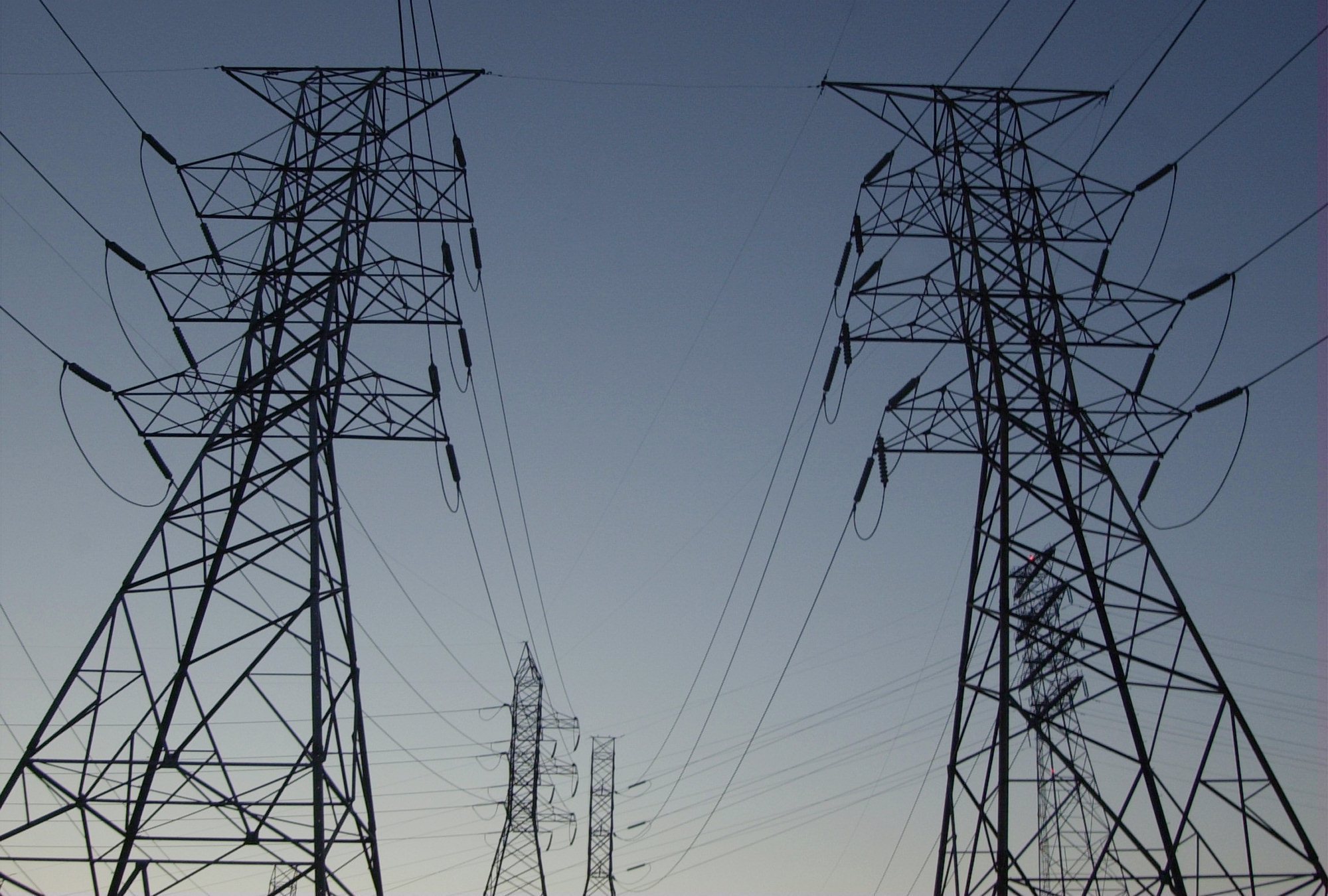
 Transmission lines like TVA’s high-voltage lines near Chickamauga Dam are part of the 450,000-mile U.S. power grid.
The U.S. power grid is a 450,000-mile system of giant towers that crisscross the landscape to carry electricity and connect power producers like TVA with consumers.
That grid – long enough in total to circle the earth 18 times – and those massive transmission and distribution lines are endangered – not only by the terrorists we so often hear about and by the terror of weather, but also by progress.
The grid as we know it now has evolved into three large interconnected systems that move electricity around the country. But it is on the brink of major change, according to Climate Central Senior Science Writer Bobby Magill – a reporter who was in Chattanooga last year for the conference of the Society of Environmental Journalists.
Magill reports that scientists and the Department of Energy are anticipating that rooftops all over the country will increasingly become adorned with solar panels and the other accoutrements of locally-generated renewable energy, pushing electricity onto the grid while also serving homes.
Right now, most of our electric grid only works as a one-way street, sending out electricity, but unable to receive it from any source other than power plants. The big change will be in turning that grid into a two-way system.
On a small scale, this already happens in select parts of the Tennessee Valley Authority’s grid where customers in the Green Power Provider program sell their solar power to TVA for a premium and in turn help balance their power bills.
Unfortunately, instead of using the program’s popularity (TVA says its 2013 program had met the application allocation target on April 24 – less than four months into the year), the utility continues to cap solar applications. TVA has further limited the program by twice stipulating massive reductions in allowable systems sizes – effectively dropping allowable system size from 1000 kilowatts to 50 kilowatts. Why? The demand and opportunity clearly is far too high and far too likely to eat into TVA power sales.
“The only thing consistent about TVA’s [green power providers] solar program modifications since 2010? TVA’s efforts to constrain the solar market,” wrote Stephen A. Smith, in a 2013 cleanenergy.org blog for the Southern Alliance of Clean Energy.
But with climate change whipping extremes across the globe and carbon costs rising even as solar costs have fallen, energy officials and experts far higher on the food chain than TVA are beginning to talk a different game.
One game changer would be microgrids, small grids connecting buildings with a local power source separate from the main grid. In addition to being power-saving, these micro-grids would also be better protected from the causes of mass grid failure – like the tornadoes in April 2011 that took out 108 TVA power transmission lines and turned 353 of the utility’s monster power towers into bowties. That disaster left 14 power distributors and 847,000 homes and businesses in North Alabama and most of Northeast Mississippi totally cut off from TVA power for a week. It also forced Browns Ferry Nuclear Plant into emergency shutdown – costing TVA millions of dollars a day in revenues for about a month.
For “Grid Week” in mid November, DOE pushed efforts to build smart grids in many places, a computerized grid that allows for two-way communication between a utility and customers, allowing power to be used and produced more efficiently.
Yes, EPB has this, and most of us already have smart meters on our homes. But we can’t yet use them to their full capacity. By logging into EPB’s website, we can see our daily power use, but EPB in October turned again to Uncle Sam at Oak Ridge National Laboratory to help the distributor figure out how to use all the data gathered on its $111.6 million federal stimulus-funded smart grid so that our smart meters might eventually be able to tell us in real time when a heat pump or furnace isn’t working properly or efficiently.
In the era to come, writes Magill at Climate Central, much of the power generated in the U.S. will come from renewables, and much of it will be generated on rooftops and in backyards. At the same time, the buildings using that electricity are likely to be much more energy efficient than they are today, and many of will be making our power – feeding it back into the grid with a two-way system that will change the energy landscape dramatically.
We just have to make sure the big power makers don’t slow-walk us any more.