
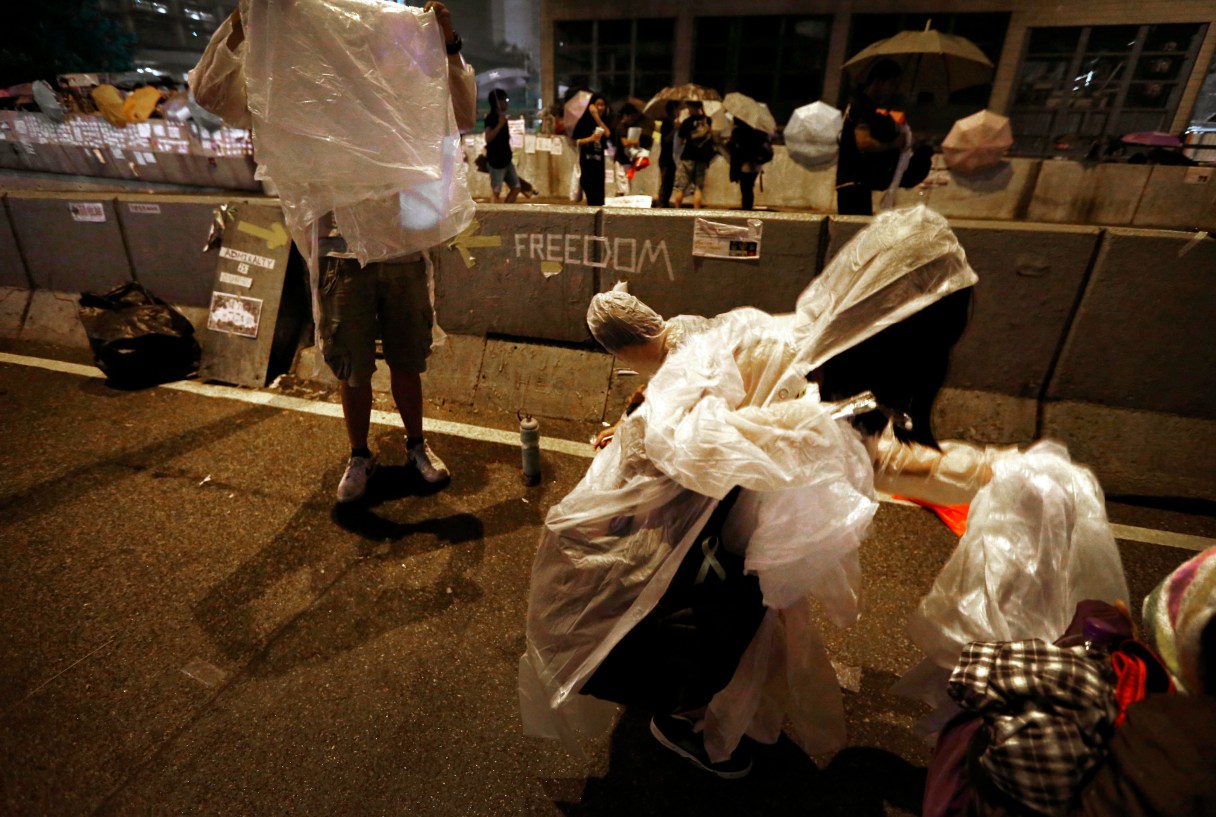
HONG KONG (AP) – The story of Chief Executive Leung Chun-ying, Hong Kong’s top leader, is a rags-to-riches tale that is generally admired in this commercially-minded city. But Leung is deeply unpopular, thanks mainly to his longstanding ties with mainland China.
Beijing’s burgeoning influence in this former British colony is a key factor driving protests that have paralyzed parts of this dynamic city and brought on some of the worst confrontations in decades. Anger toward Beijing is not shared by all in Hong Kong, and the scuffles that began Friday between protesters and people trying to force them off the streets reflect widening rifts within this city of 7 million.
Protesters and their supporters have turned out by the tens of thousands at times over the past week to voice their disapproval of Leung and of plans that would require a pro-Beijing committee to screen the nomination for Hong Kong’s inaugural election for chief executive in 2017. The protests pose the biggest challenge to the mainland since it took control in 1997 under a “one country, two systems” arrangement keeping in place the city’s civil liberties and separate legal and political systems.
“We are not seeking revolution. We just want democracy,” Joshua Wong, a 17-year-old student organizer, told a huge, youthful crowd Saturday night as they cheered and chanted “Go Hong Kong!” and “Democracy Now!”
The dissatisfaction that sparked the protests extends well beyond unhappiness with Leung and political reforms. Incomes have stagnated while living costs have soared. Hong Kong’s wealth gap is one of the world’s highest, with average incomes among those under age 24 less than 8,000 Hong Kong dollars (about $1,000) a month.