
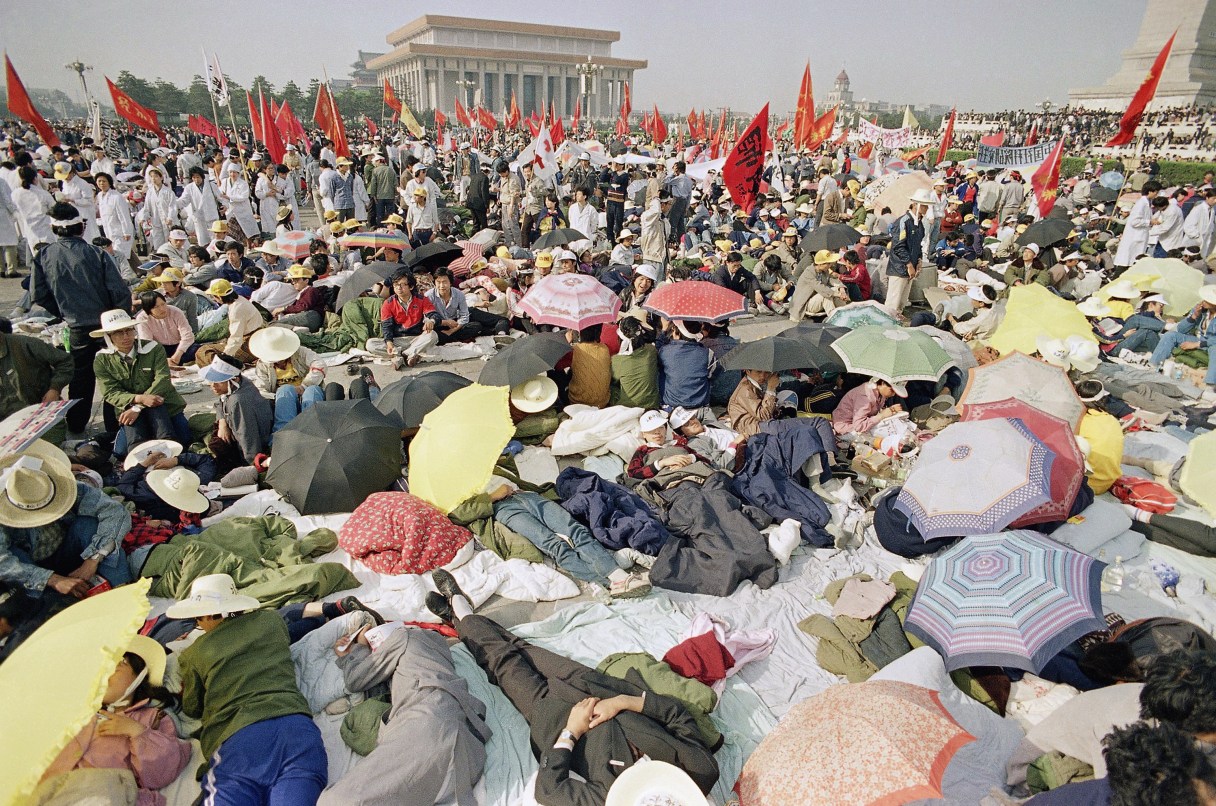
HONG KONG (AP) – The legacy of the 1989 crackdown in Tiananmen Square looms larger in Hong Kong than in mainland China, where the Communist Party has virtually erased all public mention of it. In this former British colony, hundreds of thousands attend candlelight vigils each anniversary to commemorate the grim end to the Beijing movement that was vanquished before many of the pro-democracy protesters in Hong Kong’s streets were even born.
Hong Kong’s student-led protesters insist they are not challenging communist rule, just details of Beijing’s plans for political reforms in the city. But many of their elders fear the protesters risk going too far if they stay in the streets in defiance of demands to leave in the biggest challenge to China since it took control of Hong Kong in 1997.
One urging the Hong Kong protesters to bide their time is reform-minded Bao Tong, former aide to then-Communist Party general secretary Zhao Ziyang, who spent the last 16 years of his life under house arrest after sympathizing with the students who occupied Beijing’s Tiananmen Square to seek democracy on the mainland.
“The seeds have already been sown, and they need time to lie fallow,” Bao wrote in a commentary Sunday for Radio Free Asia. “Take a break, for the sake of future room to grow. For tomorrow,” wrote Bao, who has been under house arrest himself after spending seven years in prison.
The memories of the June 4, 1989, military assault that ended the sit-ins in Tiananmen, killing hundreds, are vivid among Hong Kong people old enough to have lived through the exhilaration of the protests and the gloom that followed the crackdown. Many of Hong Kong’s 7.2 million people moved to the city to escape poverty, political pogroms and repression of dissent in the mainland, and they value the city’s democratic, Western-style civil liberties.