
Sunday, November 15, 2026Nov 15

Health law waivers: Too complicated to claim?

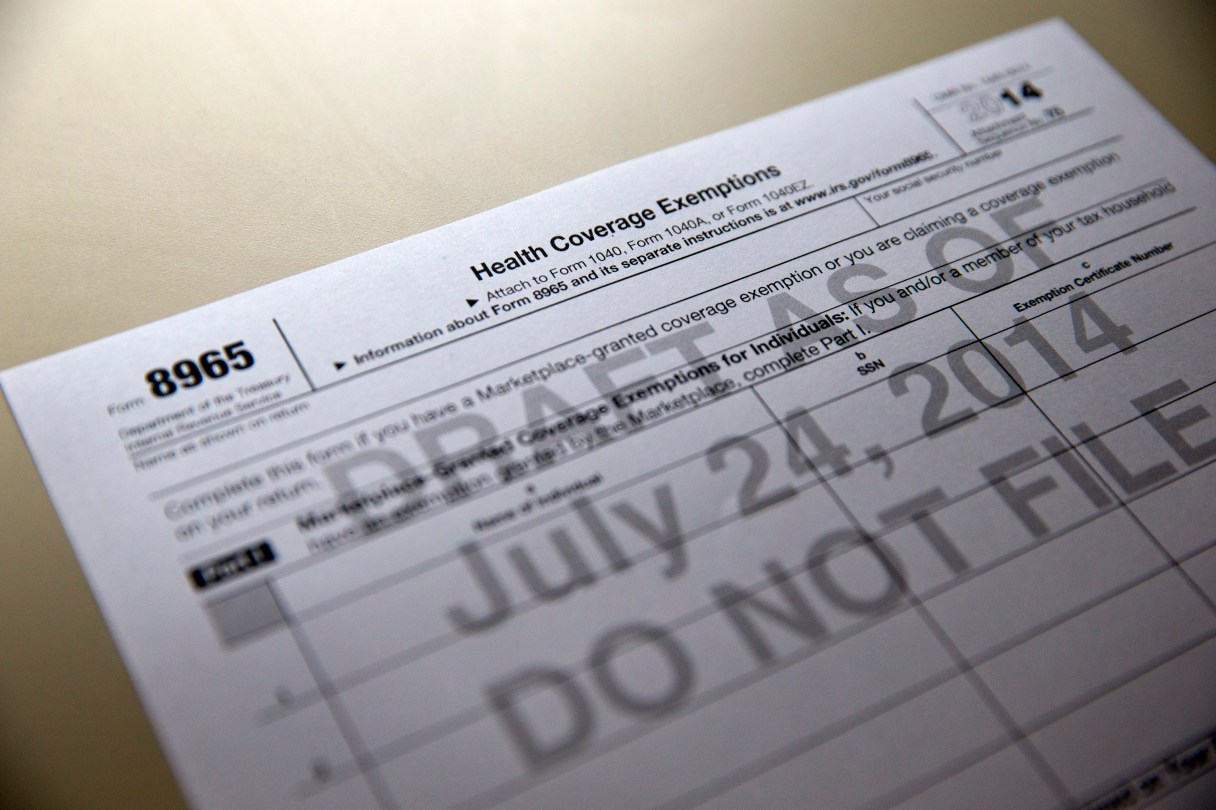
In this photo taken Oct. 3, 2014, the IRS Health Coverage Exemption form is seen in Washington. It’s the most unpopular provision in President Barack Obama’s health care law: millions of Americans who didn’t get health insurance this year now risk fines from the Internal Revenue Service. But it turns out that half or more of them may be eligible for waivers. At least on paper. Community groups and tax preparation companies say the process for claiming exemptions looks really convoluted.(AP Photo/Jacquelyn Martin)

WASHINGTON (AP) – Millions of Americans may qualify for waivers from the most unpopular part of President Barack Obama’s health care overhaul. But getting that exemption could be an ordeal.

Community groups are concerned about a convoluted process for applying for waivers from the law’s tax penalty on people who remain uninsured. Not everyone is complaining, however: Tax preparation companies are flagging it as a business opportunity.

The law’s requirement that Americans carry health insurance remains contentious. Waivers were designed to ease the impact.

But while some exemptions seem simple, others will require math calculations. Some involve mailing in supporting documents, such as copies of medical bills, police reports, obituaries, utility shut-off notices – even news articles.

Two federal agencies have roles, each with its own waivers and time schedules. Some people will apply directly to the Internal Revenue Service when they file their 2014 tax returns next year. They’ll use a new Form 8965.