
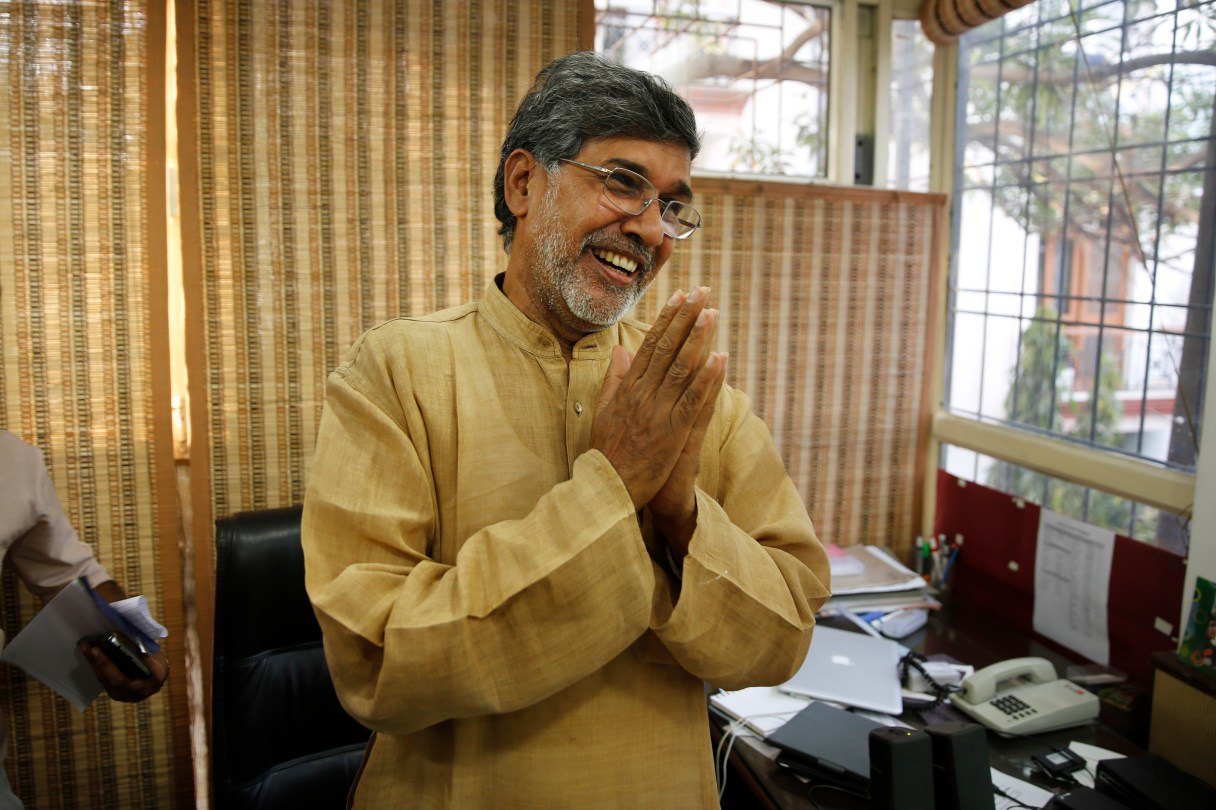
NEW DELHI (AP) – On his first day in school Kailash Satyarthi saw a young boy polishing shoes outside the school gates. The memory of that incident stayed with him, he said, leading him to give up a career in engineering to spend his life fighting India’s endemic child labor.
“It was a very sharp contrast,” he says of watching that boy, unable to go to school, clean the shoes of other little children who had the “hopes and aspirations” that education brings.
On Friday, Satyarthi, 60, was awarded the Nobel Peace Prize along with Pakistan’s Malala Yousafzai for having devoted three decades of his life to defending children’s rights.
“I strongly feel that this is a big honor to hundreds of millions of the children who have been deprived of their childhood and freedom and education. So it’s a big challenge and this will help in our fight against child labor and child slavery globally, and particularly in my own country,” he said.
Satyarthi was born in Vidisha in the central Indian state of Madhya Pradesh in 1954 and studied to be an electrical engineer. He abandoned that career path in the early 1980s to start helping children who were forced to quit school and start working, often at dangerous jobs, to support their families.