
Saturday, October 31, 2026Oct 31

This story is free to read.

Justices balk at last-minute voting changes

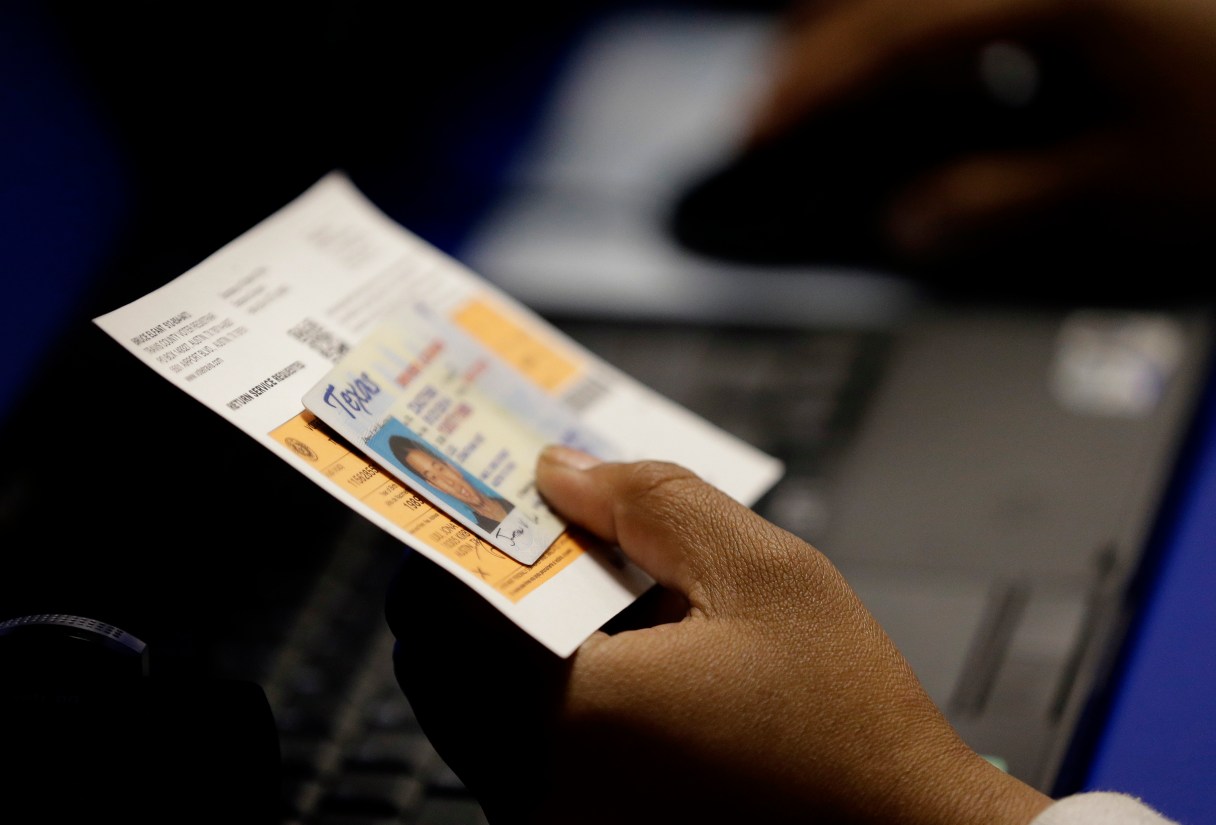
FILE - In this Feb. 26, 2014 file photo, an election official checks a voter's photo identification at an early voting polling site in Austin, Texas. A majority of the nation's highest court on Saturday Oct. 18, 2014 rejected an emergency request from the Justice Department and civil rights groups to prohibit the state from requiring voters to produce certain forms of photo identification in order to cast ballots. (AP Photo/Eric Gay, File)
FILE - In this Feb. 26, 2014 file photo, an election official checks a voter's photo identification at an early voting polling site in Austin, Texas. A majority of the nation's highest court on Saturday Oct. 18, 2014 rejected an emergency request from the Justice Department and civil rights groups to prohibit the state from requiring voters to produce certain forms of photo identification in order to cast ballots. (AP Photo/Eric Gay, File) FILE - In this Feb. 26, 2014 file photo, an election official checks a voter's photo identification at an early voting polling site in Austin, Texas. A majority of the nation's highest court on Saturday Oct. 18, 2014 rejected an emergency request from the Justice Department and civil rights groups to prohibit the state from requiring voters to produce certain forms of photo identification in order to cast ballots. (AP Photo/Eric Gay, File)

WASHINGTON (AP) – Texas has gotten the go-ahead from the Supreme Court to use its strict voter ID law in the November election.

The court’s action early Saturday comes even after a judge said the law was the equivalent of a poll tax and threatened to deprive many blacks and Latinos of the right to vote this year.

The high court acted two days before the start of early voting in Texas.

The move appears to be based on the justices’ view that changing the rules so close to an election would be confusing.

Texas has conducted several low-turnout elections under the new rules. Those rules set seven forms of approved photo ID, including concealed handgun licenses, but not college student IDs.

The court’s brief unsigned order offered no explanation for its action.