
I am 18 years old and a sophomore at Bard College in upstate New York. I am 5 foot 9 and 132 pounds, 10 pounds below what the insurance charts feel I could comfortably weigh. But what the charts don’t see is that I am thin everywhere except in my stomach, which is entirely too round and too thick.
Although I have dieted since I was 12, I have never been able to get rid of it. And I have blamed this soft, rolling belly for every disappointment in my life, including my lack of dates in high school, my subpar horsemanship and why I am uncomfortable with other people my age. “Fat” is why my grades are not better, why I don’t have more friends, and the reason people stare at me on the street. “Fat” is responsible for every success I have not had, every happiness I do not feel, and all the ways I have been ignored and marginalized by my family.
It is why, when I am home, I stand for hours at the window of my parents’ dining room, watching cars go by on the street, wondering what it is that people do with themselves all day, and how they convince themselves it matters.
It is an old thought that comes to me with a new intensity, like a bird falling out of the sky. I am in the parking lot of Stereo World in Wappingers Falls, New York. I am waiting for my boyfriend to buy speakers and wondering whether I can skip dinner, whether the apple I am eating will hold me for another seven or eight hours until I go to sleep.
I feel for the pudge underneath my shirt. If I can skip dinner, I will wake up in the morning with a stomach that lies deceptively flat and even caves in slightly between my hipbones. I will be not fat until I eat breakfast, at which time my stomach will round out again, press uncomfortably against my jeans, and announce to the world that I am a glutton.
I could lose weight if I really wanted to.
The moment the thought comes to me there is a new and inexplicable clarity to the realization that I am and have always been, in control of my body. That if I really chose to, I could lose weight and thereby change the way people think and feel about me. That I could, quite simply, cure myself of my perpetual discomfort with my body and, by extension, my perpetual dissatisfaction with my life.
By the time my boyfriend emerges from Stereo World with a speaker under each arm, my epiphany is 15 minutes old, and I am anorexic.
So began my journey from 132 pounds to 81 pounds. It was a journey that started with an apple and a thought and ended-though “ended” is not really the word-a year later with my expulsion from college and admission to Georgia Baptist Hospital in Atlanta, where I would remain for almost four months.
With hospitalization came required attendance at meals, the threat of tube feeding if I did not eat and individual, group and family therapy. In family therapy I listened as the psychologist explained, in language too simple for my family, the concept of the Identified Patient, and how the family is like a machine.
“Each family member is like a cog in a wheel,” he said, “and if one isn’t functioning properly the whole system malfunctions. Do you understand?” We nodded our heads dutifully, but beyond this rudimentary agreement to grasp the concepts, we were stonewalled in dysfunction. Thankfully, just when all seemed lost, there came medication for depression.
My progress was slow. If losing weight had been hard (contrary to popular belief, anorexics do not lose their appetite, only their willingness to feed it), gaining it back was excruciating. Losing weight was going to be my cure-all, peeling away years of unhappiness and discontent (what I called “the wallpaper of my life”). Just because it hadn’t worked yet didn’t mean it wouldn’t, I argued to my psychologist. “I just haven’t lost enough.” I was 84 pounds.
“Isn’t it interesting,” he replied, “how the thing that was going to cure you just keeps making you sicker?” I couldn’t deny the evidence. Up and down my thighs were baseball-sized bruises from the spontaneous bursting of blood vessels. My long hair was falling out in huge hanks in the shower. I hadn’t menstruated in a year. And I’d begun to have petitmal seizures.
But gaining weight-or “giving up and giving in” as I called it then-required a kind of faith I did not have, in a kind of life I’d never known. It required an admission that my happiness theory might be faulty, that my problems might not lie in my size, but in my psyche.
A few weeks into my hospitalization, the antidepressants kicked in and, when they did, I started to notice things: How the leaves outside my hospital window were brilliant shades of red and yellow; how silvery airplanes glinted in the sun; that the walls of my room were actually yellow, not white, as I’d previously thought. The world became an astonishing collection of colors it had not been before.
Soon I made friends with a fellow patient, and we spent long hours painting together and talking. On an overnight leave with my sister, we went to a party and an attractive man flirted with me. Small inroads, but with these and others I started to see that the world was not, in fact, collaborating against me to ensure my failure and unhappiness. That the rights other people had-to dates, to success, to friendships, to enjoyment-might just be mine for the taking as well.
At 95 pounds I was released from the hospital. I was hardly robust. Still, I knew that recovery and starvation were opposing realities, that each was a choice that was mine to make, and that with each came vastly different consequences. If I wanted to get on with my life in any real way-return to school, graduate, get out from under the worried gaze of my parents-then I could not continue to starve. And in order not to starve, I would have to remember that inner contentment, fulfillment and finding my place in the world would always be up to me.
 Dana Shavin
A year after my release from the hospital I graduated from Oglethorpe University in Atlanta. I took a job as an alcohol and drug counselor at a treatment center in Tifton, Georgia, and a year after that I returned to school and got my master’s degree in clinical psychology. At 24, I moved to North Georgia to take a position at a community mental health center. In my 30s I became a psychological examiner and an artist; in my 40s I started writing a book; in my 50s I became a life coach and published the book. Every step was informed by the illness that taught me that happiness, fulfillment and achievement are not reserved for the beautiful and the hungry, but are available for the taking by all who care to reach.
Were it as simple as this brief and linear overview of my illness and recovery, we might think anorexia is not such a powerful opponent. In fact, the issues that drove my illness were-and are-complex; some of them I still grapple with 35 years later. Because, while what we know best about anorexia is the refusal to eat, the grotesque thinning, the obsessive rituals around food and weight and appearance, the fact is, the visuals are just the road map in, the hieroglyphics, so to speak, of an inarticulate soul. Starvation is simply what the body wears to match the wardrobe of a thin and ailing mind.
At the trailhead of my anorexia was chronic depression, a sense that life was somehow both too long and too short, of too much and too little consequence all at once. At the heart of it was an apathetic disregard for life coupled, inexplicably, with a fervent wish for immortality.
And at the heart of that was the profoundly irrational (and mostly unconscious) idea that those who marshaled their desires and reigned in their appetites, who lived an ascetic and unfulfilled life, would somehow and for some reason be granted entrance into a world of undeath.
And then there was the very real fact that, while starvation was going to be my vehicle, it was also a brilliant diversion, a distraction from the concrete issues at hand: I was the last child at home in a household with a troubled marriage, a mother who also struggled with her weight, a father who meant well but was classically absent. Later, it would take my attention off the love relationships that couldn’t last, my mother’s car accident, my father’s cancer. Years after my release from the hospital, still struggling to eat normally, I wrote about the distraction of anorexia.
“At the heart of my predicament is the relationship I have developed with my illness: the love affair I have with feeling in exquisite control of my appetite, the reprieve I feel, in focusing on food instead of real issues…. It is this love affair that erases the boundaries between healthy, recovered eating and the kind of caloric juggling I still do: bread crust instead of bread slice, bubble gum instead of bread crust…. The fact is, addiction is a raft, a bobbing pontoon in a wide river that floats us dreamily away from the shores of our discontent. How much more pleasant to wrangle with food choices than to wonder if my father is afraid, if my mother feels more trapped, if the cancer is spreading? And regardless of whether the answers are all yes, there is still, and will always be, this: Calories burned over calories ingested equals weight lost. My magical formula that isn’t magic at all, but that nevertheless transports me to a place far from grief.”
I am 52 now. My weight is stable at 120 pounds. Occasionally people still tell me I’m too thin, which always surprises me. I think about my college boyfriend who took photographs of my spindly spine when I was 88 pounds, then shoved them under my nose. “Do you see it now?” he asked.
My body works the way it should; I love to cook and eat, and I no longer throw caloric solutions at problems of mind and spirit. Because I’m healthy, I try to steer clear of others’ subjective and ultimately unhelpful judgments about size.
When I left the hospital, a friend of a friend wrote me a letter, asking what one thing had been most instrumental to my recovery. After much thought, I realized I could not winnow it down. Certainly medication had a big role. Family therapy, while mostly unproductive, gave me the permission I needed to own my own life. Acquaintances I made in the hospital, including my relationship with a young anorexic girl, were a much-needed mirror. The patience of friends, the love of family, the devotion of my dog, who loved my lap regardless of its size, and the hundreds of sessions with my counselors and my psychologist, were all instrumental.
After many weeks, I wrote back a long letter that ended with my musing that the impact of treatment could not be understood piecemeal.
“I suspect it is less the particulars so much as it is the gestalt, the overall mission, the flailing at the gate with many keys, that finally opens the way,” I said.
Where to get help:
If you or someone you know is at risk for or suffering from anorexia nervosa, bulimia or binge eating disorder, there is help and hope.
In Chattanooga, the Mary Cameron Robinson Foundation (MCR) was founded by Jan Robinson after her daughter, Mary Cameron, 26, died as a result of complications from a 14-year battle with anorexia and bulimia nervosa and binge eating disorder. The mission of the MCR Foundation is to raise public awareness about eating disorders in the Greater Chattanooga Tri-State Area, and to act as a clearinghouse for information on prevention and treatment. Go to mcrfoundation.com for information about types of eating disorders, including warning signs and symptoms
and treatment options in the Chattanooga area and beyond. They also maintain a resource room, accessible by appointment. 1400 McCallie Ave, Suite 210, 423-622-2666
Focus Treatment Center offers inpatient, outpatient, and intensive outpatient treatment. 7429 Shallowford Road, 423-308-2560 or 2561, or email BonnieW@FocusTN.com.
The National Association of Anorexia Nervosa and Associated Disorders (anad.org) is a national clearinghouse for eating disorder information, treatment options, statistics and support. 750 E Diehl Road, No. 127, Naperville, IL. Helpline: 630-577-1330 or anadhelp@anad.org.
What you should know:
Eating disorders have the highest mortality rate of any mental illness.
Almost 50 percent of people with eating disorders meet the criteria for depression.
Up to 24 million people of all ages and genders suffer from an eating disorder (anorexia, bulimia and binge eating disorder) in the United States.
Anorexia is the third most-common chronic illness among adolescents.
25 percent of college-aged women engage in binging and purging as a weight-management technique.
The mortality rate associated with anorexia nervosa is 12 times higher than the death rate associated with all causes of death for females 15 to 24 years old.
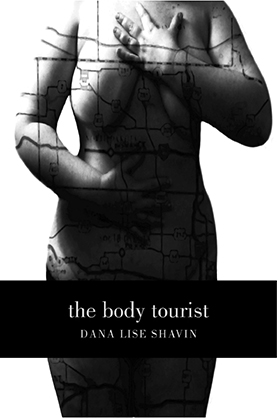
AN EXCERPT FROM THE BODY TOURIST
The is how we know ourselves, through the eyes of those around us. Here I think about a Fig Newton episode from the hospital, whereby I was working to separate the sugary fig middle from the less caloric and therefore “legal” dry crust. In a defining scene, I am sitting high on my bed, working a little plastic knife between the crusty skin and the subcutaneous fig, a surgical intervention of grave importance that day. At the same moment that the wide door of my room pushes open and my counselor Elaine (of wire-rimmed-glasses-and great-swimming-goldfish-eyes fame) steps in, my hand slips and my trusty knife plunges deep into figgy territory. I freeze, but I do not look up. Elaine, undeterred by the fact that I do not acknowledge her presence, sits down next to me on my bed. It sags significantly under her weight (she is not fat but neither is she thin and I register both of these things while still pretending not to know she is there) and her eyes (I can feel them, even now, thirty years later) light first on the eviscerated cookie in my hand and then come to rest on the side of my face. At the bottom of my trash can, which she (mercifully) cannot see from where she sits, are the lifeless bodies of three other Fig Newtons, their sticky middles glued so firmly there that it will require a small amount of force for the cleaning woman to pry them loose (a task that will engender disgust although about what exactly she won’t be certain). What matters here is not Elaine’s reaction (I have no recollection of what she said or if she in fact said anything) but what her arrival did to me, which was to awaken a shame so intense over the fact that I had been caught caring about food, in this case a snack cookie, that I redoubled my efforts to lose weight after that, which in part accounted for my additional five pound weight loss early in my hospitalization.
To explain how multilayered and profound is the shame I felt, you have to think in terms of the politician who gets caught with his hands in the coffer, or worse, up the dress of a mistress. Anorexia is in fact a kind of mistress, a beloved other that you hide from the public eye in the belief that the world can’t understand your kind of love and will therefore mock it, try to show you how it isn’t really real. And so in the interest of protecting what you know to be true, which is that your beloved is the thing that will ultimately save you, you engage secretly in your relationship-in the beginning, to throw family and friends off your trail as you winnow your daily calorie count down to next to nothing, and later as well, as you maximize the amount of time you spend jogging or leg-lifting or sit-upping off the calories you still allow yourself. What starts as a plan to protect that which gives your life meaning and that which you adore morphs into a kind of terror and embarrassment about your own passion, and about the possibility of having it taken away.