
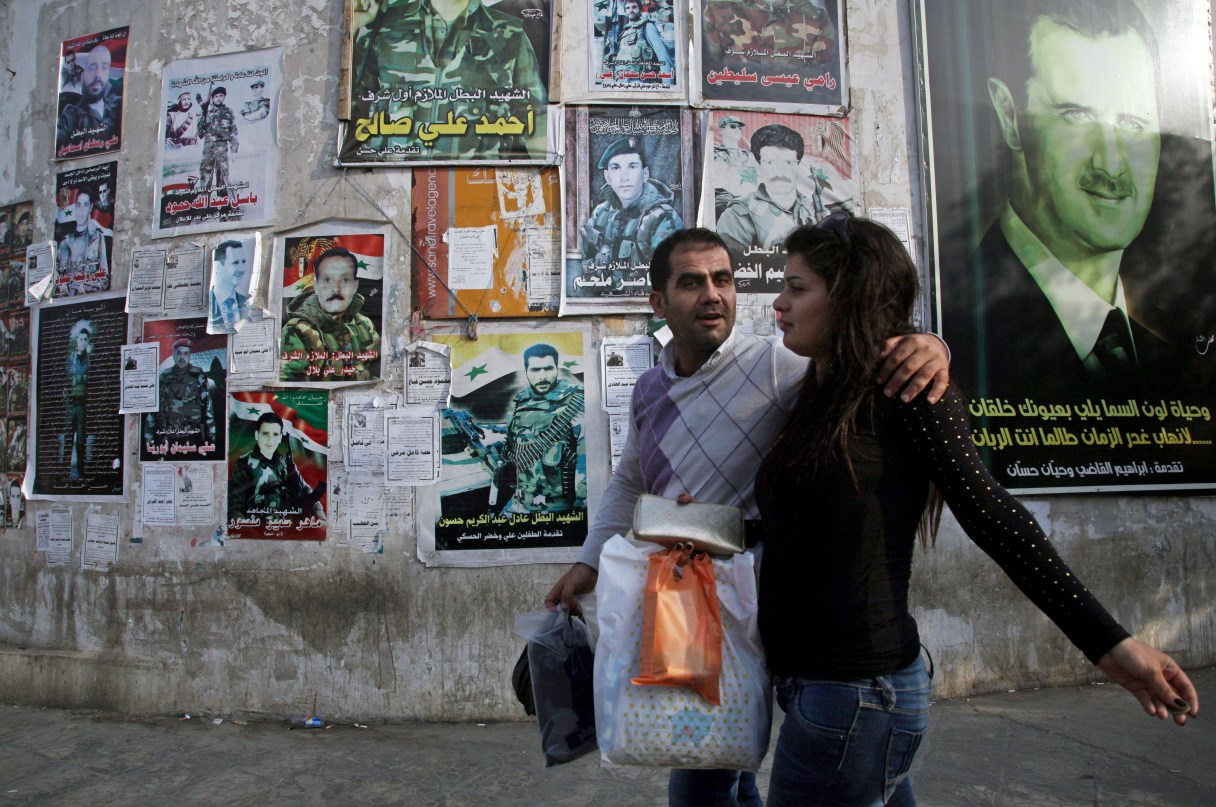
DWEIR SHEIKH SAAD, Syria (AP) – The posters announcing the deaths of Syrian soldiers are plastered on walls throughout the coastal province of Tartous, forming impromptu murals of death that illustrate the price supporters of President Bashar Assad are paying to defend his rule.
The khaki-clad men often pose with guns, with Assad’s image often imposed above the slain soldier.
For government supporters, Assad is synonymous with Syria itself, particularly in Tartous, a scenic Mediterranean port that is majority Alawite, an offshoot of Shiite Islam that is the faith of Assad’s family. For Syria’s Alawite minority, there is no other way out but to back the president, despite rumblings of dissent. Rebels often indiscriminately target Alawites; hardliners among the rebels consider them heretics, and worse, they are synonymous with Assad’s rule.
More soldiers have been killed from Tartous than any other region in Syria in the fighting to quell the armed rebellion seeking to topple Assad, now in its fourth year.
“This is the price we must pay for the country,” said Ramadan Haidar, whose 23-year-old son Mahmoud was killed fighting in northern Syria. “Because if the country doesn’t regain its sovereignty, then I have lost my son and my home.”