
Tuesday, November 10, 2026Nov 10

Justice Department: Texas voter ID discriminatory

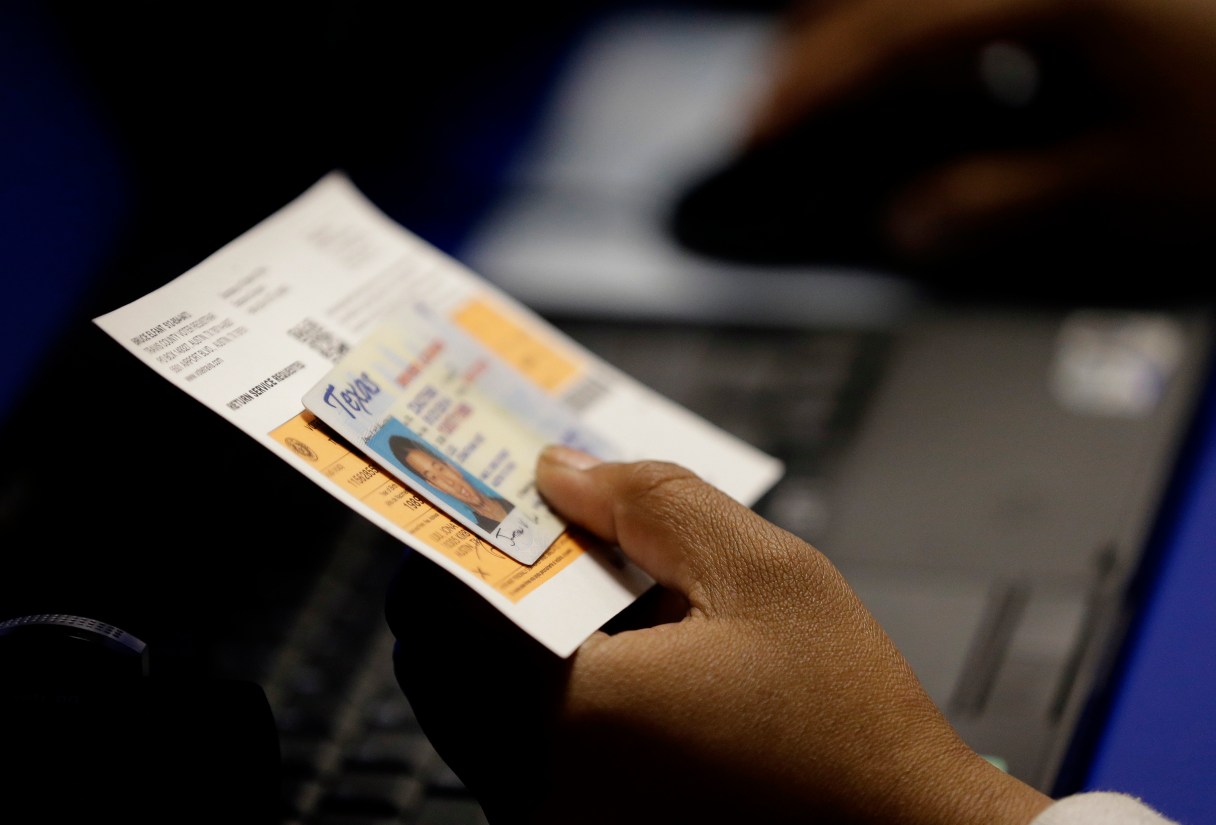
FILE - In this Feb. 26, 2014 file photo, an election official checks a voter's photo identification at an early voting polling site in Austin, Texas. A federal trial opens Tuesday, Sept. 2, 2014, that will decide the fate of one of the nation’s most stringent voter ID laws. A judge will hear arguments on whether the law safeguards ballot integrity or discriminates against minorities by imposing a mandate that suppresses turnout. (AP Photo/Eric Gay, File)
FILE - In this Feb. 26, 2014 file photo, an election official checks a voter's photo identification at an early voting polling site in Austin, Texas. A federal trial opens Tuesday, Sept. 2, 2014, that will decide the fate of one of the nation’s most stringent voter ID laws. A judge will hear arguments on whether the law safeguards ballot integrity or discriminates against minorities by imposing a mandate that suppresses turnout. (AP Photo/Eric Gay, File) FILE - In this Feb. 26, 2014 file photo, an election official checks a voter's photo identification at an early voting polling site in Austin, Texas. A federal trial opens Tuesday, Sept. 2, 2014, that will decide the fate of one of the nation’s most stringent voter ID laws. A judge will hear arguments on whether the law safeguards ballot integrity or discriminates against minorities by imposing a mandate that suppresses turnout. (AP Photo/Eric Gay, File)

CORPUS CHRISTI, Texas (AP) – A federal judge on Tuesday began reviewing tough new Texas voter ID rules challenged by the Obama administration in a trial that could threaten the polarizing law, although a decision isn’t expected before the November election.

Texas is the first test by the Justice Department to wring protections from a weaker Voting Rights Act after the U.S. Supreme Court last year gutted the heart of the landmark 1965 civil rights law.

In two Texas elections since that ruling, voters have been required to show an approved ID to cast a ballot. Lawyers for Republican Texas Attorney General Greg Abbott, the favorite to become governor in January, told a judge that both took place without glitches or disenfranchising voters.

“This requirement is one that Americans comply with every day to engage in mundane activities like cashing a check, opening a bank account or boarding a plane,” said Reed Clay, a special assistant under Abbott.

The trial in front of U.S. District Judge Nelva Gonzales Ramos in Corpus Christi is expected to last two weeks, but a ruling isn’t expected until after Election Day. That means roughly 13.6 million registered voters in Texas would still need to produce a photo ID this fall.